
call us 24/7 1-800-738-WE-WIN
call us 24/7 1-800-738-WE-WIN
Serving All of Georgia, Florida, & Texas
Negotiate Truck Accident Settlements: A Step-by-Step Guide

Table of Contents
- Why Truck Accident Settlements Require a Different Approach
- Step 1: Document Everything Before Speaking to Anyone
- Step 2: What Not to Say to Insurance Adjusters
- Step 3: Understanding Trucking Company Insurance Adjusters’ Tactics
- Step 4: Calculate Your Claim Value and Prepare a Demand Letter
- How Long Does a Truck Accident Settlement Take?
- When to Bring in a Personal Injury Attorney
- Conclusion
- Frequently Asked Questions
Last Updated: October 1, 2026
Why Truck Accident Settlements Require a Different Approach
Truck accidents aren’t like typical car collisions. The stakes are higher, the insurance policies are more complex, and the adjusters handling your claim are trained to minimize payouts. At Merritt & Merritt Law Firm, we understand how quickly accident victims can get overwhelmed by the process. (Source: Federal Motor Carrier Safety Administration (FMCSA) regulations)
Commercial trucking insurance operates under federal regulations, and the companies involved have dedicated teams trained to pressure injured people into accepting settlements far below what their claims are worth.
Understanding how to negotiate truck accident settlements with insurance adjusters is the first step toward protecting yourself.
Step 1: Document Everything Before Speaking to Anyone
Start collecting documentation immediately after the accident, before speaking to any insurance adjuster, it becomes your evidence.
Gather these documents:
- Photos of vehicle damage from multiple angles
- Photos of the accident scene (road conditions, traffic signals, debris)
- Medical records and bills from every treatment
- Receipts for medications and medical equipment
- Pay stubs showing lost wages
- Repair estimates or invoices
- Police report and incident number
- Names and contact information of witnesses
- Your own written account of what happened (written while details are fresh)
- Phone records showing when you called for help
- Insurance policy information for both parties
Keep everything organized in one place with digital copies.
Medical documentation is critical. Insurance adjusters use gaps in medical treatment to argue injuries weren’t serious. Get examined by a doctor even if you feel fine, some injuries appear days or weeks later.
Step 2: What Not to Say to Insurance Adjusters
The insurance adjuster is trained to extract information that weakens your claim. Every word you say can be used against you.
Never say these things:
- “I’m fine” or “I feel okay”, They’ll use this to argue your injuries are minor
- “I’m not sure what happened”, Creates doubt about liability
- “I could have avoided it if…”, This suggests you bear some responsibility
- “I’ve had back pain before”, They’ll claim your injuries are pre-existing
- “I don’t need a lawyer”, Signals you won’t fight for fair compensation
- Details about your personal life or finances, Irrelevant but they’ll use it
- Anything on social media about the accident, It will be found and used
Don’t give a recorded statement without a lawyer present, adjusters phrase questions carefully to make innocent answers sound harmful in writing.
If an adjuster calls, say: “I’m not able to discuss this without my attorney present. Please send all communications in writing to my lawyer.” Then hang up.

Step 3: Understanding Trucking Company Insurance Adjusters’ Tactics
The anchoring effect. Adjusters often open with artificially low offers because the first number can become a psychological reference point. Counter this by leading with your own demand letter backed by documentation (see Step 4).
Exploiting policy complexity. Commercial trucking policies involve multiple layers (driver’s, carrier’s, cargo liability, umbrella). Adjusters obscure this structure to delay settlement. FMCSA regulations require minimum liability, but adjusters may imply these are the ceiling, they’re not. Ask: “Which policies are responding, and what are their limits?”
Pressure to settle quickly. Adjusters push for fast settlement before you discover federal safety violations (e.g., exceeding 11-hour driving limits under 49 CFR 395.8, missing logbooks, failed inspections under 49 CFR 396). These violations establish negligence and increase claim value. Don’t rush, thorough investigation can significantly increase settlement value.
Minimizing injuries in high-impact collisions. Truck accidents involve vehicles weighing 80,000 pounds or more. The trauma is categorically different from car accidents. Yet adjusters will still argue that your medical treatment was excessive or that you’re exaggerating pain. They’ll say “Most people don’t need that many physical therapy visits” even though truck accident injuries frequently involve spinal trauma, traumatic brain injury, and chronic pain requiring extended treatment. They’ll point to gaps in treatment (if you missed an appointment due to cost or scheduling) as evidence you’re not seriously injured.
The sympathy script. Adjusters use phrases like “I understand this is difficult” to lower your guard. Recognize this as a tactic. Keep all communication in writing and say: “I’m not able to discuss this without my attorney present. Please send all communications in writing to my lawyer.”
Step 4: Calculate Your Claim Value and Prepare a Demand Letter
Severe injuries: Multiply economic damages by 4-8 (e.g., $100,000 economic damages + $400,000-$800,000 non-economic = $500,000-$900,000 total).
Minor injuries: Multiply by 1.5-2.5 (rare in truck accidents).
Schedule a Free Consultation →
Your demand letter must include:
- Header: Your name, address, phone number, email; the adjuster’s name and company; the date; and the claim number.
- Subject line: “Demand for Settlement – [Your Name] – Claim #[Number]”
- Narrative of the accident: A clear, factual account including date, time, location, weather, road conditions, and sequence of events. State facts, not opinions. Example: “On [date], at [time], I was traveling northbound on [road] at [speed] in the right lane. The truck, operated by [driver name] and owned by [company name], suddenly changed lanes without signaling, striking my vehicle.” Avoid opinions like “reckless” or “clearly at fault.”
- Liability analysis: Reference traffic laws, FMCSA regulations, or the police report. Example: “The police report states the truck driver failed to maintain safe following distance, violating [state] traffic code [citation]. The logbook shows he exceeded the 11-hour driving limit under 49 CFR 395.8, impairing his ability to operate safely.”
- Your injuries: List every injury you sustained. Be specific: “Fractured L4 vertebra, requiring surgical fusion on [date]. Herniated disc at L5-S1. Traumatic brain injury with persistent headaches and cognitive difficulties.”
- Medical treatment timeline: Create a chronological list of all medical care:
- [Date]: Emergency room visit, diagnosis of fractured vertebra
- [Date]: Orthopedic surgery consultation
- [Date]: Spinal fusion surgery
- [Date]: Physical therapy (ongoing, 2x per week)
- [Date]: Neuropsychological evaluation for TBI
- Economic damages (itemized):
- Medical bills: $[amount] (attach copies of bills)
- Lost wages: $[amount] (attach pay stubs and employer letter)
- Future medical care: $[amount] (attach physician’s estimate)
- Transportation: $[amount]
- Total economic damages: $[amount]
- Non-economic damages (with justification):
- Pain and suffering: $[amount]. Justification: “Claimant sustained a severe spinal injury requiring surgery and will experience chronic pain for the foreseeable future. Medical records indicate permanent nerve damage. Claimant’s treating physician estimates ongoing pain management treatment for 10+ years.”
- Loss of enjoyment of life: $[amount]. Justification: “Prior to the accident, claimant was an avid runner and participated in competitive sports. Due to spinal injury, claimant is permanently unable to engage in these activities.”
- Emotional distress: $[amount]. Justification: “Claimant has been diagnosed with PTSD and anxiety related to the accident. Claimant requires ongoing mental health treatment.”
- Total non-economic damages: $[amount]
- Total demand: Economic damages + Non-economic damages = [Total amount]
- Deadline for response: “I expect your written response to this demand by [date, typically 30 days]. If we do not reach settlement by this date, I will pursue litigation.”
- Exhibits: Attach police report, medical records, pay stubs, repair estimates, photographs, and any other supporting documentation.
How Long Does a Truck Accident Settlement Take?
Settlement timelines can vary. Simple cases may settle in a few months; complex cases can take longer. Don’t let time pressure you into a bad settlement, adjusters may exploit financial stress. A fair settlement months from now beats an unfair one today.
When to Bring in a Personal Injury Attorney
Hire an attorney if: the accident caused serious injury, liability is disputed, your claim is denied, the settlement seems too low, you’re pressured to sign quickly, you’ve given a recorded statement, multiple parties are involved, or the at-fault party is uninsured. A lawyer levels the playing field, adjusters treat represented claimants differently.
Conclusion
Negotiating truck accident settlements is fundamentally about information and preparation. You now understand what adjusters do, what not to say, and how to value your claim. The difference between fair and lowball offers comes down to willingness to push back.
Frequently Asked Questions
What should you never say to an insurance adjuster after a truck accident?
Avoid admitting fault, minimizing your injuries, accepting the first offer, or signing anything without legal review. Don’t provide recorded statements without an attorney present, speculate about the accident, or discuss your medical history beyond documented injuries. Adjusters use these statements to reduce your compensation. Stick to factual details about the accident itself, and let your attorney handle all settlement discussions.
How long does a truck accident settlement take?
Timeline varies based on injury severity, liability clarity, and insurance cooperation. Minor cases may settle in a few months, while complex truck accidents involving multiple parties or serious injuries can take longer. Medical treatment completion affects timing—insurers often wait until you reach maximum medical improvement. Litigation adds to the process. An attorney can help with negotiations while protecting your interests.
Why are truck accident settlements more complex than standard car accidents?
Commercial trucking involves federal regulations, multiple insurance policies (truck, cargo, company), and higher damage amounts. Trucking companies employ experienced adjusters trained in negotiation tactics. Liability determination is complicated by DOT regulations, driver logs, and maintenance records. Injuries are often more severe, increasing claim value and insurer resistance. These factors require specialized knowledge to maximize compensation and counter aggressive settlement strategies.
What documentation is most important after a truck accident?
Collect photos of vehicle damage, accident scene, and injuries; police report; medical records and bills; employment records showing lost wages; witness statements; trucking company information; and insurance details. Document non-economic damages through a journal of pain, emotional distress, and lost activities. Preserve electronic data like dash cam footage and text messages. This evidence establishes liability, damages, and negotiation leverage with insurance adjusters.
Our Locations

Atlanta/Decatur
1 West Court Square
Suite 750
Decatur, GA 30030

Savannah
100 Bull Street
Suite 200
Savannah, GA 31401

Statesboro
15 West Main Street
Statesboro, GA 30458
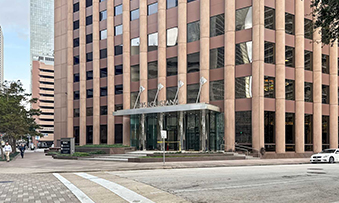
Houston
1415 Louisiana Street,
Suite 1800,
Houston, TX 77002

Jacksonville
841 Prudential Drive
12th Floor
Jacksonville, FL 32207

Contact Us
© Copyright 2026 Merritt & Merritt Law Firm. All rights reserved.