
call us 24/7 1-800-738-WE-WIN
call us 24/7 1-800-738-WE-WIN
Serving All of Georgia, Florida, & Texas
How to Find Legal Representation for Hit and Run

Table of Contents
- Step 1: Gather Evidence and File a Police Report Immediately
- Step 2: Seek Medical Attention and Document Your Injuries
- Step 3: Understand the Hit and Run Accident Statute of Limitations
- Step 4: Research and Evaluate Personal Injury Attorneys
- Step 5: Prepare for Your Personal Injury Attorney Consultation Questions
- Step 6: File an Uninsured Motorist Claim for Hit and Run
- Step 7: What to Expect After Hiring Legal Representation for Hit and Run
- Frequently Asked Questions
Last Updated: September 12, 2026
Step 1: Gather Evidence and File a Police Report Immediately
Learning how to find legal representation for hit and run begins long before you call a lawyer. A police report is the single most valuable document: it records that a fleeing driver existed and that you were not at fault.
Do this at the scene, if you can do it safely:
- Call 911 and request an officer. Do not leave until a report is filed.
- Photograph vehicle damage, debris, skid marks, and the position of your car.
- Write down the time, weather, and traffic conditions while they are fresh.
- Collect names and phone numbers from anyone who stopped.
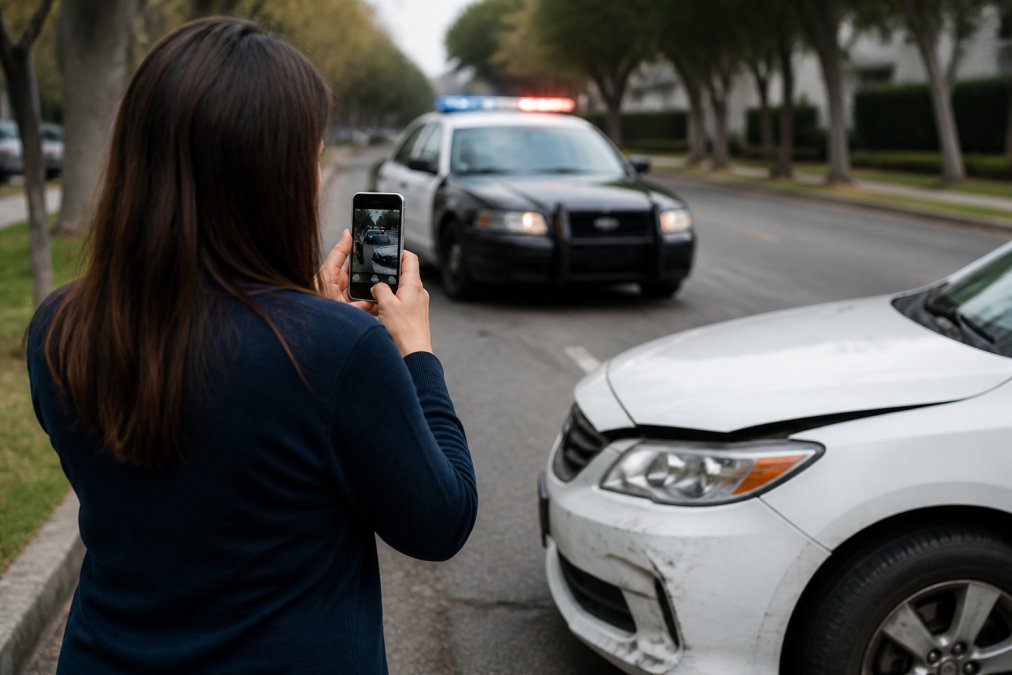
A person standing at the scene of a minor car accident on a city street, using a smartphone to photograph the damage and surrounding area, with a police car arriving in the background
Step 2: Seek Medical Attention and Document Your Injuries
Medical documentation is the backbone of every personal injury claim. See a doctor within 24 hours, even when you feel fine (mayoclinic.org). Adrenaline masks symptoms, and soft tissue injuries often surface days later.
Keep a simple file with:
- Emergency room or urgent care records and discharge paperwork
- Every follow-up visit, prescription, and imaging result
- A daily pain log noting what you could not do that day
- Photos of visible bruising or swelling, dated
Insurance adjusters look for gaps in treatment. A two-week gap reads as “not that hurt,” whether or not that is true.
Step 3: Understand the Hit and Run Accident Statute of Limitations
The hit and run accident statute of limitations is the deadline for filing a lawsuit, and missing it usually ends your case. Deadlines vary by state and claim type, and uninsured motorist claims can carry shorter notice windows than the lawsuit itself.
The three clocks running at the same time
Most people assume one deadline exists. In a hit and run case there are usually three, and the shortest controls:
- The lawsuit filing deadline. This is the statute of limitations for the personal injury claim, set by state statute and generally running from the crash date, not the date you realized you were hurt.
- The uninsured motorist notice deadline. Your own policy is a contract with its own notice and proof-of-claim requirements, frequently measured in weeks or a few months, not years.
- The government-entity notice deadline. If a public vehicle or employee was involved, a city bus, municipal truck, police cruiser, many jurisdictions require a formal notice of claim within months before you can sue.
Why the deadline is not always the crash date
Two doctrines can move the starting line:
- The discovery rule. In some states, the clock starts when you knew or should have known you were injured, not on the collision date, useful when injuries surface days or weeks later.
- Tolling. The deadline can pause, while a minor is under 18, the defendant is out of the jurisdiction, or the victim is incapacitated. Tolling rules are state-specific and narrow.
A hit and run adds a wrinkle: because the at-fault driver is unidentified, the practical deadline you are racing is often the uninsured motorist notice window, not the lawsuit deadline, a fact many victims discover only after a denial for late notice.
A concrete comparison of how differently states handle this
Statutes of limitations for personal injury claims are set state by state:
Jurisdiction | Typical personal injury filing window | Notes |
|---|---|---|
California | 2 years | Government-entity claims generally require notice within 6 months (courts.ca.gov) |
New York | 3 years | No-fault insurance rules apply to many crash claims |
Texas | 2 years | Shorter windows apply to claims against government entities |
Florida | 2 years | No-fault system governs most initial crash claims |
Pennsylvania | 2 years | Choice no-fault state, so coverage path varies by policy |
These figures are illustrative, not advice for your case. Confirm the exact deadline for your situation with your state’s official court or bar resources rather than relying on a general figure. State court and legal aid directories can point you to the right jurisdiction.
How this interacts with no-fault and at-fault states
No-fault versus at-fault status changes which deadline governs your first move. In no-fault states, your own personal injury protection (PIP) pays initial medical bills and lost wages regardless of fault, and the lawsuit deadline matters mainly outside the no-fault threshold. In at-fault states, you can pursue the at-fault driver directly, but in a hit and run that driver is gone, so the uninsured motorist notice clock becomes the operative deadline.
That is why hit and run victims in no-fault and at-fault states face different first steps, even with identical injuries. Knowing which system applies is the fastest way to identify which clock is running.
Step 4: Research and Evaluate Personal Injury Attorneys
Start with attorneys who handle car accident and personal injury cases as a core practice. Look for a firm that has taken hit and run and uninsured motorist claims to trial, since insurers settle differently when a case can go to court.
A practical screening method:
- Search your state bar association’s directory for licensed personal injury attorneys.
- Check whether the firm publishes real results and client feedback.
- Confirm the firm works on contingency, meaning you pay only if they win.
- Ask how many hit and run cases they have handled in the past year.
Most firms offer a free case evaluation, so use that call to test how they communicate. If you are recovering at home or in a hospital, ask whether the attorney will travel to you. If you are recovering at home or in a hospital, ask whether the attorney will travel to you.
What to Look for in a Hit and Run Lawyer
The right attorney for a hit and run case has three traits: experience with uninsured motorist coverage disputes, willingness to investigate when no other driver was identified, and a clear fee structure.
Ask directly about each:
- Investigation resources. Can they subpoena surveillance footage and hire an accident reconstruction expert?
- Fee agreement. Is it a true contingency fee, with costs handled up front by the firm?
- Communication. Who answers your calls, and how often will you get updates?
Step 5: Prepare for Your Personal Injury Attorney Consultation Questions
Walk into the consultation with a written list. Strong personal injury attorney consultation questions cover liability, coverage, cost, and timeline, the answers tell you more than any advertisement.
Schedule a Free Consultation →
Bring these documents:
- Police report number and a copy, if available
- Medical records and bills collected so far
- Your auto insurance policy, including the uninsured motorist section
- Photos, witness names, and any repair estimates
Then ask:
- Who pays for investigation if the other driver is never found?
- How will you prove liability without a defendant to identify?
- What is your estimate of the case timeline, and what causes delays?
- What do you need from me to move quickly?
Step 6: File an Uninsured Motorist Claim for Hit and Run
An uninsured motorist claim hit and run victims file is often the only path to compensation, because the at-fault driver has vanished. Coverage is optional in some states and required in others, so check your declarations page first. “Uninsured motorist” actually covers two different coverages, and knowing which applies changes how you file.
UM vs. UIM: two coverages, two different claims
- Uninsured motorist (UM) coverage responds when the at-fault driver has no insurance, or, in a hit and run, cannot be identified. This is the coverage that most directly applies to a hit and run.
- Underinsured motorist (UIM) coverage responds when the at-fault driver has insurance but the limits are too low to cover your damages. UIM is less relevant in a true hit and run because there is no identified driver with a policy to exhaust.
Many policies sell these together, but they are separate coverages with separate limits. Read your declarations page line by line and note each limit.
The hit-and-run-specific requirements most policies contain
Insurers frequently add conditions to UM claims that do not apply to ordinary claims. Common ones include:
- Physical contact requirement. Some policies require that the unidentified vehicle actually made contact with yours. A swerve-and-run or a phantom vehicle that caused you to hit a guardrail may fall outside coverage under a strict reading.
- Prompt reporting requirement. Many policies require you to report the hit and run to police within a set period, often 24 hours, as a condition of UM coverage.
- Cooperation and proof-of-claim deadlines. You may be required to submit a sworn statement and supporting documents within a defined window.
Miss any of these conditions and the insurer may deny the claim even when the crash clearly happened, the most common reason hit and run UM claims fail.
Stacking: when you have more coverage than you think
If you insure more than one vehicle, or live with a family member who has a separate policy, you may be able to “stack” UM limits, adding multiple policies or vehicles to increase total coverage. Not every state permits stacking, and some policies include anti-stacking language. Ask your attorney whether stacking applies before accepting a settlement based on a single policy limit.
What your own insurer will do
If you carry UM coverage, your own insurer steps into the role of the missing driver’s insurer, but that does not make the process friendly. Your insurer now has an interest in paying you as little as possible, and it may ask for a recorded statement before you understand your injuries, or a medical authorization that lets it pull your entire medical history.
A DIY checklist before you call a lawyer
You can strengthen a UM claim before hiring anyone. Gather:
- A copy of your declarations page showing UM and UIM limits
- The police report number and a copy of the report
- Photos of your vehicle damage and the scene
- Names and contact information for any witnesses
- Your medical records and bills to date
- A written timeline of the crash and everything that happened after
Having this file ready shortens intake and gives your attorney a running start on the notice deadlines above.
Step 7: What to Expect After Hiring Legal Representation for Hit and Run
Once you retain counsel, the case moves through predictable phases: an immediate case evaluation, then an investigation where your attorney requests the police report, canvasses nearby businesses for surveillance footage, and locates witnesses.
From there:
Phase | What Happens | Who Drives It |
|---|---|---|
Investigation | Evidence gathering, witness statements, reconstruction | Your attorney |
Demand | Documented settlement demand sent to the insurer | Your attorney |
Negotiation | Insurer counteroffers, medical records reviewed | Both sides |
Litigation | Lawsuit filed if settlement talks stall | Your attorney |
Timelines vary widely. Cases with clear liability and completed treatment often resolve faster than disputed ones. Ask your attorney for a realistic range at the outset.
A hit and run leaves you with injuries, a missing defendant, and an insurer that would rather you gave up. You do not have to sort through the coverage rules, deadlines, and investigation work alone. Merritt & Merritt Law Firm brings over 45 years of trial experience to car accident and personal injury cases, offers a free case evaluation, and works on a contingency fee, so you pay only if we win. Our team can meet you at your home, office, or hospital. Schedule a free consultation with Merritt & Merritt Law Firm.
Frequently Asked Questions
How much does a hit-and-run defense lawyer cost?
Most personal injury law firms handle hit-and-run cases on a contingency fee basis, meaning you pay no upfront costs and only owe a fee if they recover compensation for you. The fee is typically a percentage of the settlement or verdict. Merritt & Merritt Law Firm operates this way, so you can pursue your claim without financial risk. Always confirm the fee structure during your free consultation.
What evidence is needed in a hit and run case?
Key evidence includes the police report, witness statements, surveillance footage from nearby businesses or traffic cameras, photos of your vehicle damage and injuries, and any medical records. If the driver is never found, your uninsured motorist coverage may come into play. An attorney can help gather and preserve this evidence, especially time-sensitive video footage that may be overwritten.
How do I prove a hit and run accident?
Proving a hit-and-run involves showing that another vehicle caused the collision and fled the scene. Evidence like paint transfers, debris, witness testimony, and surveillance video can establish liability. Even without the driver’s identity, your own testimony and physical evidence can support an uninsured motorist claim. A lawyer can work with accident reconstruction experts to strengthen your case.
What are the benefits of hiring a personal injury attorney for a hit and run?
An attorney can handle all communication with insurance adjusters, investigate the accident, gather evidence, and negotiate a fair settlement. They can also file a lawsuit if needed. With over 45 years of trial experience, firms like Merritt & Merritt Law Firm provide the resources and knowledge to pursue maximum compensation for medical expenses, lost wages, and pain and suffering.
Our Locations

Atlanta/Decatur
1 West Court Square
Suite 750
Decatur, GA 30030

Savannah
100 Bull Street
Suite 200
Savannah, GA 31401

Statesboro
15 West Main Street
Statesboro, GA 30458

Houston
1415 Louisiana Street,
Suite 1800,
Houston, TX 77002

Jacksonville
841 Prudential Drive
12th Floor
Jacksonville, FL 32207

Contact Us
© Copyright 2026 Merritt & Merritt Law Firm. All rights reserved.