
call us 24/7 1-800-738-WE-WIN
call us 24/7 1-800-738-WE-WIN
Serving All of Georgia, Florida, & Texas
Expert Witnesses in Truck Accident Litigation

Table of Contents
- What Expert Witnesses Do in Truck Accident Cases
- Types of Expert Witnesses in Personal Injury Cases
- FMCSA Regulations and Expert Testimony Standards
- How Expert Testimony Proves Liability and Negligence
- Daubert Standards and Expert Admissibility
- Cost of Expert Witnesses in Litigation
- Challenging Expert Testimony and Cross-Examination
- Frequently Asked Questions
Last Updated: October 1, 2026
What Expert Witnesses Do in Truck Accident Cases
Expert witnesses truck accident cases serve a critical function in litigation by translating complex technical, medical, and scientific evidence into terms a jury can understand and act upon. Their role extends far beyond simply offering an opinion, they establish the factual foundation upon which liability is determined and damages are calculated.
In truck accident cases, expert witnesses examine physical evidence, reconstruct events, analyze regulatory compliance, and document injuries. They bridge the gap between specialized knowledge and legal proceedings, making their testimony essential to proving negligence and establishing causation. At Merritt & Merritt Law Firm, we work with experts to build cases that hold negligent parties accountable.
The admissibility of expert testimony hinges on whether the expert’s methodology meets established legal standards. Courts apply rigorous gatekeeping functions to ensure testimony rests on reliable scientific principles rather than speculation. This gatekeeping process directly impacts which evidence a jury will consider when determining liability.
Expert witnesses in truck accident cases often have access to Electronic Logging Device (ELD) data, a digital record of driver hours, vehicle speed, and braking patterns. This data frequently becomes the most compelling evidence in litigation, as it’s difficult to dispute or manipulate.
Types of Expert Witnesses in Personal Injury Cases
Different categories of expert witnesses address distinct aspects of truck accident litigation. Understanding which types of expert witnesses are relevant to your case helps ensure comprehensive evidence presentation and stronger legal arguments.
Accident Reconstructionists
Accident reconstructionists are engineers or investigators who analyze crash dynamics, vehicle damage patterns, and roadway conditions to determine how the collision occurred. They use physics, engineering principles, and physical evidence to establish the sequence of events leading to impact.
These experts examine vehicle positioning, tire marks, debris scatter patterns, and damage severity. They calculate vehicle speeds at impact, determine sight lines and reaction times, and identify contributing factors like road conditions or weather. Their testimony often proves whether a driver had adequate time to avoid the collision or whether negligent behavior directly caused the crash.
Reconstructionists frequently testify about standard of care, whether the defendant’s actions matched what a reasonably prudent driver would do under similar circumstances. This testimony directly supports negligence claims by demonstrating deviation from accepted driving practices.
Medical Experts and Injury Documentation
Medical experts, physicians, surgeons, and specialists, document the extent of injuries and causation between the accident and medical conditions. Their role involves reviewing medical records, conducting examinations, and offering opinions on diagnosis, treatment necessity, and prognosis.
In catastrophic injury cases, medical experts establish the severity of harm and project long-term care requirements. They quantify economic damages by calculating lifetime medical costs and document non-economic damages like pain and suffering. Their testimony transforms medical records into compelling narratives about how the accident changed the victim’s life.
Medical experts also address pre-existing conditions, distinguishing between injuries directly caused by the truck accident and prior health issues. This distinction is crucial for establishing causation and preventing defense arguments that minimize accident-related harm.
Commercial Motor Vehicle Engineers
Commercial motor vehicle engineers evaluate whether trucks were properly maintained, whether defects contributed to the accident, and whether the driver operated the vehicle according to Federal Motor Carrier Safety Regulations (FMCSA). These experts examine maintenance records, inspection logs, and mechanical components.
They testify about whether brake failure, tire blowout, coupling failure, or other mechanical defects played a role in the crash. They also evaluate whether the truck was loaded properly, whether cargo was secured according to regulations, and whether weight distribution affected vehicle stability or braking capability.
Their expertise in commercial motor vehicle standards and regulations provides technical support for negligence claims based on improper maintenance or regulatory violations.
The strongest truck accident cases combine multiple expert categories, reconstruction evidence showing how the crash occurred, medical evidence showing injury severity, and engineering evidence showing regulatory violations or mechanical failures. Together, they create an irrefutable narrative of negligence and causation.
FMCSA Regulations and Expert Testimony Standards
The Federal Motor Carrier Safety Regulations establish mandatory standards for commercial truck operations, maintenance, and driver conduct. Expert witnesses reference these regulations to establish the standard of care and demonstrate when defendants violated required safety practices.
FMCSA regulations cover driver qualifications, hours of service, vehicle maintenance, hazardous materials handling, and safety equipment requirements. When a truck accident involves violation of these federal standards, expert testimony about those violations significantly strengthens negligence claims. Juries understand that federal regulations exist specifically to prevent accidents and protect public safety.
Expert testimony about FMCSA compliance also addresses causation. If an expert demonstrates that a violation directly contributed to the accident, for example, driver fatigue from exceeding hours-of-service limits, that testimony establishes both negligence and causation simultaneously.
Federal Motor Carrier Safety Administration regulations provide the technical standards that commercial vehicle experts reference when evaluating defendant conduct. These regulations form the legal baseline for expert opinions about standard of care in trucking operations.
Schedule a Free Consultation →
How Expert Testimony Proves Liability and Negligence
Expert witnesses truck accident cases prove negligence by establishing four required elements: duty, breach, causation, and damages. Expert witnesses address each element through specialized knowledge and objective analysis.
Duty is established through regulatory standards and industry practice. An expert in commercial motor vehicle operations testifies that truck drivers have a duty to maintain their vehicles, obey hours-of-service regulations, and operate safely. This element is rarely disputed because federal law explicitly creates these duties.
Breach occurs when expert testimony demonstrates the defendant violated established standards. An accident reconstructionist testifies that the defendant was traveling at excessive speed for conditions. A maintenance expert testifies that required brake inspections were not performed. An ELD data analyst testifies that the driver exceeded federally mandated hours of service. Each expert addresses a specific breach of duty.
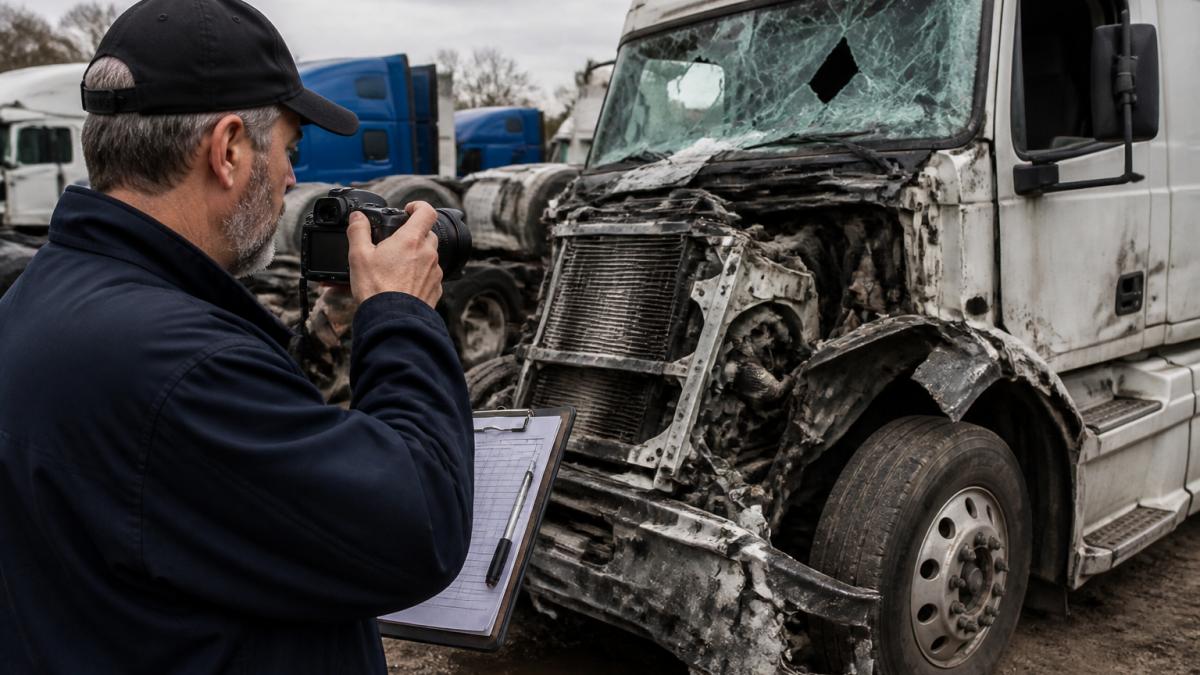
Causation requires expert testimony connecting the breach directly to the accident. The accident reconstructionist demonstrates that excessive speed prevented the driver from stopping in time. The maintenance expert shows that brake failure resulted from skipped inspections. The medical expert connects injuries to the impact forces documented by reconstruction analysis.
Damages are quantified through medical experts calculating treatment costs, lost wages, and diminished earning capacity. Life care planners project future medical needs for catastrophic injuries. Economic experts calculate present-value damages accounting for inflation and investment returns.
Expert testimony transforms abstract legal concepts into concrete evidence. Juries understand negligence when an expert explains, “The driver was traveling 15 miles per hour over the speed limit on a wet highway. At that speed, the truck required an additional 240 feet to stop compared to the posted speed limit. The accident occurred 180 feet after the driver applied brakes, meaning the driver could not have avoided this collision regardless of reaction time.”
Defense attorneys will aggressively challenge expert testimony through cross-examination. Experts must be able to defend their methodology, explain their assumptions, and acknowledge limitations in their analysis. Weak expert testimony can be more harmful than no testimony, juries distrust experts who appear evasive or overconfident.
Daubert Standards and Expert Admissibility
The Daubert standard, established by the Supreme Court, sets criteria for admitting expert testimony in federal court and most state courts. Judges act as gatekeepers, excluding testimony that fails to meet Daubert requirements before jurors ever hear it.
Daubert requires that expert testimony be based on reliable methodology, be relevant to the case, and be presented by a qualified expert. The test examines whether the methodology can be tested, whether it has been subject to peer review, whether there is a known error rate, and whether the scientific community generally accepts it.
Experts must explain their methodology clearly and justify why their approach is reliable. An accident reconstructionist must explain the physics principles underlying speed calculations. A medical expert must justify diagnostic conclusions based on established medical standards. An ELD data analyst must explain how electronic records are generated and why they are reliable.
Courts increasingly scrutinize novel or untested methodologies. An expert cannot simply assert an opinion, they must demonstrate that their methodology is accepted in their field and has been reliably applied in similar cases.
Cost of Expert Witnesses in Litigation
Expert witnesses represent a significant litigation expense. Accident reconstructionists, medical experts, and engineers typically charge hourly rates for case review, analysis, report preparation, and testimony. Rates vary based on expertise level, geographic location, and case complexity.
Catastrophic injury cases involving commercial trucks, where expert testimony on liability, medical damages, and vehicle engineering is essential to establishing substantial damages. Cases involving FMCSA violations or mechanical defects particularly benefit from expert analysis.
Challenging Expert Testimony and Cross-Examination
Defense attorneys use cross-examination to undermine expert credibility and raise doubt about opinions. Effective cross-examination identifies inconsistencies, challenges methodology, and highlights limitations in analysis.
Frequently Asked Questions
Why are expert witnesses necessary in truck accident cases?
Expert witnesses establish causation, quantify damages, and explain technical evidence that a jury cannot understand from lay testimony alone. In truck accidents involving catastrophic injuries, commercial motor vehicle mechanics, or federal motor carrier safety regulations, expert testimony often determines whether liability is proven and how much compensation is awarded. They translate complex forensic analysis and telematics data into clear, credible evidence.
What types of expert witnesses are used in tractor-trailer accident litigation?
Common expert witnesses include accident reconstructionists who analyze crash mechanics, biomechanical engineers who document injury causation, medical doctors who assess damages and prognosis, commercial vehicle engineers who evaluate maintenance and design defects, and trucking safety specialists who testify about FMCSA regulations and standard of care. Each type addresses a specific element of liability or damages needed to build your case.
How much does it cost to hire expert witnesses in a truck accident case?
Expert witness costs vary significantly based on the specialist’s credentials, the complexity of the case, and the time required for analysis and testimony. Accident reconstructionists, medical experts, and engineers typically charge hourly rates ranging from $200 to $500 per hour or flat fees for specific services. At Merritt & Merritt, we evaluate which experts are essential to your case and discuss costs during your free consultation. Many cases justify the investment because strong expert testimony increases settlement value and trial success.
Can expert witness testimony be challenged in court?
Yes. The defense can challenge admissibility under the Daubert standard, which requires experts to demonstrate that their methodology is reliable, their qualifications are solid, and their conclusions are relevant to the case. During cross-examination, opposing counsel may question the expert’s bias, methodology, or interpretation of data. A well-qualified expert with sound methodology and clear testimony withstands challenge. Our trial team prepares experts thoroughly to defend their findings and maintain credibility under pressure.
Our Locations

Atlanta/Decatur
1 West Court Square
Suite 750
Decatur, GA 30030

Savannah
100 Bull Street
Suite 200
Savannah, GA 31401

Statesboro
15 West Main Street
Statesboro, GA 30458

Houston
1415 Louisiana Street,
Suite 1800,
Houston, TX 77002

Jacksonville
841 Prudential Drive
12th Floor
Jacksonville, FL 32207

Contact Us
© Copyright 2026 Merritt & Merritt Law Firm. All rights reserved.