
call us 24/7 1-800-738-WE-WIN
call us 24/7 1-800-738-WE-WIN
Serving All of Georgia, Florida, & Texas
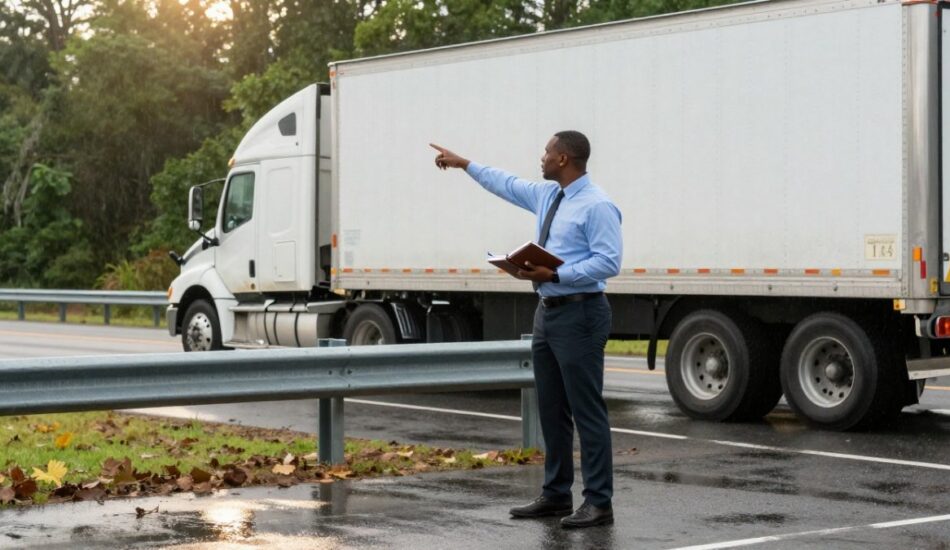
How to Determine Who Is Liable in a Trucking Company Accident
Last Updated: November 17, 2026
Quick Summary
Liability in a trucking company accident can attach to several parties at once, including the truck driver, the trucking company, the carrier, cargo owners and loaders, the truck owner or lessor, and maintenance providers or parts makers. Under vicarious liability and respondeat superior, an employer answers for a driver’s negligence during the job, and federal safety rules make the carrier responsible for vehicle maintenance and driver oversight.
- Injuries in large-truck crashes rose 5% in 2024, reaching 161,201, per the National Safety Council.
- Carriers sometimes label drivers as contractors to dodge responsibility, but courts look at the real employment relationship.
- Black box data can be overwritten and logs altered, so act early to preserve truck accident evidence.
- A Federal Motor Carrier Safety Administration violation, such as an hours-of-service breach, can support a negligence claim on its own.
- There were 13.65 fatal large-truck crashes per million people in 2019, per FMCSA data reported by CRC Group.
Table of Contents
- Who Can Be Sued After a Truck Accident
- Truck Accident Evidence That Establishes Liability
- Semi-Truck Accident Settlement and the Truck Accident Settlement Timeline
- Frequently Asked Questions
Who Can Be Sued After a Truck Accident
The exact phrase “who is liable in a trucking company accident” hides a bigger question: who can be sued. In a trucking company accident, liability often reaches past the driver to the carrier, cargo loaders, owners, and maintenance providers. This guide from Merritt & Merritt Law Firm explains each party. (Source: National Safety Council Injury Facts)
Injuries in large-truck crashes rose 5% in 2024, reaching 161,201, according to the National Safety Council Injury Facts. More injuries mean more claims, and more claims mean insurers fight harder over who pays.
Here is the short answer. Liability in a trucking company accident is legal responsibility for the crash and the resulting damages. It can attach to several parties at once.
- The truck driver. Driver error, fatigue, distraction, or impairment creates personal liability.
- The trucking company. Under vicarious liability and respondeat superior, an employer answers for a driver’s negligence during the job.
- The carrier. Federal safety rules make the carrier responsible for vehicle maintenance and driver oversight.
- Cargo owners and loaders. Improper cargo securement can shift weight and cause a crash.
- The truck owner or lessor. Leasing arrangements can split responsibility.
- Maintenance providers and parts makers. Poor repairs or defective truck parts point to third-party vendors and manufacturers.
Employee or independent contractor status matters here. Carriers sometimes label drivers as contractors to dodge responsibility. Courts look at the real employment relationship, not the label.
If you were hurt, our guide on how to hold trucking companies accountable walks through evidence and legal strategy. For the fault rules that apply in a Texas case, see how fault is determined in a Texas truck accident case.
Liability in a trucking company accident can attach to several parties at once, and each one may be sued.
| Party | Basis for liability |
|---|---|
| Truck driver | Driver error, fatigue, distraction, or impairment |
| Trucking company | Vicarious liability and respondeat superior for on-the-job negligence |
| Carrier | Federal safety rules on vehicle maintenance and driver oversight |
| Cargo owners and loaders | Improper cargo securement that shifts weight and causes a crash |
| Truck owner or lessor | Leasing arrangements can split responsibility |
| Maintenance providers and parts makers | Poor repairs or defective truck parts |
Truck Accident Evidence That Establishes Liability
Truck accident evidence decides which parties end up on the hook. It also disappears fast. Black box data can be overwritten, and logs can be altered, so act early. (Source: Federal Motor Carrier Safety Administration)
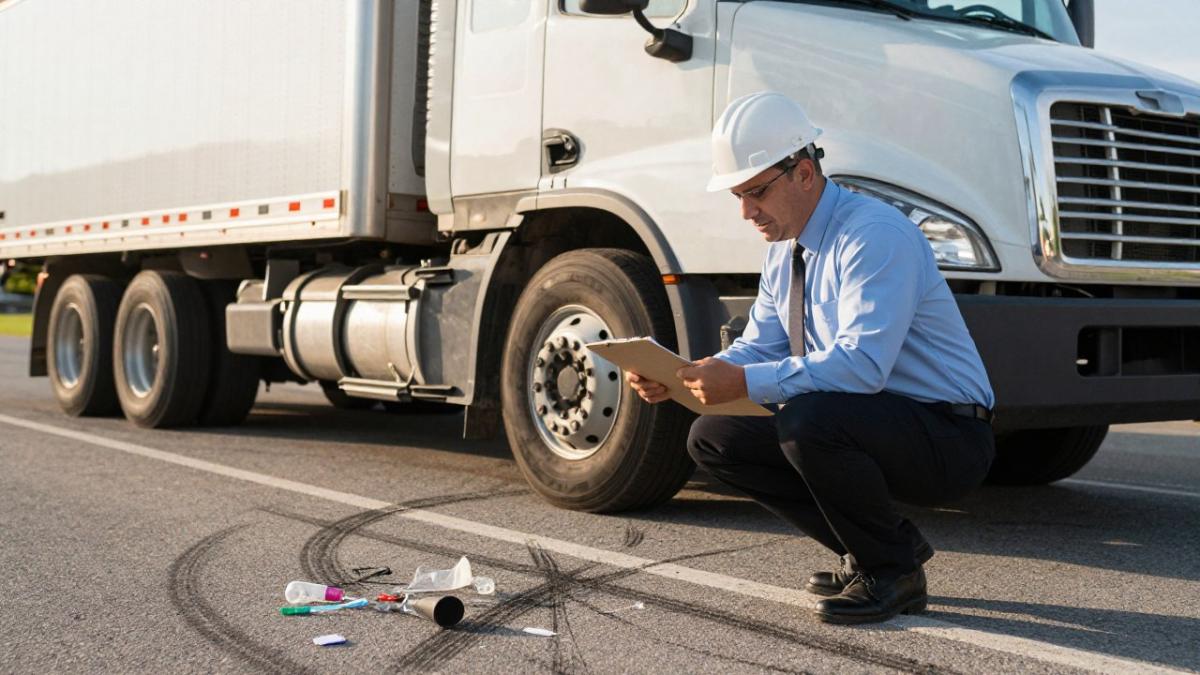
The evidence that matters most:
- The truck’s electronic logging device and black box data
- Driver hours-of-service records
- Maintenance and inspection files
- Cargo securement records
- Dashcam and nearby surveillance video
- Witness statements and the police report
Federal regulations tie directly to this proof. A Federal Motor Carrier Safety Administration violation, such as an hours-of-service breach, can support a negligence claim on its own.
Watch out: if the carrier destroys or loses black box data, your claim can weaken. Our page on your rights when a truck black box is destroyed explains spoliation and what to do. For the full evidence timeline, see what to expect during a truck accident investigation.
Semi-Truck Accident Settlement and the Truck Accident Settlement Timeline
A semi-truck accident settlement is the money a victim recovers for injuries, lost wages, and pain and suffering. Most cases settle, but the timeline varies.
There were 13.65 fatal large-truck crashes per million people in 2019, per FMCSA data reported by CRC Group. Fatal cases take longer and draw heavier scrutiny.
Timelines vary widely, and there is no fixed schedule for truck accident claims. Our commercial truck accident compensation guide explains how to calculate compensation, understand settlement timelines, and negotiate fairly. Complex cases with disputed fault or catastrophic injuries often take longer. Comparative fault rules can reduce your recovery if you share blame, so the facts matter. Sorting out which parties share fault can be complex, especially when a commercial carrier and its insurer are pushing back.
You pay only if we win.
Trucking companies and their insurers move fast to control the story after a crash. You need someone moving faster. Merritt & Merritt Law Firm brings over 45 years of trial experience, 24-hour service, and a contingency fee, so you owe nothing unless we win. Get started with Merritt & Merritt Law Firm and get a free case evaluation today.
Frequently Asked Questions
Who is liable in a truck accident: the driver or the trucking company?
Often both. A truck driver can be personally liable for negligent driving, while the trucking company may be liable under respondeat superior for a driver’s actions during employment. Carriers can also face direct claims for negligent hiring, training, or supervision. Because more than one party may share responsibility, a trucking company accident investigation usually looks at the driver, the carrier, cargo loaders, and maintenance providers before liability is assigned.
How long does it take to settle a trucking accident case?
There is no fixed timeline. The truck accident settlement timeline depends on how quickly evidence is preserved, whether liability is disputed, and how serious the injuries are. Cases involving clear liability and completed medical treatment may resolve faster, while disputes over fault, comparative fault rules, or multiple defendants can extend the process. Your attorney can give you a realistic estimate after reviewing the crash facts and insurance coverage involved.
What evidence helps determine who is responsible for a truck accident?
Key truck accident evidence includes the police crash report, driver logs and hours-of-service records, the truck’s electronic data and maintenance history, dashcam or nearby surveillance footage, cargo securement records, and employment or contractor agreements. Preserving this evidence early matters because some records are retained for limited periods. An attorney can send spoliation letters to the carrier and other parties to prevent destruction of evidence while the liability investigation proceeds.

Our Locations

Atlanta/Decatur
1 West Court Square
Suite 750
Decatur, GA 30030

Savannah
100 Bull Street
Suite 200
Savannah, GA 31401

Statesboro
15 West Main Street
Statesboro, GA 30458
Houston
1415 Louisiana Street,
Suite 1800,
Houston, TX 77002

Jacksonville
841 Prudential Drive
12th Floor
Jacksonville, FL 32207

Contact Us
© Copyright 2026 Merritt & Merritt Law Firm. All rights reserved.