
call us 24/7 1-800-738-WE-WIN
call us 24/7 1-800-738-WE-WIN
Serving All of Georgia, Florida, & Texas
How to Hold Trucking Companies Accountable: A Legal Guide

Table of Contents
- Understanding Trucking Company Liability and Your Rights
- Immediate Steps: Evidence Collection After a Commercial Vehicle Crash
- Key Regulatory Framework: FMCSA Regulations and Compliance
- Identifying Responsible Parties: Independent Contractor vs. Employee Status
- Building Your Case: What a Truck Accident Lawyer Investigates
- Civil Litigation and Damages: How to Hold Trucking Companies Accountable in Court
- Common Mistakes to Avoid When Pursuing Accountability
- Conclusion: Taking Action After a Trucking Accident
Last Updated: August 1, 2026
When you’re injured in a trucking accident, holding the trucking company accountable requires understanding negligence law, federal regulations, and evidence preservation. At Merritt & Merritt Law Firm, we’ve spent over 45 years investigating these cases and holding liable parties responsible. This guide walks you through the legal and practical steps required to build a strong accountability case, from evidence preservation to courtroom strategy.
Call the Merritt & Merritt Law Firm today at 404-975-1775.
Commercial vehicles weigh 80,000 pounds or more, and collisions involving them generate catastrophic injuries far exceeding standard vehicle accidents. Many trucking companies operate with minimal oversight, hire unqualified drivers, ignore maintenance schedules, and push drivers to violate federal hours of service rules. Holding them accountable requires knowing where to look for evidence, which regulations matter most, and how to navigate civil litigation.
Understanding Trucking Company Liability and Your Rights
Trucking company liability doesn’t rest on the truck driver alone. The company itself bears legal responsibility through two mechanisms: vicarious liability or direct negligence.
Vicarious liability means the trucking company is responsible for the negligent actions of its employees. If a driver employed by the company violates traffic laws, drives fatigued, or operates an unsafe vehicle, the company is liable.
Direct negligence means the company itself failed to meet its duty of care. This includes negligent hiring (bringing on an unqualified driver), negligent retention (keeping a driver with a history of violations), negligent training (failing to provide adequate safety instruction), and negligent maintenance (allowing vehicles to operate in unsafe condition).
According to the Federal Motor Carrier Safety Administration (FMCSA), trucking companies must maintain driver qualification files, conduct background checks, verify driving records, and enforce compliance with hours of service regulations. When a company skips these steps or falsifies records, you have direct negligence claims.
Vicarious Liability and Negligent Hiring
Vicarious liability applies automatically once you prove the driver was negligent and acting within the scope of employment. Negligent hiring requires deeper investigation. Many trucking companies fail to conduct adequate background checks or ignore red flags in a driver’s history.
To prove negligent hiring, you need access to the driver’s qualification file (DQF), which the FMCSA requires all trucking companies to maintain. This file should contain:
- A completed FMCSA Form MCSA-5876 (Application for Employment)
- A three-year driving record from the state
- A ten-year employment history
- Medical certification
- Documentation of any prior violations or accidents
If the company cannot produce a complete DQF, or if the file shows the company hired a driver despite obvious warning signs, you have a strong negligent hiring claim.
Negligent Retention and Training Failures
Trucking companies must monitor ongoing driver performance and remove drivers who become unsafe. Negligent retention occurs when a company keeps an employee who has developed a pattern of safety violations, failed drug tests, or caused multiple accidents.
The FMCSA requires trucking companies to provide documented safety training covering hazardous materials, defensive driving, vehicle inspection, and hours of service compliance. If your crash involved a driver who lacked proper training in a critical area, the company’s training negligence is directly relevant.
Immediate Steps: Evidence Collection After a Commercial Vehicle Crash
The first 48 hours after a trucking accident are critical. Evidence disappears, memories fade, and trucking companies move quickly to limit liability.
Preserving Physical and Digital Evidence
At the crash scene, photograph everything: vehicle damage, road conditions, weather, traffic signals, skid marks, and debris patterns. Request the police report immediately.
Request the truck’s electronic data. Modern commercial vehicles contain electronic logging devices that capture speed, braking, acceleration, and hours of service data. This telematics data is often the most damaging evidence against the trucking company because it’s objective and difficult to dispute.
Send a written preservation letter to the trucking company within 48 hours demanding that the vehicle, cargo, and all electronic records be preserved pending litigation. This letter creates a legal duty to preserve evidence. If the company destroys or alters evidence after receiving the letter, courts may impose sanctions or allow a “spoliation inference” (allowing a jury to assume the destroyed evidence was harmful to the company’s case).
(/blog/truck-accident-lawyer-near-me/) Investigates]
Issuing a Spoliation Letter
A spoliation letter is a formal written demand that the trucking company preserve all evidence related to the crash. Send this letter via certified mail within 48 hours of the accident. The letter should identify:
- The specific vehicle (VIN, license plate, company)
- The date, time, and location of the crash
- All evidence categories: the vehicle itself, electronic logging devices, maintenance records, driver logs, dispatch records, communications, and personnel files
- A statement that failure to preserve evidence may result in sanctions or adverse inferences
This letter is essential. If the company later destroys or alters evidence, you can argue to a jury that the company did so intentionally to hide guilt.
Key Regulatory Framework: FMCSA Regulations and Compliance
The Federal Motor Carrier Safety Administration (FMCSA) sets federal safety standards for commercial motor carriers. Understanding these regulations is essential because violations often prove negligence directly.
Hours of Service Violations and Driver Fatigue
The FMCSA limits how long drivers can work without rest:
- Maximum 11 hours of driving per 14-hour work shift
- Minimum 10 hours of off-duty time between shifts
- Maximum 60 hours of work in seven consecutive days (or 70 hours in eight consecutive days)
Driver fatigue is one of the leading causes of trucking accidents. If the driver’s logbook or electronic logging device shows the driver exceeded hours of service limits before hitting you, the company is liable for negligence. Request the driver’s logbook, the vehicle’s ELD data, and any dispatch communications. Discrepancies between logbook entries and ELD data often reveal the company’s negligence.
CSA Scores and Safety Audits
The FMCSA maintains Carrier Safety Audit (CSA) scores for every trucking company. These scores measure safety performance across categories including unsafe driving, hours of service compliance, vehicle maintenance, and hazardous materials handling. A high CSA score indicates a pattern of safety violations.
You can request a company’s CSA score through the FMCSA’s website. A company with a documented history of safety violations is more likely to have caused your crash through systemic negligence.
Identifying Responsible Parties: Independent Contractor vs. Employee Status
Not all drivers are employees. Some trucking companies hire independent contractors, which creates a legal shield against vicarious liability. However, courts apply strict tests to determine status.
The key question: Does the company control how the driver works? If the company controls dispatch, routes, speed, hours, vehicle maintenance, or safety decisions, the driver is likely an employee despite what a contract says. Even if a driver is an independent contractor, the company may still be liable under the doctrine of non-delegable duty.
Building Your Case: What a Truck Accident Lawyer Investigates
Holding trucking companies accountable requires a systematic investigation that goes far beyond the police report.
Telematics, Black Box Data, and Electronic Logging Devices
Modern commercial vehicles contain electronic logging devices (ELDs) that record driving hours, location, and vehicle status in real time. Telematics systems record speed, acceleration, braking, engine RPM, and GPS location tracking. Black box recorders capture the final 30-60 seconds before a crash, including speed, braking pressure, steering angle, and throttle position. This data often proves the driver was speeding, braking improperly, or distracted. Request all telematics data, ELD records, and black box downloads immediately after the crash and again during formal discovery.
Driver Qualification Files and Maintenance Records
The driver qualification file (DQF) is the company’s personnel record for the driver. A complete DQF often reveals negligent hiring. Maintenance records show whether the company properly serviced the vehicle. Request pre-trip inspection reports, maintenance and repair logs, recall notices and whether repairs were completed, and inspection reports from DOT or FMCSA audits. If the truck had known safety defects that the company failed to repair, the company is negligent.
Civil Litigation and Damages: How to Hold Trucking Companies Accountable in Court
Once you’ve gathered evidence, civil litigation is the mechanism for holding trucking companies accountable and recovering damages for your injuries.
Compensatory and Punitive Damages
Compensatory damages reimburse your actual losses: medical bills, lost wages, property damage, and pain and suffering.
Punitive damages punish the defendant for egregious conduct and deter future violations. Punitive damages are available when the company’s conduct was reckless or showed conscious indifference to your safety. Examples include knowingly hiring a driver with multiple DUI convictions, ignoring FMCSA safety violations and citations, falsifying maintenance records, pressuring drivers to violate hours of service rules, or operating a vehicle with known safety defects.
The Discovery Process and Settlement Negotiation
Discovery is the legal process where both sides exchange evidence. You have the right to request documents, written interrogatories, depositions, and expert reports. Discovery often reveals damaging evidence the company hoped to hide. Internal emails may show the company ignored safety warnings. Deposition testimony may contradict the company’s official story. Many cases settle during or after discovery, once the company realizes the evidence is overwhelming. If the company refuses to settle, the case proceeds to trial.
Common Mistakes to Avoid When Pursuing Accountability
Talking to insurance adjusters without an attorney. Insurance companies are trained to minimize liability. Never give a recorded statement without legal representation.
Failing to preserve evidence immediately. If you delay sending a spoliation letter or fail to photograph the scene, critical evidence may disappear. Act within 48 hours of the crash.
Accepting an early settlement offer. Insurance companies often make low initial offers. Don’t settle until you’ve completed medical treatment and understand your long-term prognosis.
Posting about the crash on social media. Insurance companies monitor social media for posts that contradict injury claims.
Assuming the police report is accurate. Police officers don’t always investigate thoroughly or understand commercial vehicle regulations. Independent investigation is essential.
Failing to hire an expert. Accident reconstruction experts, vehicle inspection experts, and human factors specialists can provide testimony that proves negligence.
Holding trucking companies accountable requires understanding the intersection of negligence law, federal transportation regulations, and evidence preservation. Merritt & Merritt Law Firm has investigated hundreds of trucking accidents over 45 years of trial experience. We know which evidence matters, how to pressure companies through discovery, and how to present cases to juries in a way that secures meaningful compensation. If you’ve been injured in a trucking accident, contact us for a free consultation. We investigate your claim thoroughly, hold liable parties responsible, and work on contingency, you pay only if we win. Federal Motor Carrier Safety Administration regulations govern every aspect of trucking company operations, and violations of these standards are central to proving accountability in court.
Frequently Asked Questions
When can a trucking company be held liable for an accident?
A trucking company can be held liable through vicarious liability when their employee driver causes an accident, or through direct negligence such as negligent hiring, negligent retention, or failure to provide adequate safety training. Companies may also be liable for violations of FMCSA regulations, driver fatigue due to hours of service violations, inadequate vehicle maintenance, or failing to maintain proper driver qualification files. An experienced truck accident lawyer can evaluate the specific circumstances of your case to determine which liability theories apply.
What evidence is most important in holding trucking companies accountable?
Critical evidence includes electronic logging device data and telematics or black box data from the commercial vehicle, which show speed, braking, and driver behavior. Driver logs, maintenance records, and the driver's qualification file demonstrate compliance or violations. CSA scores reveal the company's safety history. Additionally, preserve physical evidence from the accident scene, obtain witness statements, and issue a spoliation letter to prevent destruction of evidence. Expert accident reconstruction may also be necessary to establish fault and causation in catastrophic injury cases.
What types of damages can I recover in a lawsuit against a trucking company?
You may pursue compensatory damages for medical bills, lost wages, pain and suffering, and long-term care costs in catastrophic injury or wrongful death cases. Punitive damages may also be available if the company's conduct was grossly negligent or reckless—for example, knowingly hiring an unqualified driver or ignoring safety violations. The amount depends on the severity of your injuries, your economic losses, and evidence of the company's negligence or misconduct. A truck accident lawyer can help calculate realistic damages based on your specific circumstances.
Should I hire a truck accident lawyer to hold a trucking company accountable?
Yes. Trucking companies have experienced legal teams and insurance companies defending them. A truck accident lawyer understands FMCSA regulations, knows how to obtain telematics and black box data through discovery, can conduct regulatory compliance audits, and understands the civil litigation process. They also handle the complexity of identifying whether the driver is an employee or independent contractor—which affects liability. Many firms, including Merritt & Merritt Law Firm, work on contingency, meaning you pay only if they win your case.
Our Locations

Atlanta/Decatur
1 West Court Square
Suite 750
Decatur, GA 30030

Savannah
100 Bull Street
Suite 200
Savannah, GA 31401
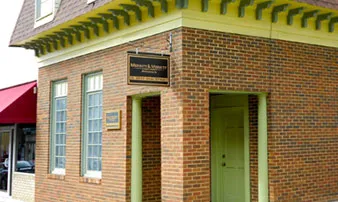
Statesboro
15 West Main Street
Statesboro, GA 30458
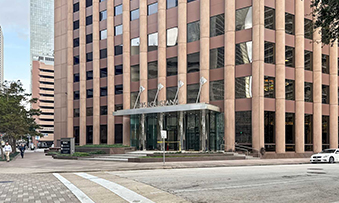
Houston
1415 Louisiana Street,
Suite 1800,
Houston, TX 77002

Jacksonville
841 Prudential Drive
12th Floor
Jacksonville, FL 32207

Contact Us
© Copyright 2026 Merritt & Merritt Law Firm. All rights reserved.