
call us 24/7 1-800-738-WE-WIN
call us 24/7 1-800-738-WE-WIN
Serving All of Georgia, Florida, & Texas
How to Choose an Injury Lawyer: 7 Essential Criteria

Table of Contents
- How to Choose an Injury Lawyer: A Framework for Success
- Assess Trial Experience and Litigation Background
- Questions to Ask a Personal Injury Lawyer Before Hiring
- Understanding Personal Injury Lawyer Contingency Fee Structures
- Evaluate Communication Style and Accessibility
- Research Attorney Reputation, Reviews, and Track Record
- How Long Do Personal Injury Cases Take and What’s the Timeline
- Signs of a Bad Personal Injury Lawyer to Avoid
Last Updated: July 12, 2026
Choosing the right personal injury lawyer directly impacts your settlement amount, case timeline, and overall experience. This guide walks you through essential criteria that separate exceptional representation from mediocre counsel.
Call the Merritt & Merritt Law Firm today at 404-975-1775.
Why This Decision Matters
Your personal injury lawyer becomes your advocate during a vulnerable period. A skilled attorney investigates thoroughly, negotiates aggressively with insurance adjusters, and isn’t afraid to take your case to trial. The wrong attorney may pressure you to accept a lowball settlement or fail to uncover critical evidence.
Your decision also affects your peace of mind. A lawyer who communicates regularly, explains your options clearly, and provides realistic expectations reduces stress during an already difficult situation.
Assess Trial Experience and Litigation Background
The most critical factor is actual courtroom experience. Many attorneys who handle personal injury cases have never tried cases in front of a jury. Trial experience matters because insurance companies price settlement offers based on which attorneys have won jury verdicts.
Ask directly: “How many personal injury cases have you taken to trial in the past five years?” A vague response signals limited courtroom experience. Attorneys proud of their trial record will cite specific numbers.
Board Certification and Professional Credentials
Board certification in personal injury law demonstrates rigorous standards beyond basic licensing. The American Board of Trial Advocates (ABOTA) and National Board of Trial Advocacy certify trial specialists based on documented trial experience, peer review, and continuing education.
Verify that your prospective attorney maintains good standing with the state bar association and has no disciplinary history. Check your state’s bar website for public disciplinary records.
Experience with Specific Injury Types
Personal injury law covers motor vehicle accidents, workplace injuries, medical malpractice, product liability, and slip-and-fall claims. Each involves different legal theories and evidence standards.
Request examples of cases similar to yours that the attorney has handled. What were the outcomes? How long did they take? Specific examples reveal genuine expertise versus generalities.
Questions to Ask a Personal Injury Lawyer Before Hiring
Prepare a list of questions during your consultation. The quality of their responses reveals how they’ll communicate throughout your case.
Consultation Questions About Case Strategy
Ask how the attorney would approach your specific case. A strong lawyer asks detailed questions first, then explains their strategy. If they jump immediately into talking about themselves without understanding your situation, that’s a bad sign.
Ask: “What is your assessment of my case’s strength?” A good attorney gives honest evaluation, explaining both strengths and potential challenges. Follow up with: “What would be your strategy for settlement negotiations, and at what point would you recommend we go to trial?”
Ask about their use of expert witnesses and accident reconstruction specialists. Personal injury cases often require expert testimony to establish liability or quantify damages.
Questions About Track Record and Past Results
Request specific information about past results. Ask: “Can you share examples of cases similar to mine and the outcomes you achieved?” They should provide concrete numbers, not vague assurances.
Pay attention to outcome ranges. If an attorney claims every case results in six-figure settlements, that’s unrealistic. Credible attorneys acknowledge that outcomes vary based on liability strength and injury severity.
Ask whether they have references from past clients willing to discuss their experience. Request permission to contact at least two or three former clients.
Understanding Personal Injury Lawyer Contingency Fee Structures
Under a contingency fee agreement, your attorney advances all case costs and receives payment only if you recover compensation. The attorney’s fee is typically 25% to 40% of your settlement or jury award, depending on complexity and whether it goes to trial.
Here’s the critical distinction: the attorney’s percentage fee is separate from case expenses. If you settle for $100,000 with a 33% fee, you receive $67,000 after the attorney’s fee. You’re also responsible for reimbursing case expenses, perhaps $5,000 in expert fees, which comes from your remaining amount.
Some attorneys charge a lower percentage if the case settles before trial (25%) and a higher percentage if it goes to trial (33-40%).
What Questions to Ask About Legal Fees
Ask directly: “What is your contingency fee percentage, and does it differ if my case settles versus goes to trial?” Get the answer in writing.
Clarify: “Are court costs and expert fees deducted before or after your contingency percentage is calculated?” This distinction matters significantly.
Ask about additional costs like medical record retrieval, deposition transcripts, investigation fees, and expert witness fees. Confirm that you won’t be charged anything if your case is unsuccessful.
Evaluate Communication Style and Accessibility
How an attorney communicates matters as much as their legal skills. During your consultation, observe whether they listen carefully, take notes, and explain legal concepts in plain language.
Ask directly: “How often will you update me on my case’s progress?” Confirm how you’ll communicate, can you call directly, or do you leave messages with a paralegal? Will they respond to emails?
Research Attorney Reputation, Reviews, and Track Record
Research the attorney’s reputation before committing. Start with Google reviews and legal directories like Avvo or Super Lawyers. Read both positive and negative reviews, paying attention to patterns.
Check the state bar association website for disciplinary history. Most states maintain public records of attorney discipline. An attorney with no disciplinary history is a good sign.
Bar Association Standing and Client Testimonials
Verify that the attorney is in good standing with the bar association. Ask directly about their bar standing and whether they’ve faced disciplinary complaints. Defensiveness or refusal to discuss this is a red flag.
Client testimonials provide insight into the actual experience of working with an attorney. Look for specific details about communication, case outcomes, and professionalism. Ask your prospective attorney for client references you can contact directly.
How Long Do Personal Injury Cases Take and What’s the Timeline
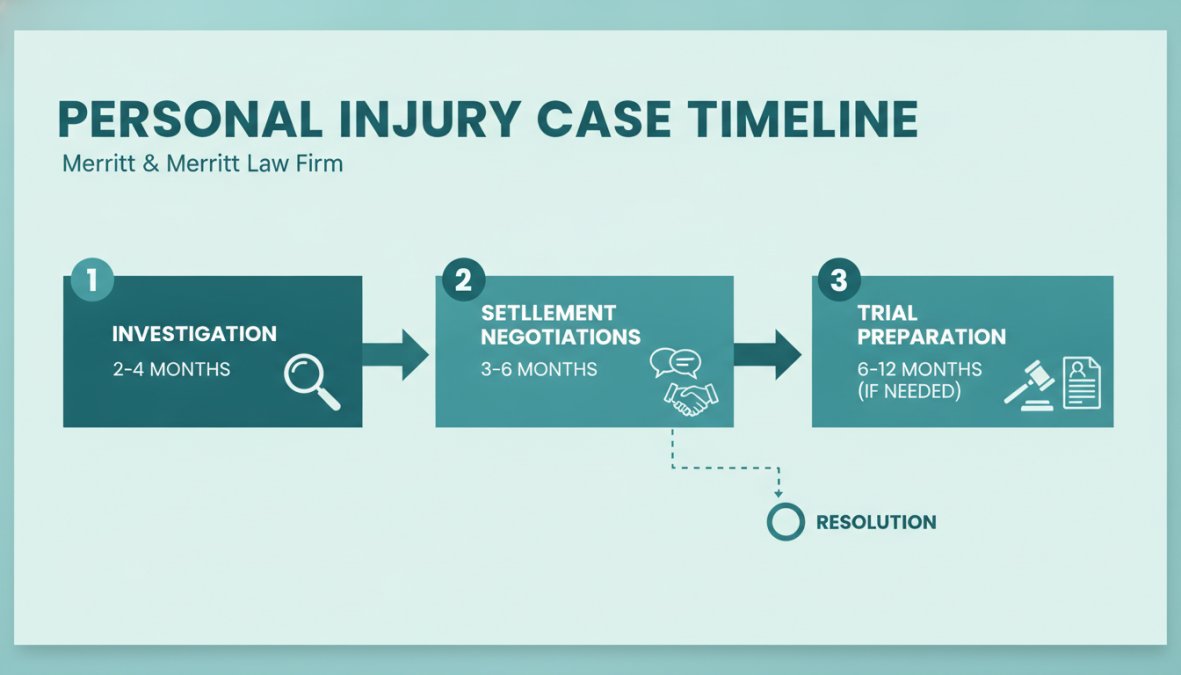
Case duration varies based on injury severity, liability clarity, and whether settlement succeeds or the case goes to trial. Simple cases with clear liability might resolve in 6-12 months. Complex cases typically take 18-36 months. Cases going to trial add another 6-12 months.
The timeline breaks into phases: initial investigation (2-4 months), settlement negotiations (3-6 months), and trial preparation if needed (6-12 months).
Ask your prospective attorney: “Based on my case type, what timeline should I expect?” Be wary of attorneys who promise quick resolution; complex cases rarely settle quickly, and rushing settlement often means accepting less compensation.
Signs of a Bad Personal Injury Lawyer to Avoid
A bad attorney often guarantees specific outcomes. No ethical attorney can promise a particular settlement amount or guarantee you’ll win at trial.
Pressure to settle quickly is another warning sign. Your attorney should discuss settlement offers and explain pros and cons, but the decision should be yours.
Red Flags in Communication and Professional Conduct
An attorney who’s difficult to reach or ignores your calls and emails is failing in their basic duty. You should be able to contact your legal team and receive responses within a reasonable timeframe.
Watch for attorneys who discourage questions or seem annoyed when you want clarification. Be cautious of attorneys who criticize opposing counsel excessively or make unprofessional comments about judges.
An attorney who fails to disclose conflicts of interest is engaging in unethical conduct. Ask directly whether they have any conflicts affecting your representation.
Switching Lawyers: When and How to Make a Change
Sometimes the attorney-client relationship doesn’t work. You might discover your attorney lacks needed experience, communicates poorly, or isn’t prioritizing your case.
First, document your concerns. Have a direct conversation with your current attorney about your concerns. If unresolved, you have the right to terminate the relationship.
When switching attorneys, understand that your new attorney needs time to get up to speed. Your current attorney must transfer your file, including all documents and correspondence. Timing matters, if your case is close to trial or settlement, switching might not be practical.
Warning Sign | What It Means | Action to Take |
|---|---|---|
Difficult to reach or slow responses | Attorney may be overbooked or disorganized | Request explicit communication schedule; consider switching if unmet |
Pressure to settle quickly | Attorney prioritizing their fee over your interests | Discuss your timeline; get second opinion if uncomfortable |
Vague about past results | Attorney may lack relevant experience | Ask for specific case examples; verify with references |
Guarantees specific outcomes | Unethical conduct; sets unrealistic expectations | Walk away immediately |
Discourages your questions | Attorney doesn’t respect your role in decisions | Find attorney who values your input |
Poor communication about strategy | You won’t understand your case or options | Request detailed strategy explanation; switch if unsatisfied |
Practical Consultation Checklist
Use this checklist during your initial consultation to ensure you ask all critical questions.
- Experience: Ask about trial experience in past five years and specific cases similar to yours
- Credentials: Verify board certification, bar standing, and disciplinary history
- Case Strategy: Request detailed explanation of how they’d approach your case
- Timeline: Get realistic estimate of how long your case might take
- Fees: Clarify contingency percentage and whether it differs for settlement vs. trial
- Expenses: Understand which case costs they’ll advance and which you might owe
- Communication: Confirm how often you’ll receive updates and how you’ll reach them
- References: Request contact information for past clients you can speak with
- Conflicts: Ask whether they have any conflicts of interest affecting your case
- Fee Agreement: Request written contingency agreement before signing anything
Selecting the right personal injury lawyer is one of the most important decisions you’ll make after an injury. The criteria covered here, trial experience, board certification, communication style, and reputation, distinguish attorneys who deliver genuine results from those who simply go through the motions. At Merritt & Merritt Law Firm, we understand this decision’s weight, which is why we emphasize our over 45 years of trial experience and commitment to clear communication. With our 24-hour availability and willingness to meet you in your home, office, or hospital, we ensure you receive support when you need it most. Our contingency fee structure means you pay only if we win. Schedule a free consultation with Merritt & Merritt Law Firm today and let our experienced team evaluate your case.
Frequently Asked Questions
What questions should I ask a personal injury lawyer during a consultation?
Ask about their trial experience, success rate with cases similar to yours, how they handle settlement negotiations, their communication frequency, and how contingency fees work. Inquire about their litigation strategy, whether they handle discovery and arbitration, and what damages they believe you can recover. Ask for references from past clients and clarify their approach to case evaluation and attorney-client privilege protections.
How do personal injury lawyer contingency fees work?
Under a contingency fee arrangement, your personal injury lawyer only gets paid if you win your case or reach a settlement. The attorney's fee is typically a percentage of the damages awarded or settlement amount you receive. Ask your lawyer to explain what costs are covered by the contingency agreement, what happens if you lose, and whether you're responsible for court costs, expert witness fees, or investigation expenses during the legal process.
How long do personal injury cases typically take to resolve?
Timeline varies significantly based on case complexity, liability disputes, and insurance adjuster responsiveness. Simple cases may settle in months, while litigation involving discovery, mediation, or trial preparation can take 1-3 years or longer. During your consultation, ask your chosen injury lawyer for a realistic timeline estimate specific to your case. They should explain statute of limitations deadlines and explain how settlement negotiations or arbitration might accelerate resolution.
What are signs of a bad personal injury lawyer I should avoid?
Red flags include poor communication, pressure to accept quick settlements, lack of trial experience, no clear case strategy, inability to explain legal fees transparently, and negative reviews regarding professional conduct. Avoid lawyers who guarantee specific verdicts, lack board certification or bar association standing, or show little interest in your case details. If a lawyer exhibits legal malpractice concerns or seems uninterested in thorough case investigation and due diligence, consider switching lawyers.
Our Locations

Atlanta/Decatur
1 West Court Square
Suite 750
Decatur, GA 30030

Savannah
100 Bull Street
Suite 200
Savannah, GA 31401

Statesboro
15 West Main Street
Statesboro, GA 30458

Houston
1415 Louisiana Street,
Suite 1800,
Houston, TX 77002

Jacksonville
841 Prudential Drive
12th Floor
Jacksonville, FL 32207

Contact Us
© Copyright 2026 Merritt & Merritt Law Firm. All rights reserved.