
call us 24/7 1-800-738-WE-WIN
call us 24/7 1-800-738-WE-WIN
Serving All of Georgia, Florida, & Texas
Commercial Truck Accident Compensation Guide
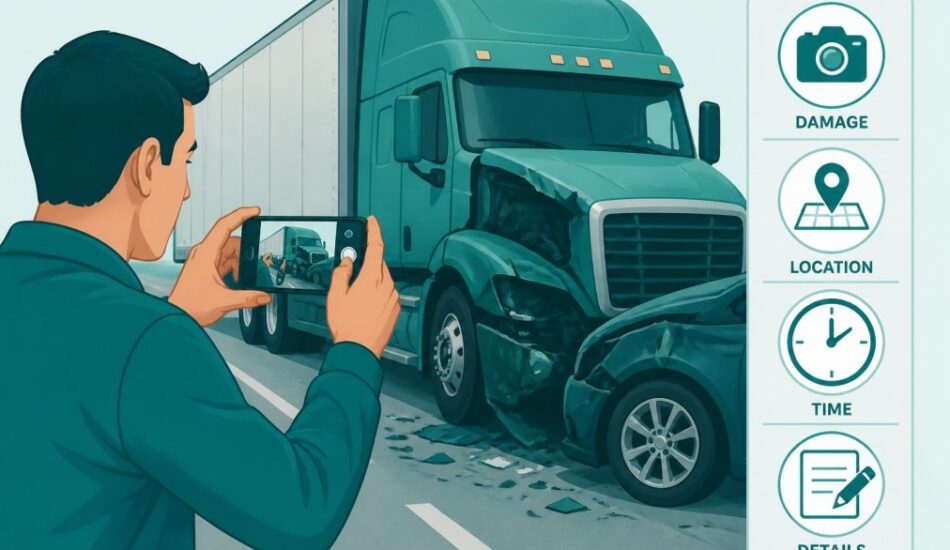
Table of Contents
- Understanding Commercial Truck Accident Compensation
- Types of Damages You Can Recover
- Average Truck Accident Settlement Amount by Injury Type
- Liability and Determining Fault in Commercial Vehicle Collisions
- Truck Accident Lawsuit Timeline: What to Expect
- How to Negotiate a Truck Accident Settlement
- Tax Implications of Your Settlement and Recovery
- Conclusion
Last Updated: August 3, 2026
Understanding Commercial Truck Accident Compensation
Commercial truck accidents differ fundamentally from standard vehicle collisions. Commercial vehicles weigh up to 80,000 pounds when fully loaded, creating catastrophic impact forces that passenger vehicles cannot match. Most accident victims don’t understand how their case will be valued or what they’re entitled to recover. Insurance adjusters exploit this knowledge gap, offering quick settlements that fall far short of actual damages. At Merritt & Merritt Law Firm, we’ve spent over 45 years holding liable parties accountable and ensuring our clients receive full compensation. This guide shows you exactly how truck accident settlements are calculated, what factors influence recovery, and how to avoid costly mistakes.
Call the Merritt & Merritt Law Firm today at 404-975-1775.
Why Truck Accidents Demand Different Legal Approaches
Truck accidents differ from typical personal injury cases because multiple parties can share responsibility, federal trucking regulations create additional liability pathways, and insurance policy limits often fail to cover actual damages. The trucking industry operates under strict Federal Motor Carrier Safety Administration (FMCSA) regulations that, when violated, establish negligence directly without requiring proof of careless driving.
A truck driver who violates hours-of-service regulations and causes an accident has already proven negligence through regulatory violation alone. Commercial truck accident claims often involve multiple defendants: the driver, the trucking company, the vehicle manufacturer, the cargo loader, or the maintenance contractor. Each party carries different insurance policies with different limits. Understanding this multi-party liability structure is essential because it determines how much total compensation is available to you.
Key Players in Your Compensation Claim
The at-fault driver bears personal liability for negligent actions, but drivers are typically judgment-proof. The real money comes from the trucking company’s insurance policy.
The trucking company faces vicarious liability for driver negligence and direct liability if they hired an unqualified driver, failed to maintain the vehicle, pressured the driver to violate safety regulations, or failed to provide adequate training. Trucking company insurance policies typically carry much higher limits than personal auto policies.
The insurance adjuster represents the insurance company’s financial interests, not yours. Their job is to minimize what the company pays through recorded statements, medical record requests, and background investigations designed to find reasons to deny or reduce your claim.
Your personal injury attorney levels the playing field. An experienced attorney knows how to investigate FMCSA violations, obtain black box data, hire accident reconstruction experts, and negotiate aggressively with insurers.
Types of Damages You Can Recover
Truck accident damages fall into three broad categories: economic damages (quantifiable financial losses), non-economic damages (subjective but real harms), and punitive damages (awarded for gross negligence or intentional misconduct).
Economic Damages: Medical Bills, Lost Wages, and More
Economic damages represent actual financial losses directly resulting from the accident.
Medical expenses include all accident-related treatment: emergency room visits, hospitalization, surgery, physical therapy, prescription medications, and medical equipment. Critically, economic damages include not just past medical bills but also future medical expenses. If you’ll require ongoing treatment for the next 10 years, those future costs are part of your claim.
Lost wages cover income lost during recovery. If you earn $75,000 annually and miss 12 weeks of work, you’re entitled to $21,428 in lost wages. If your injuries permanently reduce earning capacity, you can no longer work in your previous field or must take a lower-paying job, you can recover the difference in lifetime earnings.
Property damage covers repair or replacement costs. In total-loss situations, you’re entitled to fair market value before the accident.
Other economic damages include transportation costs while your vehicle is repaired, increased insurance premiums, and cost of hiring help for household tasks you can no longer perform.
Non-Economic Damages: Pain and Suffering
Non-economic damages compensate you for subjective harms: physical pain, emotional distress, loss of enjoyment of life, scarring, disfigurement, and loss of consortium.
These damages are harder to prove because they’re subjective. Attorneys use several methods to quantify them: the multiplier method (multiply total economic damages by 2-5, depending on injury severity), the per diem method (assign a daily dollar amount for pain and suffering, multiply by recovery days), or jury verdict analysis (research comparable awards in your jurisdiction).
A catastrophic injury, spinal cord damage resulting in paralysis, traumatic brain injury, amputation, or severe burns, typically commands higher non-economic damage awards than a broken arm that fully heals.
Punitive Damages and Wrongful Death Claims
Punitive damages are awarded when the defendant’s conduct was grossly negligent, reckless, or intentional. They’re designed to punish the wrongdoer and deter similar conduct. Punitive damages are available when, for example, a trucking company knowingly hired a driver with DUI convictions, ignored repeated safety violations, or falsified maintenance records.
Wrongful death claims arise when a truck accident kills the victim. Surviving family members can recover: funeral and burial expenses, the deceased’s lost earning capacity, loss of companionship and consortium, and in some cases, punitive damages. Wrongful death settlements in catastrophic truck accidents frequently exceed $1 million.
Average Truck Accident Settlement Amount by Injury Type
Settlement amounts vary dramatically based on injury severity, liability clarity, insurance policy limits, and jurisdiction.
Minor injuries (soft tissue damage, minor fractures) with clear liability typically settle for $10,000 to $50,000. Moderate injuries (broken bones requiring surgery, significant soft tissue damage, temporary disability) typically settle for $50,000 to $250,000. Serious injuries (permanent partial disability, significant scarring, chronic pain, loss of limb function) typically settle for $250,000 to $1,000,000 or more. Catastrophic injuries (spinal cord damage, traumatic brain injury, permanent total disability) frequently settle for $1,000,000 to $5,000,000 or higher.
What Influences Your Settlement Range
Settlement value depends on six key factors: liability strength (how clear is defendant negligence?), injury severity (how serious are documented injuries?), medical evidence (do medical records support claimed injuries?), economic damages (what did the accident actually cost?), insurance limits (how much coverage is available?), and jurisdiction (what do juries in your area typically award?).
Factor | Impact on Settlement |
|---|---|
Clear liability (driver violation of FMCSA rules) | +30-50% |
Catastrophic injury vs. minor injury | +200-400% |
Strong medical documentation | +20-40% |
High insurance policy limits | Removes cap on recovery |
Comparative negligence (victim partially at fault) | -25-75% |
Jurisdiction known for high jury awards | +15-30% |
Liability and Determining Fault in Commercial Vehicle Collisions
Establishing liability in a truck accident requires proving that the defendant owed you a duty of care, breached that duty, and caused your injuries. In truck accidents, liability is often clearer than in passenger vehicle collisions because federal regulations create explicit duties.

Negligence and FMCSA Compliance Violations
A truck driver breaches their duty of care through negligence: speeding, drowsy driving, distracted driving, improper lane changes, or failure to maintain safe following distance. In commercial trucking, negligence is often established through FMCSA violations, which create a powerful legal presumption of negligence.
FMCSA regulations govern hours of service (drivers cannot operate for more than 11 hours without a 10-hour rest break), vehicle maintenance (trucks must be inspected and maintained to safe standards), driver qualifications, and cargo securement. When a driver violates these regulations and causes an accident, negligence is established directly.
Multi-Party Liability and Comparative Negligence
Commercial truck accidents frequently involve multiple liable parties: the driver, the trucking company, the cargo loader, the vehicle manufacturer, or the maintenance contractor.
Comparative negligence becomes relevant if you bear some responsibility for the accident. If you were speeding, didn’t maintain safe following distance, or failed to see the truck, you may be found partially at fault. In comparative negligence jurisdictions, your recovery is reduced by your percentage of fault. If you’re 20% at fault and total damages are $100,000, you recover $80,000. In pure comparative negligence states, you can recover even if you’re 99% at fault. In modified comparative negligence states, you can only recover if you’re less than 50% at fault.
Using the Black Box (EDR) and Accident Reconstruction
Modern commercial trucks are equipped with electronic data recorders (EDRs), commonly called “black boxes,” that continuously record vehicle data: speed, acceleration, brake application, steering input, and engine parameters. This data is invaluable in establishing liability because it provides objective evidence of what the truck was doing at impact.
If black box data shows the truck was traveling 65 mph in a 45 mph zone, that’s powerful evidence of negligence. If it shows the driver applied brakes only 0.2 seconds before impact, that establishes inattention. Critically, the trucking company controls access to black box data. An experienced attorney must immediately send a preservation notice demanding that the company preserve all black box data, vehicle maintenance records, driver logs, and other evidence.
Accident reconstruction experts analyze the accident scene, vehicle damage, skid marks, and other physical evidence to determine how the accident occurred and who was at fault. A qualified expert can often prove liability more convincingly than eyewitness testimony because their analysis is based on physics and objective evidence.
Truck Accident Lawsuit Timeline: What to Expect
Understanding the timeline from accident to settlement or verdict helps you manage expectations. Truck accident cases typically take longer than standard car accident cases because they’re more complex.
From Claim Filing to Settlement or Trial
The process begins when you report the claim to the insurance company. The insurance company assigns an adjuster who investigates the accident and reviews medical records. For straightforward cases with clear liability and minor injuries, settlement can occur within 30-60 days.
For cases with moderate injuries or liability questions, investigation typically lasts 60-120 days. The adjuster may request medical records, employment records, tax returns, and authorization to interview treating physicians. Do not sign authorizations without consulting an attorney.
After investigation, the insurance company makes an initial settlement offer, typically 30-50% below actual case value. Your attorney will respond with a demand letter and request a higher amount. Negotiation typically lasts 30-90 days.
If settlement cannot be reached, your attorney files a lawsuit. The litigation phase begins with discovery, where both sides exchange documents and information. This phase typically lasts 6-12 months. After discovery, there may be mediation, where a neutral third party facilitates settlement negotiations. If mediation fails, the case proceeds to trial, which typically occurs 12-24 months after the lawsuit is filed.
The entire process from accident to settlement or verdict typically takes 18-36 months for cases that proceed to trial. Cases that settle during negotiation or mediation typically resolve within 6-12 months.
Statute of Limitations for Your Personal Injury Claim
The statute of limitations is the deadline by which you must file a lawsuit. Missing this deadline means you lose your right to sue. The statute of limitations for personal injury claims varies by state, typically ranging from 2 to 4 years. Consult with an attorney in your specific jurisdiction to determine your deadline, but the general rule is: don’t wait.
How to Negotiate a Truck Accident Settlement
Settlement negotiation is where most truck accident cases are resolved. Understanding the negotiation process and having an experienced attorney representing you dramatically improves your outcome.
Steps to Take Immediately After a Commercial Vehicle Collision
The first hours after a truck accident are critical.
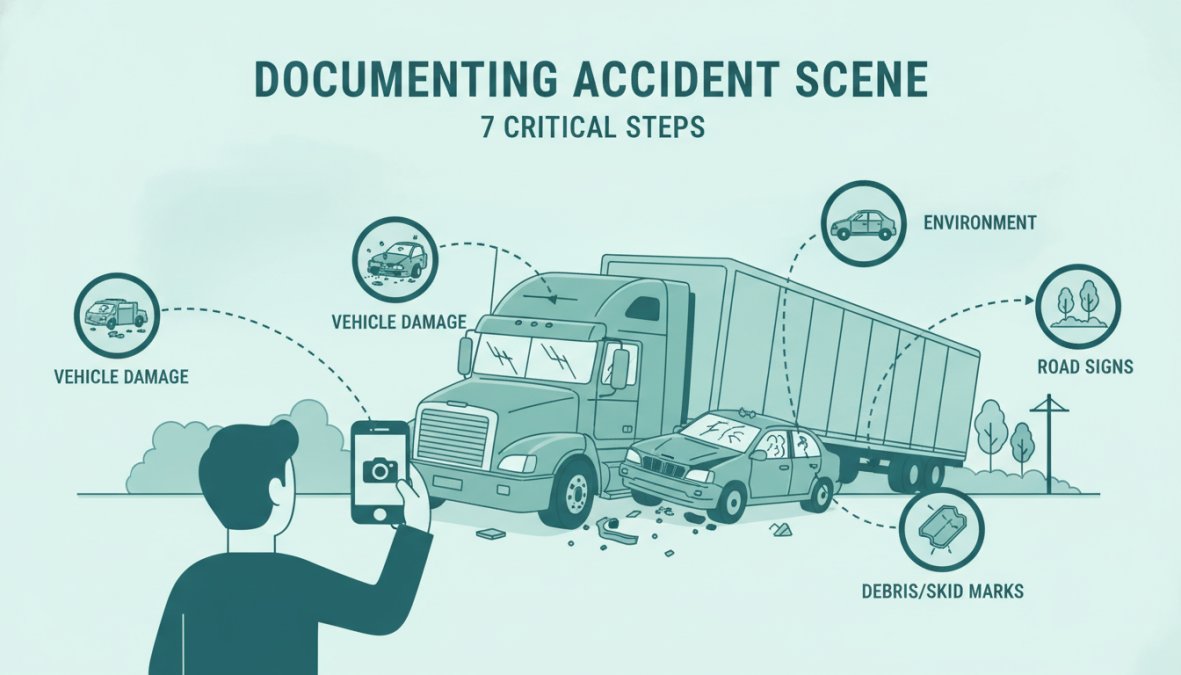
Call 911 and request emergency services if anyone is injured. Move to safety if possible and turn on hazard lights. Document the scene with photographs or video if you can do so safely. Capture vehicle positions, damage patterns, road conditions, weather, traffic signals, and visible skid marks.
Obtain witness information before witnesses leave the scene. Get names, phone numbers, and email addresses from anyone who saw the accident. Do not admit fault or apologize for the accident. Stick to factual statements.
Request a police report and get the report number. Seek medical attention even if you don’t feel injured. Some injuries don’t cause immediate symptoms. Notify your insurance company of the accident, but do not provide a recorded statement without consulting an attorney first.
Working With Insurance Adjusters and Settlement Negotiation Strategy
The insurance adjuster will contact you shortly after the accident. Their goal is to minimize what the company pays.
Do not provide a recorded statement without an attorney present. Recorded statements can be used to impeach your credibility later. Review any authorization for medical records carefully. Some authorizations grant access to all your medical records, including unrelated treatment. Request a limited authorization covering only accident-related treatment.
Do not accept early settlement offers without consulting an attorney. These offers are designed to resolve the case quickly before you fully understand your injuries. When your attorney makes a demand, the adjuster will likely counter with a lower offer. Negotiation typically involves multiple rounds of offers and counter-offers.
When to Accept an Offer and When to Pursue Litigation
Accept a settlement offer when: liability is unclear and the offer is reasonable given the uncertainty; your injuries are moderate and the offer covers all damages; the defendant’s insurance limits are low and you’ve negotiated them to the maximum; or you need funds immediately.
Pursue litigation when: liability is strong and the insurance company is offering significantly less than your case is worth; your injuries are catastrophic; the defendant has high insurance limits or significant assets; or the insurance company is acting in bad faith.
Tax Implications of Your Settlement and Recovery
A common misconception is that all settlement money is tax-free. The tax treatment of your settlement depends on what damages it covers.
Personal injury damages are generally not taxable if they compensate you for physical injury or sickness. Medical expenses, lost wages due to injury, pain and suffering, and permanent disability are not taxable income.
Punitive damages are always taxable as ordinary income. If your settlement includes $500,000 in compensatory damages (tax-free) and $100,000 in punitive damages (taxable), you’ll owe income tax on the $100,000.
Interest on damages is taxable as ordinary income. Lost wages are not taxable if they compensate you for income you would have earned but didn’t due to injury.
Discuss the tax implications of your specific settlement with a tax professional or CPA, as they depend on the precise allocation of damages in your settlement agreement. Your attorney can work with your tax professional to structure the settlement in the most tax-efficient manner.
Conclusion
A commercial truck accident compensation guide must address the unique complexity of these cases: the catastrophic nature of injuries, the multiple liable parties, the federal regulations that establish negligence, and the substantial damages at stake. Understanding what damages you can recover, how liability is established, and how to negotiate aggressively with insurance companies positions you to secure the full compensation you deserve.
Truck accidents are not routine personal injury cases. They demand experienced legal representation from a firm that understands trucking regulations, has relationships with accident reconstruction experts, and has the resources to pursue litigation against well-funded insurance companies. Merritt & Merritt Law Firm brings over 45 years of trial experience, immediate case evaluation, thorough investigation of claims, and a contingency fee structure that aligns our interests with yours, we’re paid only when you win. We’re available 24 hours a day and can meet with you at your home, office, or hospital to discuss your case. Schedule a free consultation with Merritt & Merritt Law Firm today to learn what your truck accident claim is worth.
Frequently Asked Questions
How is compensation calculated in a commercial truck accident?
Compensation combines economic damages (medical expenses, lost wages, rehabilitation costs, future earning capacity) and non-economic damages (pain and suffering). Adjusters multiply medical bills by a factor (typically 1.5 to 5) based on injury severity and liability strength. Factors like driver fatigue, improper loading, vehicle maintenance violations, and FMCSA compliance affect the multiplier. Your attorney will gather medical records, expert witness testimony, and accident reconstruction data to build your case value.
What's the typical truck accident lawsuit timeline, and how long before I receive settlement?
Most truck accident cases settle within 6 to 12 months, though complex cases involving catastrophic injury or multi-party liability may take 18 to 36 months. Initial investigation takes 1 to 3 months. Discovery and depositions add 3 to 6 months. Settlement negotiations typically occur before trial. If litigation proceeds to trial, add 6 to 12 additional months. The statute of limitations is generally 2 years in Georgia and Florida for personal injury claims, giving you time to pursue fair compensation without rushing.
Should I accept the first settlement offer from the trucking company's insurance?
No. Initial offers are typically 30 to 50 percent below fair value. Insurance adjusters test your knowledge and willingness to fight. Before accepting, obtain medical documentation showing maximum medical improvement, calculate all lost wages and future earning capacity, and consult an attorney. Your lawyer will demand the insurer's policy limits and use accident reconstruction, Black Box data, and FMCSA violations to justify higher demands. Only settle when the offer reflects your actual damages and your attorney confirms it's reasonable.
What does it mean that you only get paid if you win, and are there hidden costs?
A contingency fee means your attorney's fee (typically 25 to 40 percent of recovery) comes only from your settlement or judgment. You pay nothing upfront for legal representation. However, case costs (medical records, expert witnesses, accident reconstruction, court filing fees) are separate. Some firms advance these costs and recover them from your settlement; others require you to pay them. Always clarify in writing whether costs are advanced or billed to you, and what happens if the case is lost. Merritt & Merritt Law Firm operates on contingency, so you're protected.
What role does the Black Box (EDR) play in my truck accident claim?
The Electronic Data Recorder (EDR) in commercial trucks records speed, braking, acceleration, and steering data before, during, and after a collision. This data is critical evidence of driver negligence or mechanical failure. Trucking companies often try to destroy or hide EDR data, so your attorney must immediately issue a preservation notice. EDR evidence can prove driver fatigue, excessive speed, or improper braking, significantly increasing settlement value. Expert witnesses analyze EDR data alongside accident reconstruction to establish liability and strengthen your compensatory damages claim.
How do tax implications affect my settlement amount?
Personal injury settlements for physical injury are generally tax-free under IRS rules. However, portions awarded for lost wages may be taxable. Punitive damages are always taxable. Interest on settlements is taxable. Settlement structured as periodic payments (annuity) may have different tax treatment than lump sum. Consult a tax professional or CPA before accepting settlement to understand your actual net recovery. Your attorney can help structure the settlement to minimize tax burden, ensuring the full amount works for your recovery and financial stability.
Our Locations

Atlanta/Decatur
1 West Court Square
Suite 750
Decatur, GA 30030

Savannah
100 Bull Street
Suite 200
Savannah, GA 31401

Statesboro
15 West Main Street
Statesboro, GA 30458
Houston
1415 Louisiana Street,
Suite 1800,
Houston, TX 77002

Jacksonville
841 Prudential Drive
12th Floor
Jacksonville, FL 32207

Contact Us
© Copyright 2026 Merritt & Merritt Law Firm. All rights reserved.