
call us 24/7 1-800-738-WE-WIN
call us 24/7 1-800-738-WE-WIN
Serving All of Georgia, Florida, & Texas
Car Accident Liability Disputes: How to Prove Fault
Table of Contents
- What Is a Car Accident Liability Dispute?
- How to Prove Fault in a Car Accident
- Gathering Evidence at the Accident Scene
- Understanding Comparative Negligence Laws
- Disputing Insurance Claim Denial
- Steps to Take After an Accident
- When to Hire a Personal Injury Attorney
- Frequently Asked Questions
Last Updated: September 3, 2026
What Is a Car Accident Liability Dispute?
A car accident liability dispute occurs when two or more parties involved in a collision disagree about who bears legal responsibility for the crash. This disagreement typically arises when one driver claims the other caused the accident, but the at-fault driver contests that determination or disputes the degree of fault assigned to them. The stakes are significant: determining liability directly affects insurance claim approval, settlement amounts, and whether you’ll recover compensation for your injuries and property damage. (Source: National Highway Traffic Safety Administration (NHTSA) data)
Liability disputes arise when one driver claims they weren’t at fault and the other driver’s insurance company disagrees. The insurer may deny the claim, offer a lowball settlement, or delay investigation. Evidence, state law, and insurance policy language determine the outcome.
Establishing legal responsibility requires evidence: police reports, witness statements, vehicle damage patterns, and scene documentation. Insurance adjusters work for their company, not you, and interpret ambiguous evidence in their company’s favor. Understanding the dispute process is essential.
A denied claim doesn’t mean you’re out of options. You can challenge the determination, gather additional evidence, and force a formal review.
How to Prove Fault in a Car Accident
Proving fault requires establishing a legal chain: the other driver owed you a duty of care, breached that duty, and that breach caused your damages.
Strongest evidence includes: police reports documenting violations, neutral witness statements, dashcam or surveillance video, and medical records connecting injuries to the accident.
Adjusters use comparative negligence to evaluate fault. If you’re 20% at fault and the other driver 80% at fault, you recover 80% of damages (naic.org). In some states, being 51% or more at fault means no recovery (iii.org).
Vehicle damage patterns indicate fault: rear-end collisions almost always mean the trailing driver is at fault for failing to maintain safe distance. Side-impact collisions require examining traffic signals, stop signs, and witness accounts.
Don’t give recorded statements to the other driver’s insurance company without consulting an attorney first. Adjusters ask questions designed to get you to admit fault or minimize injuries. If you’ve already given a statement, disclose it to your attorney immediately.
Gathering Evidence at the Accident Scene
Evidence collected at the scene determines liability disputes. Prioritize safety first, then documentation.
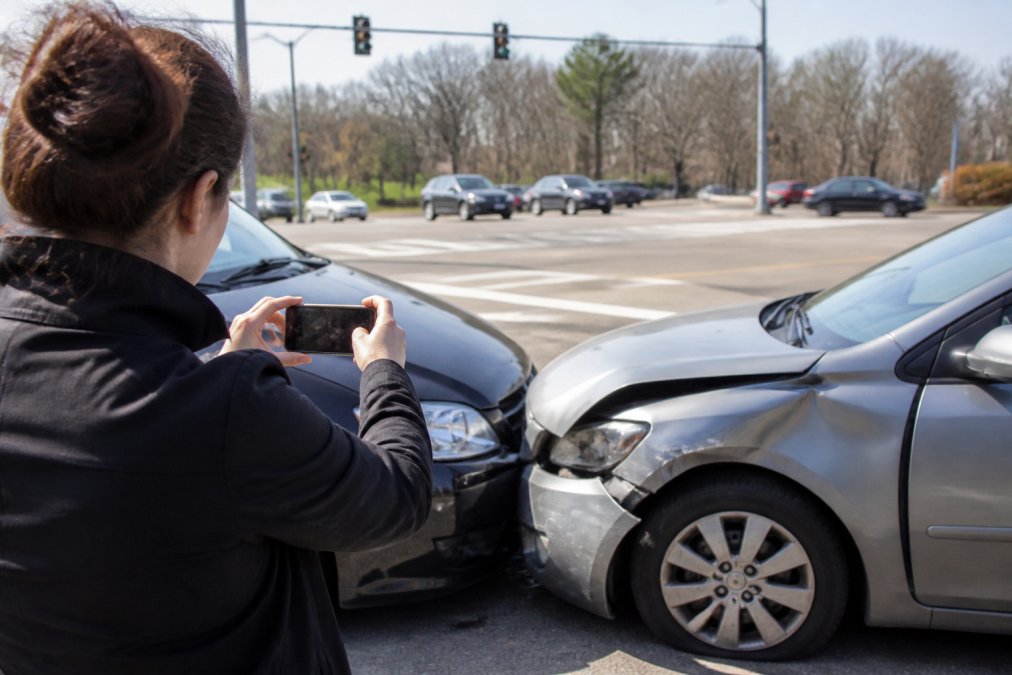
Photograph the scene from multiple angles: vehicle positions relative to road markings and landmarks, close-ups of damage and impact points, wide shots of road conditions and visibility, traffic signals, and stop signs. Record brief video narration if safe.
Collect names, phone numbers, and addresses from all witnesses. Get brief statements about what they observed. Neutral, credible witnesses are more valuable than those pressured to support your narrative.
Request the police report number at the scene. The officer should provide a case number or report number. This allows you to obtain a copy of the official police report, which documents the officer’s investigation, citations issued, and preliminary fault determination. In some states, police reports carry less legal weight than in others, but they’re still valuable evidence because they show an independent investigation occurred.
Photograph visible injuries and document your physical condition in writing immediately after the accident. Don’t minimize injuries. Document symptoms as they evolve, since injuries often develop over hours or days.
Don’t repair your vehicle immediately; adjusters need to inspect damage. Keep all medical records, treatment receipts, lost wage documentation, and written communication with insurers.
Understanding Comparative Negligence Laws
Your state’s negligence laws directly affect how much compensation you can recover. The two primary frameworks are comparative negligence and contributory negligence, and they produce dramatically different outcomes.
Comparative negligence allows recovery even if partially at fault. If you’re 30% responsible and the other driver 70% responsible, you recover 70% of damages. If total damages are $100,000 and you’re 30% at fault, you receive $70,000.
Contributory negligence is harsher: any responsibility, even 1%, means no recovery. This all-or-nothing approach is used in only a few jurisdictions but creates strong incentive to fight disputes aggressively.
Georgia and Florida use comparative negligence, allowing recovery if you’re not more than 50% at fault. You can pursue a claim even if you made a mistake, as long as your fault doesn’t exceed the other driver’s.
Adjusters use these laws strategically. Assigning you 20-30% fault significantly reduces their payout. They ask leading questions and emphasize your mistakes to build a shared-fault narrative.
In settlement negotiations, the standard is lower; in court, a jury must find liability based on preponderance of the evidence. This higher standard makes strong evidence collection critical. (Source: Insurance Information Institute (III) reports)
Disputing Insurance Claim Denial
When an insurance company denies your claim or offers an unreasonably low settlement, you have the right to challenge that decision. The formal process varies slightly by state, but the general framework is consistent: request a written explanation of the denial, gather additional evidence, and submit a formal written dispute to the insurance company’s claims department.
Schedule a Free Consultation →
Request a written explanation from the adjuster about the denial or fault percentages. Use their explanation as a roadmap for gathering rebuttal evidence.
Submit a formal written dispute letter to the claims department. Be professional and factual. Present evidence systematically: police report findings, dashcam footage, witness statements, and scene photographs. Structure arguments around evidence, not emotion.
Attach copies of police reports, witness statements, photographs, medical records, and repair estimates. Keep originals for your records. Use email with read receipts or certified mail to prove delivery.
Request a formal review by a supervisor or claims manager. Many insurers have internal appeals processes. A fresh review sometimes reaches a different conclusion within 30-60 days.
If the insurer continues denying the claim after formal dispute, file a complaint with your state’s insurance commissioner. Regulatory scrutiny motivates reconsideration.
A letter from an attorney often shifts the dynamic. Adjusters know that denying a legitimate claim may result in litigation and attorney’s fees.
Steps to Take After an Accident
Your actions in the hours and days following an accident significantly impact your ability to prove fault and recover compensation. The sequence matters.
Immediately after the collision:
- Check for injuries and call 911 if anyone needs medical attention. Your health is the priority.
- Move to a safe location if possible. If you can safely exit the vehicle and move to the shoulder, do so to avoid being struck by passing traffic.
- Turn on your hazard lights and set up warning triangles or flares if you have them.
- Call the police and request an accident report. Provide your name, location, and basic information about the collision.
- Photograph the accident scene, vehicle damage, and road conditions while waiting for police.
- Collect information from the other driver: name, phone number, address, driver’s license number, vehicle information, and insurance details. Do not discuss fault or sign any documents except for the police officer’s accident report.
- Get contact information from witnesses before they leave the scene.
Within 24-48 hours:
- Seek medical evaluation even if you don’t feel injured. Many injuries develop over hours or days. A medical record documenting your condition immediately after the accident is valuable evidence.
- Document your injuries with photographs and written notes about your symptoms, pain levels, and any treatment received.
- Notify your own insurance company of the accident. Provide basic facts but do not admit fault.
- Obtain a copy of the police report using the report number provided at the scene.
- Write down your recollection of the accident while it’s fresh: what you were doing, what you saw, how the collision happened, and your immediate aftermath.
Within one week:
- Request written statements from any witnesses you identified at the scene.
- Obtain repair estimates for vehicle damage from multiple sources.
- Preserve all medical records and treatment documentation.
- Avoid posting about the accident on social media. Insurance companies monitor social media accounts and will use any posts against you.
- Do not discuss the accident with the other driver or their insurance company without consulting an attorney first.
Step | Timing | Priority |
|---|---|---|
Check for injuries and call 911 | Immediately | Critical |
Photograph scene and vehicles | Before leaving scene | Critical |
Collect witness information | At scene | High |
Obtain police report number | At scene | High |
Seek medical evaluation | Within 24 hours | High |
Notify your insurance | Within 24-48 hours | High |
Document injuries with photos | Within 48 hours | High |
Request witness statements | Within one week | Medium |
Obtain repair estimates | Within one week | Medium |
Avoid social media posts | Ongoing | High |
When to Hire a Personal Injury Attorney
You don’t need an attorney for every car accident. Minor fender-benders with clear liability and minimal injuries can often be resolved through insurance negotiations. But certain situations demand professional legal representation, and waiting too long to hire an attorney can damage your case.
Hire an attorney if the other driver was cited or police determined fault. This strengthens your position and allows an attorney to pressure the insurer into accepting liability.
Hire an attorney if you’ve suffered significant injuries requiring ongoing treatment. Attorneys calculate true case value including pain and suffering, lost wages, and future medical expenses.
Hire an attorney if your claim is denied or settlement is unreasonably low. An attorney can file formal disputes, investigate further, and pursue litigation if needed.
Hire an attorney if liability is disputed or unclear. Attorneys investigate thoroughly, locate witnesses, obtain dashcam footage, and subpoena records if relevant.
Hire an attorney if multiple vehicles were involved or the accident occurred in a commercial context. These situations involve complex liability and specialized insurance coverage.
Hire an attorney if pressured to sign documents or give recorded statements. An attorney can address inaccurate or coerced statements in dispute proceedings.
Hire an attorney as soon as you realize the insurer isn’t handling your claim fairly. Insurance companies make early determinations and stick with them unless forced to reconsider. Early involvement often resolves disputes faster.
After a car accident, understanding your rights and the liability dispute process puts you in control. You don’t have to accept an insurance company’s determination as final. You can challenge denials, gather evidence, and force a formal review. When disputes become complex or when insurance companies dig in, professional legal representation shifts the balance in your favor. Merritt & Merritt Law Firm has spent over 45 years fighting for accident victims who’ve been treated unfairly by insurance companies. We investigate claims thoroughly, hold liable parties accountable, and secure the compensation you deserve. Schedule a free consultation with our team to discuss your case and learn your options. We’re available 24 hours a day and can meet you at your home, office, or hospital, whatever works for your recovery.
Frequently Asked Questions
What happens when liability is disputed in a car accident?
When liability is disputed, both insurance companies conduct separate investigations to determine fault. Your insurer may assign an insurance adjuster to evaluate evidence, witness statements, and the police report. If the insurers disagree on fault determination, you can file a formal written dispute, request an internal review, or pursue mediation or arbitration. In some cases, legal action becomes necessary to resolve the liability determination and secure fair compensation for damages and bodily injury.
How can I prove I was not at fault for a car accident?
Collect evidence immediately: photographs of the accident scene, vehicle damage, and road conditions; the police report; witness contact information and statements; dashcam or traffic camera footage; and your own detailed account of events. Request the other driver’s insurance information and policy details. Document any injuries and medical treatment. If comparative negligence applies in your state, even partial fault may reduce your recovery. An attorney can help organize evidence, challenge the other party’s account, and present a compelling case to the insurance adjuster or in court.
Can I dispute an insurance company’s fault determination?
Yes. If your insurance company denies your claim or assigns you fault you believe is incorrect, you have the right to dispute their decision. Request a formal review of their liability determination in writing, providing additional evidence if available. Many insurers offer internal appeals processes. If that fails, you can file a complaint with your state’s insurance commissioner or pursue mediation or arbitration. An attorney can guide you through the appeal process, challenge the insurance adjuster’s investigation, and ensure your rights are protected.
What evidence is most important in resolving a liability dispute?
The strongest evidence includes the police report, which often documents the officer’s initial fault assessment; witness statements from neutral parties; dashcam or surveillance footage showing how the accident occurred; photographs of vehicle damage, scene conditions, and traffic signals; medical records linking injuries to the accident; and expert testimony on negligence or traffic laws if needed. Modern telematics data from your vehicle can also establish speed and braking patterns. An attorney can evaluate which evidence carries the most weight and how to present it effectively to overcome claim denial or challenge the insurance adjuster’s conclusion.
Our Locations

Atlanta/Decatur
1 West Court Square
Suite 750
Decatur, GA 30030

Savannah
100 Bull Street
Suite 200
Savannah, GA 31401
Statesboro
15 West Main Street
Statesboro, GA 30458
Houston
1415 Louisiana Street,
Suite 1800,
Houston, TX 77002

Jacksonville
841 Prudential Drive
12th Floor
Jacksonville, FL 32207

Contact Us
© Copyright 2026 Merritt & Merritt Law Firm. All rights reserved.