
call us 24/7 1-800-738-WE-WIN
call us 24/7 1-800-738-WE-WIN
Serving All of Georgia, Florida, & Texas
8 Ways to Prove Negligence in a Car Accident
Table of Contents
- Understanding the Four Elements of Negligence in Personal Injury Cases
- 1. Obtain the Police Accident Report
- 2. Collect Dashcam and Surveillance Footage
- 3. Gather Eyewitness Statements and Contact Information
- 4. Document Medical Records and Injury Evidence
- 5. Preserve Digital Evidence and Social Media
- 6. Use a Car Accident Evidence Checklist at the Scene
- 7. How to Prove Fault in a Car Accident Without Witnesses
Last Updated: August 11, 2026
Understanding the Four Elements of Negligence in Personal Injury Cases
To prove negligence in a car accident, you must establish four distinct legal elements: duty of care, breach of duty, causation, and damages. Without all four, your case will fail regardless of injury severity.
Call the Merritt & Merritt Law Firm today at 404-975-1775.
Duty of Care
Duty of care is the legal obligation every driver has to operate their vehicle safely and follow traffic laws. The moment someone gets behind the wheel, they owe this duty to all road users, drivers, passengers, pedestrians, cyclists.
Courts apply the reasonable person standard: What would a reasonable, prudent driver do in the same circumstances? This isn’t about perfection, but whether the defendant’s actions fell below what a typical, careful driver would do. Speeding in a school zone, running a red light, or texting while driving all violate duty of care.
Breach of Duty
Breach of duty occurs when a driver fails to meet the standard of care. The breach must be provable through evidence: a traffic citation, witness testimony, dashcam footage, or accident reconstruction showing they violated a specific traffic law or safety standard.
Common breaches include excessive speed, failure to yield, distracted driving, driving under the influence, or ignoring traffic signals.
Causation and Damages
Causation establishes that the defendant’s breach directly caused your injuries. Actual cause asks: Would your injury have occurred but for the defendant’s actions? Proximate cause asks whether the injury was a foreseeable result of the breach.
Damages are your actual losses: medical bills, lost wages, property damage, and pain and suffering. Medical records, repair estimates, and pay stubs document these losses.
1. Obtain the Police Accident Report
The police accident report is often the most important single document in your case. It’s an official record created by law enforcement at the scene and carries significant weight with insurance adjusters and juries.
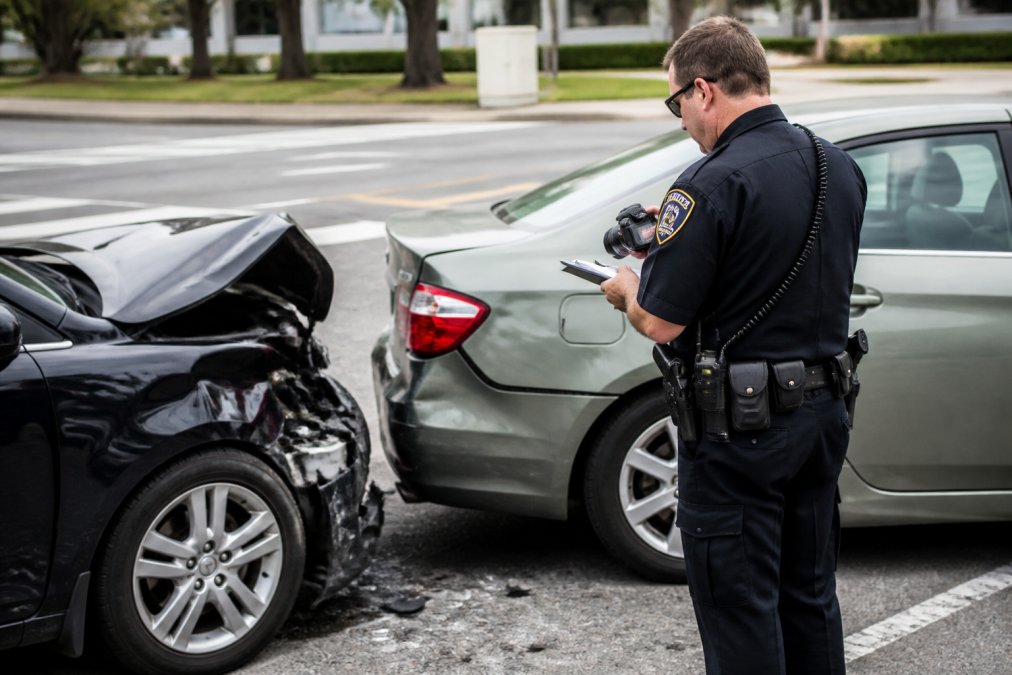
Request the report as soon as possible using the case or report number. You can obtain it directly from the responding police department or through your attorney. Citations issued appear in the report and become powerful evidence of breach of duty, a citation for speeding, failure to yield, or running a red light documents that the other driver violated traffic law.
The officer’s narrative describes how the accident occurred, road conditions, vehicle damage, and injuries reported at the scene. While an officer’s opinion on fault isn’t binding, their factual observations support your case and preserve details that witnesses might forget months later.
Not all accidents generate police reports. Minor fender-benders in parking lots may never be reported. In these situations, you’ll rely more heavily on other evidence: witness statements, photographs, and your own documentation. But whenever a report exists, obtain it immediately, it’s typically public record and costs $10-30.
2. Collect Dashcam and Surveillance Footage
Video evidence is the gold standard for proving negligence. Dashcam footage shows exactly what happened without interpretation or memory gaps, documenting vehicle positions, speeds, traffic signals, and the sequence of events leading to impact.
If you have dashcam footage, preserve it immediately by transferring it to cloud storage or an external drive. Don’t rely on the dashcam’s built-in storage, which may overwrite old footage.
Surveillance footage from nearby businesses, traffic cameras, or residential properties can be invaluable. Gas stations, convenience stores, restaurants, and apartment complexes often have security cameras covering nearby intersections. Contact the manager and ask about footage, many businesses keep recordings for 30-90 days before deleting them, so time is critical.
Traffic cameras maintained by city or state transportation departments may have recorded the accident. Your attorney can request this footage through public records requests, though the process can take weeks.
Once you suspect a claim, stop any automatic deletion and inform your attorney. Deliberately destroying evidence can result in sanctions or adverse inferences.
3. Gather Eyewitness Statements and Contact Information
Eyewitness testimony provides independent corroboration of how the accident occurred. Unlike parties to the accident, neutral witnesses have no financial interest in the outcome.
At the scene, get the names, phone numbers, email addresses, and insurance information of anyone who witnessed the accident. Write it down immediately rather than relying on memory. Get a brief statement about what they saw: “The red car ran the red light before hitting the blue car.”
Eyewitness statements become more valuable when recorded close to the accident. Memory fades quickly, and details vivid immediately after an accident become fuzzy within weeks. Getting contact information at the scene is critical, once witnesses leave, they’re often impossible to locate later.
4. Document Medical Records and Injury Evidence
Medical documentation proves causation between the accident and your injuries and establishes that you suffered damages. Without medical records, you have no proof of injury.
Seek medical attention immediately after the accident, even if you feel fine. Some injuries don’t appear for hours or days. An immediate medical evaluation creates a baseline and documents your condition at the earliest point.
Keep detailed records of every medical appointment, test, treatment, and expense:
- Emergency room reports and bills
- Doctor’s notes from follow-up visits
- Physical therapy records and receipts
- Prescription documentation
- Medical imaging (X-rays, MRI, CT scans)
- Specialist evaluations
- Wage loss documentation from your employer
Medical records prove causation by documenting injuries consistent with the accident mechanism and establish damages by showing treatment costs. Consistency matters, if you tell your doctor your back hurts but post photos showing you hiking or playing sports, the insurance company will use that against you.
5. Preserve Digital Evidence and Social Media
Digital evidence is increasingly important in accident cases: text messages, emails, social media posts, location data, and metadata from photos can prove negligence or establish liability.
Preserve all digital communications related to the accident. Screenshots of texts, emails, and voicemails can reveal admissions of fault or consciousness of guilt.
Schedule a Free Consultation →
Your own social media requires caution. Posts contradicting injury claims are damaging. Insurance companies routinely search social media for evidence that contradicts injury claims. A post saying “Great day at the gym” undermines a claim of severe back pain.
The other driver’s social media can support your case. Posts showing reckless behavior, intoxication, or dangerous driving can establish their negligence. Your attorney can subpoena social media accounts during discovery.
Location data from phones, fitness trackers, or apps can establish where vehicles were and when. Metadata embedded in digital files can prove when photos were taken and from what location, preventing claims that you staged photos later.
6. Use a Car Accident Evidence Checklist at the Scene
The moments immediately after an accident are chaotic. A structured checklist ensures you capture everything that matters.
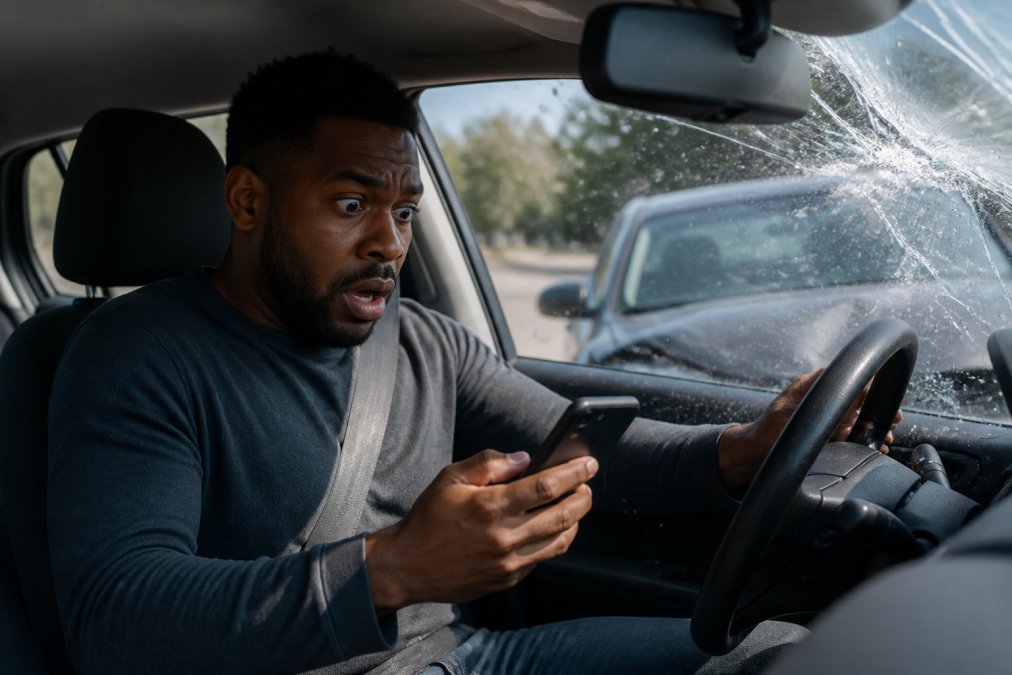
At-Scene Evidence Checklist:
Evidence Type | What to Capture | Why It Matters |
|---|---|---|
Vehicle Damage | Photos of all damage from multiple angles, close-ups of impact points | Establishes collision severity and impact direction |
Scene Conditions | Road surface, weather, lighting, visibility, traffic signals, lane markings | Proves whether conditions affected the accident or driver negligence |
Vehicle Positions | Photos showing final resting positions, skid marks, debris | Reconstructs the accident sequence and impact dynamics |
License Plates | Photos of both vehicles’ plates, VIN if visible | Confirms vehicle identity for insurance and police reports |
Driver Information | Names, phone numbers, addresses, insurance details, license numbers | Enables communication and claim filing |
Witness Information | Names, contact details, what they saw | Provides independent corroboration |
Traffic Signals | Photos of signal status, street signs, speed limit signs | Documents whether traffic laws were violated |
Injuries | Photos of visible injuries, medical attention sought | Establishes damages and causation |
Time and Location | Exact address, time of day, date | Creates official record for police report |
Take photos before moving vehicles if safe. Document the scene exactly as it was at impact. Write down your own observations immediately, don’t rely on memory. Note road conditions, weather, lighting, and anything unusual about the other driver’s behavior.
Get the other driver’s statement if willing. Don’t argue or accuse them of fault, just ask what happened from their perspective. Their version may contain admissions or contradictions that help your case.
7. How to Prove Fault in a Car Accident Without Witnesses
Proving negligence without independent witnesses requires a different evidence strategy. You have only your account versus the other driver’s account, making circumstantial evidence critical.
Damage Pattern Analysis: The location and severity of vehicle damage reveals the impact direction and point of contact. If your vehicle shows damage on the driver’s side and the other vehicle shows damage on the passenger’s side, the impact direction is established. Accident reconstruction experts use damage patterns to determine vehicle speeds and positions at impact.
Traffic Law Violations: Even without witnesses, traffic citations create powerful evidence. A citation for speeding, running a red light, or failure to yield documents a breach of duty of care. Combined with your account and damage patterns, it supports negligence.
Accident Reconstruction: Professional accident reconstructionists analyze vehicle damage, road conditions, skid marks, and physics to determine how the accident occurred. Their expert testimony is powerful in word-versus-word cases because it’s objective and based on science.
Your Own Credibility: In the absence of witnesses, your credibility becomes paramount. Were you paying attention? Did you follow traffic laws? Can you describe the accident clearly and consistently? Insurance adjusters and juries assess whether you’re believable.
The Other Driver’s Behavior: How did the other driver act after the accident? Did they admit fault, apologize, or seem evasive? Consciousness of guilt supports your account.
Without witnesses, your case becomes more dependent on physical evidence, expert analysis, and credibility. Professional legal representation becomes essential.
The Role of Social Media in Proving Negligence
The other driver’s posts, photos, or check-ins can reveal negligence or undermine their credibility. A post about distracted driving habits, reckless behavior, or substance use can support your claim that they’re a negligent driver.
Your own social media requires caution. Posts contradicting injury claims are damaging. Insurance companies routinely search social media as part of claim investigation.
Why Merritt & Merritt Law Firm Handles Evidence Collection Differently
Proving negligence requires strategic evidence gathering from day one. Many accident victims make mistakes in the immediate aftermath that undermine their cases by failing to preserve evidence or document injuries properly.
At Merritt & Merritt Law Firm, our approach focuses on immediate action. We investigate claims thoroughly to hold liable parties accountable. Our team understands what evidence matters most and how to preserve it before it’s lost. With over 45 years of trial experience, we’ve handled thousands of accident cases and know what juries need to see to award damages.
We’re available 24 hours a day because accidents don’t happen during business hours. We can visit you at home, your office, or the hospital. We work on contingency, you pay only if we win. That means our financial incentive aligns with yours: we’re motivated to build the strongest possible case because we only get paid when you recover compensation.
Proving negligence in a car accident requires establishing four legal elements: duty of care, breach of duty, causation, and damages. The evidence you gather immediately after the accident determines whether you can prove each element. Police reports, dashcam footage, eyewitness statements, medical records, and digital evidence all contribute to a compelling case. In situations without witnesses, circumstantial evidence and expert reconstruction become critical. If you’ve been injured in a car accident and need guidance on building your negligence claim, reach out to Merritt & Merritt Law Firm for a free consultation. Our team will evaluate your case, explain your options, and guide you toward the compensation you deserve.
Frequently Asked Questions
What are the four elements you must prove to establish negligence in a car accident?
To prove negligence, you must establish four elements: (1) the at-fault driver had a duty of care toward you, (2) they breached that duty through negligent or reckless behavior, (3) their breach caused the accident (causation), and (4) you suffered actual damages such as bodily injury, medical bills, or property damage. Each element must be supported by evidence like police reports, medical documentation, and eyewitness testimony. Without all four, your negligence claim may fail.
Can you prove negligence in a car accident without eyewitnesses?
Yes. While eyewitness statements strengthen your case, you can prove fault without them using dashcam footage, traffic citations issued at the scene, police accident reports, vehicle damage patterns, medical records documenting your injuries, and expert accident reconstruction analysis. Digital evidence like GPS data, vehicle black box data (EDR), and traffic camera footage can establish what happened. Insurance adjusters and courts also consider the physical evidence and the negligent driver's own admissions.
What role does a police report play in proving negligence?
A police accident report is crucial evidence showing the officer's initial investigation findings, including the citation issued, statements from both drivers, witness accounts, and the officer's assessment of fault. The report documents the accident scene, road conditions, traffic signs, and speed limits. While not conclusive proof, it carries significant weight with insurance adjusters and in court because it reflects an objective third party's investigation. If the other driver received a citation, this strengthens your negligence claim considerably.
How does dashcam footage help prove negligence?
Dashcam footage provides objective visual evidence of how the accident occurred, showing the other driver's actions before, during, and after impact. It captures traffic violations like running a red light, speeding, or unsafe lane changes that demonstrate breach of duty. This video evidence eliminates disputes about what happened (word-versus-word scenarios) and is highly persuasive to insurance adjusters and juries. Courts recognize dashcam footage as reliable evidence that clearly establishes liability and causation.
What happens if I already gave a recorded statement to the insurance adjuster—can I still prove negligence?
Yes, you can still pursue your case. However, recorded statements can complicate matters if you misspoke or if the adjuster misrepresented your words. Do not sign anything or give additional statements without consulting an attorney first. An experienced personal injury attorney can review what you said, address any inconsistencies, and build your case using other evidence like police reports, medical records, and expert testimony. The insurance company cannot use your statement alone to deny your claim if stronger evidence supports negligence.
Our Locations

Atlanta/Decatur
1 West Court Square
Suite 750
Decatur, GA 30030

Savannah
100 Bull Street
Suite 200
Savannah, GA 31401
Statesboro
15 West Main Street
Statesboro, GA 30458
Houston
1415 Louisiana Street,
Suite 1800,
Houston, TX 77002

Jacksonville
841 Prudential Drive
12th Floor
Jacksonville, FL 32207

Contact Us
© Copyright 2026 Merritt & Merritt Law Firm. All rights reserved.