
call us 24/7 1-800-738-WE-WIN
call us 24/7 1-800-738-WE-WIN
Serving All of Georgia, Florida, & Texas
Get Compensation for Car Accident: A Step-by-Step Guide

Table of Contents
- What to Do After a Car Accident to Protect Your Claim
- Understanding the Car Accident Claim Process
- Types of Car Accident Compensation You Can Claim
- How to Calculate What Your Case Is Worth
- Negotiating Your Settlement: Avoiding Low-Ball Offers
- Why You Need a Personal Injury Lawyer for Car Accidents
- Tax Implications and Hidden Costs You Should Know About
- Social Media and Your Car Accident Claim: What Not to Post
Get Compensation for Car Accident: A Step-by-Step Guide
Last Updated: July 23, 2026
When you’re injured in a car accident, understanding how to get compensation is critical to protecting your rights and financial recovery. At Merritt & Merritt Law Firm, we’ve helped thousands of accident victims navigate the complex process of securing fair settlements. The steps you take immediately after an accident directly determine whether you’ll recover what you’re owed or accept a low-ball offer.
Call the Merritt & Merritt Law Firm today at 404-975-1775.
This guide walks you through the entire process of getting compensation for your car accident, from the scene through settlement negotiation, showing you exactly what insurance companies look for and the tactics that separate victims who get fair settlements from those who don’t.
What to Do After a Car Accident to Protect Your Claim
The first hours after a car accident determine the strength of your entire claim. Most accident victims make critical mistakes at the scene that weaken their position later when negotiating with insurance adjusters.
Immediate actions at the scene
Your first priority is safety. Move to a safe location if possible, call 911 if anyone is injured, and wait for police to arrive. Do not admit fault or apologize for the accident, even if you think you might be partially responsible.
Once you’re safe, document everything. Take photographs and videos of the accident scene from multiple angles, vehicle damage, road conditions, traffic signals, and the position of both vehicles. Get the other driver’s name, phone number, address, driver’s license number, vehicle information, and insurance details. Write down the names and contact information of any witnesses and ask them to describe what they saw. Note the police report number so you can obtain a copy later.
Do not sign anything at the scene except the police report. Do not give a recorded statement to the other driver’s insurance company without legal representation.
Documentation and evidence gathering
Seek medical attention immediately, even if you don’t feel seriously injured. Some injuries like whiplash and back strains don’t show symptoms for hours or days. A medical record created on the day of the accident establishes a clear link between the accident and your injuries.
Keep detailed records of every medical appointment, treatment, and expense related to your injuries. Document lost wages with written confirmation from your employer showing dates absent and wages lost. Photograph your injuries as they heal and keep a detailed journal of your pain, limitations, and how injuries affect your daily activities and work.
Understanding the Car Accident Claim Process
The car accident settlement process follows a predictable path. Understanding each stage helps you avoid being pressured into accepting inadequate settlements before your case is fully developed.
Filing your personal injury claim
Your claim begins when you notify the at-fault driver’s insurance company of the accident. You must also report the accident to your own insurance company, even if the other driver was clearly at fault.
When you contact the other driver’s insurance company, an insurance adjuster will be assigned to your case. This adjuster’s job is to minimize what the insurance company pays out. Do not provide a detailed recorded statement without legal representation, as it can be used against you if your case goes to litigation.
The insurance adjuster will request medical records, wage loss documentation, and repair estimates. Provide these promptly but keep copies for yourself.
Working with insurance adjusters
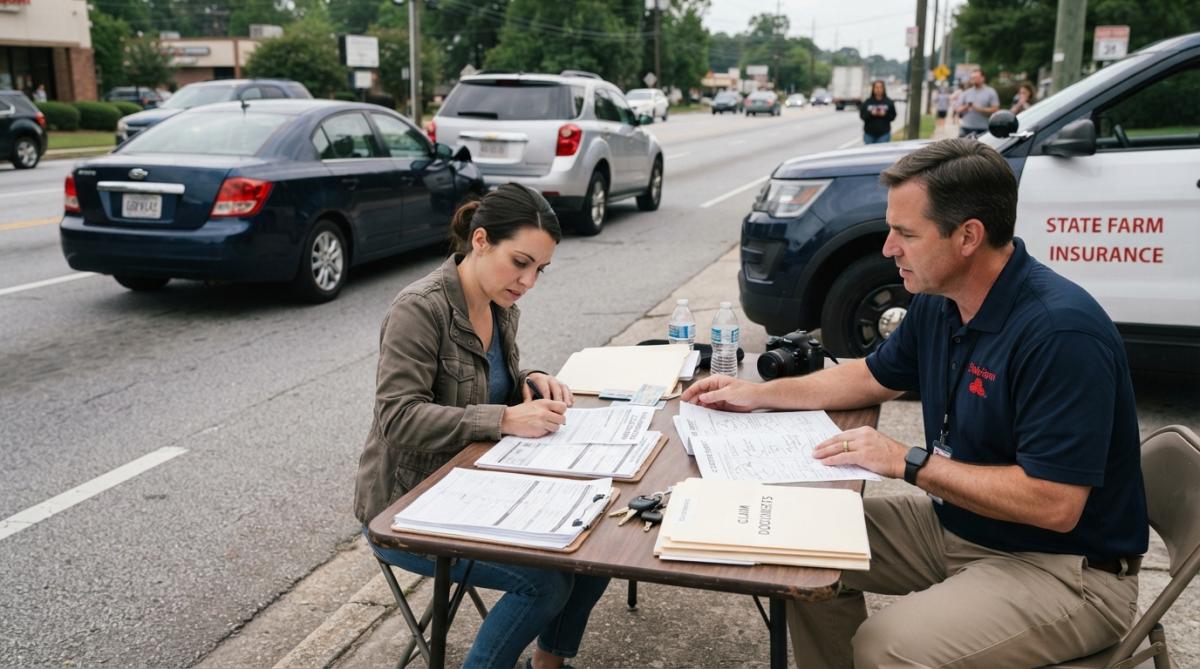
The insurance adjuster’s investigation determines whether the at-fault driver’s insurance company will accept liability. In some cases, liability is clear. In others, it’s disputed, and the adjuster may argue that you share partial fault.
Understanding at-fault versus no-fault states affects how your claim proceeds. In at-fault states, the driver who caused the accident is responsible for paying damages. In no-fault states, your own insurance company pays your medical expenses and lost wages regardless of who caused the accident, though you can still pursue additional compensation from the at-fault driver for serious injuries.
The insurance adjuster will contact you with settlement offers. The first offer is almost always significantly lower than what your case is actually worth. Insurance companies use initial low offers as an anchor, hoping you’ll accept quickly without understanding your claim’s true value.
Do not accept the first settlement offer. Do not sign any settlement agreement or release of liability without understanding exactly what you’re signing away.
Types of Car Accident Compensation You Can Claim
Car accident compensation falls into two categories: economic damages and non-economic damages. Insurance companies often acknowledge economic damages while aggressively minimizing non-economic damages.
Economic damages explained
Economic damages are measurable, documented financial losses caused by the accident. Medical expenses are your largest economic damage in most cases, including emergency room treatment, hospital stays, doctor appointments, physical therapy, prescription medications, and ongoing medical care related to your injuries.
Lost wages represent income you would have earned if you hadn’t been injured. If your injuries prevent you from returning to your previous job, you can claim lost earning capacity. Out-of-pocket expenses include transportation to medical appointments, home care services, and property damage to repair or replace your vehicle.
Non-economic damages and pain and suffering
Non-economic damages compensate you for pain, suffering, emotional distress, loss of enjoyment of life, and permanent scarring or disfigurement. These damages are harder to quantify than economic damages, which is why insurance companies often dispute their value.
Pain and suffering compensates you for physical pain during recovery and any chronic pain that persists after healing. Emotional distress damages compensate for psychological harm, anxiety, depression, or PTSD. Loss of enjoyment of life compensates you for activities you can no longer do because of your injuries.
How to Calculate What Your Case Is Worth
Calculating your settlement value requires combining economic damages with a reasonable valuation of non-economic damages. Insurance companies use formulas and multipliers to calculate settlement ranges, and you need to understand these methods to recognize when an offer is genuinely low.
Using damage multipliers for pain and suffering
The damage multiplier method multiplies your total economic damages by a number between 1.5 and 5, depending on injury severity.
For minor injuries with quick recovery, multipliers typically range from 1.5 to 2.5. For moderate injuries requiring several months of treatment, multipliers typically range from 2.5 to 4. For serious injuries with permanent effects, multipliers can reach 4 to 5 or higher.
Factors that influence your settlement amount
Insurance policy limits cap the maximum compensation available. If the at-fault driver carries minimum liability coverage, you cannot recover more than that limit, regardless of your actual damages.
Comparative negligence rules affect settlement value in many states. If you were partially at fault, your settlement is reduced by your percentage of fault.
The strength of liability evidence affects settlement negotiations. If liability is clear, the insurance company will accept liability quickly and focus on damages value. Medical evidence quality directly influences settlement value. Detailed medical records showing injury severity, treatment received, and recovery timeline support higher valuations. Your credibility matters significantly, social media activity showing you engaging in activities inconsistent with your claimed injuries can devastate your claim.
Factor | Impact on Settlement | Why It Matters |
|---|---|---|
Injury severity | Multiplier of 1.5-5x | Serious injuries command higher multipliers |
Economic damages | Base calculation | Total medical + lost wage expenses |
Policy limits | Maximum cap | Cannot exceed at-fault driver’s coverage |
Comparative negligence | Percentage reduction | Your fault reduces your recovery |
Liability strength | Negotiation use | Clear liability = faster settlement |
Medical evidence | Damages documentation | Detailed records = higher valuations |
Negotiating Your Settlement: Avoiding Low-Ball Offers
Settlement negotiation is where most accident victims either secure fair compensation or accept inadequate offers. Insurance companies have sophisticated strategies for pressuring victims into quick settlements before they understand their claim’s true value.
Understanding initial settlement offers
The insurance adjuster will contact you with an initial settlement offer, typically 4-8 weeks after the accident. This first offer is almost always significantly lower than the claim’s actual value. Insurance companies use this anchoring strategy intentionally.
Initial offers often arrive with language suggesting the offer is time-limited or will decrease if you don’t accept immediately. This is a pressure tactic. In reality, settlement offers typically remain open for months, and insurance companies will negotiate upward if you present evidence supporting higher valuations.
Do not accept the initial offer. Instead, respond by explaining that you’re still gathering medical records and calculating your full damages.
Crafting a strong demand letter
A demand letter formally requests compensation for your damages. This letter presents your case in writing, allowing you to organize your evidence and arguments compellingly.
Your demand letter should include: a clear statement of the accident facts, evidence supporting liability, a detailed list of all economic damages with supporting documentation, a detailed explanation of your non-economic damages with medical evidence supporting your pain and suffering valuation, and a specific settlement demand amount.
The settlement demand should be higher than the amount you’re willing to accept, providing room for negotiation. Your demand letter should be professional, organized, and fact-based. Avoid emotional language or accusations.
Why You Need a Personal Injury Lawyer for Car Accidents
Many accident victims attempt to negotiate settlements alone, believing they can save money by avoiding attorney fees. In practice, accident victims without legal representation typically recover 30-40% less than those represented by experienced personal injury lawyers.
What attorneys do during settlement negotiation
A personal injury lawyer evaluates your case objectively, calculating realistic settlement ranges based on comparable cases, injury severity, and local jury verdict trends. Attorneys handle all communication with insurance adjusters, preventing you from making statements that could be used against your claim. Insurance companies know that represented claimants are more likely to pursue litigation if settlement offers are unreasonable, so they often make significantly higher offers.
Lawyers investigate the accident thoroughly, gathering police reports, witness statements, and accident reconstruction evidence that strengthens your liability case. They obtain and organize medical records, ensuring all treatment is documented and presented clearly to support damages valuations. If settlement negotiations stall, attorneys can file a lawsuit and prepare your case for trial.
Contingency fees: How you pay only if we win
At Merritt & Merritt Law Firm, we represent accident victims on a contingency fee basis. This means you pay attorney fees only if we recover compensation for you. If we don’t recover anything, you owe nothing.
Contingency fees typically range from 25-40% of the recovery, depending on whether the case settles or requires litigation. This aligns our interests with yours and removes the financial barrier to hiring experienced legal help.
Tax Implications and Hidden Costs You Should Know About
Settlement funds for personal injury claims are generally not taxable income under federal tax law. However, if your settlement includes punitive damages, those are taxable. Most car accident settlements don’t include punitive damages.
If your health insurance paid some of your medical bills, the insurance company may have a subrogation right, a legal claim to recover what they paid from your settlement. Your personal injury attorney handles subrogation negotiations to minimize the amount your insurance company recovers. Medicare or Medicaid may also have subrogation rights if they paid for medical treatment related to your accident.
Attorney fees and costs are deducted from your settlement before you receive your check. Make sure you understand the fee agreement before signing it and ask your attorney to provide an itemized breakdown of all costs.
Social Media and Your Car Accident Claim: What Not to Post
Insurance companies investigate accident claimants extensively, including reviewing their social media activity. Posts, photos, and comments that contradict your injury claims can devastate your settlement value.
Do not post photos showing you engaging in activities inconsistent with your claimed injuries. Do not post about your settlement negotiations, settlement amounts, or the case generally. Do not accept friend requests from people you don’t know during your claim process. The safest approach is to avoid posting about your accident, injuries, or claim entirely until your case is fully resolved.
Navigating a car accident claim alone is challenging when you’re already dealing with injuries and recovery. The insurance company has trained adjusters, sophisticated settlement formulas, and financial incentives to minimize what they pay you. At Merritt & Merritt Law Firm, we level the playing field by providing expert representation, thorough case investigation, and aggressive negotiation on your behalf. With over 45 years of trial experience and a commitment to holding liable parties accountable, we ensure you receive fair compensation for your injuries and losses. Our contingency fee structure means you pay nothing unless we recover compensation for you. Schedule a free consultation with Merritt & Merritt Law Firm today and let our team fight for the settlement you deserve.
Frequently Asked Questions
How do I know if I have a valid car accident compensation claim?
You have a valid claim if another driver's negligence caused your accident and you suffered documented injuries or property damage. This typically requires evidence of liability, medical records showing injury, and proof of damages. If you're in an at-fault state, the liable driver's insurance should cover your losses. In no-fault states, your own insurance covers medical expenses regardless of who caused the accident. An attorney can review your specific situation to determine claim strength and potential compensation.
What types of car accident compensation can I recover?
You can recover two main categories: economic damages (medical bills, lost wages, property damage, out-of-pocket expenses) and non-economic damages (pain and suffering, emotional distress, loss of enjoyment). Economic damages are straightforward to calculate using receipts and records. Non-economic damages use multipliers—typically 1.5 to 5 times your economic damages—depending on injury severity and liability strength. A personal injury lawyer can help maximize both categories based on your case specifics.
How long does it take to get compensation for a car accident?
Settlement timelines vary by injury severity and case complexity. Minor injuries with clear liability may settle in 3-6 months. Moderate injuries typically take 6-12 months. Severe injuries requiring maximum medical improvement can take 12-24+ months. Insurance companies often delay initially, which is why handling low-ball offers strategically matters. Having legal representation typically accelerates negotiations. Your attorney can provide realistic timelines based on your specific injury type and liability situation.
Do I need a lawyer to get compensation for my car accident claim?
While you can file a claim independently, a personal injury lawyer significantly improves outcomes. Attorneys understand settlement negotiation tactics, prevent you from accepting low-ball offers, gather critical medical evidence, and handle complex liability issues. They work on contingency fees—you pay only if you win—so there's no upfront cost. Experienced lawyers know how insurance adjusters operate and can challenge their valuations. For serious injuries or disputed liability, legal representation is especially valuable.
Our Locations

Atlanta/Decatur
1 West Court Square
Suite 750
Decatur, GA 30030

Savannah
100 Bull Street
Suite 200
Savannah, GA 31401

Statesboro
15 West Main Street
Statesboro, GA 30458

Houston
1415 Louisiana Street,
Suite 1800,
Houston, TX 77002

Jacksonville
841 Prudential Drive
12th Floor
Jacksonville, FL 32207

Contact Us
© Copyright 2026 Merritt & Merritt Law Firm. All rights reserved.