call us 24/7 1-800-738-WE-WIN
call us 24/7 1-800-738-WE-WIN
Serving All of Georgia, Florida, & Texas
What Liability Means in a Car Accident
Table of Contents
- What Liability Means in a Car Accident
- How Negligence Determines Liability and Fault
- How Is Fault Determined in a Car Accident
- Comparative Negligence Laws and Shared Fault
- What Is Bodily Injury Liability Coverage
- Property Damage Liability vs. Bodily Injury Liability
- Legal Consequences of Being Found at Fault
- Liability in Multi-Vehicle Pileups
- Frequently Asked Questions
Last Updated: September 4, 2026
Liability in a car accident is the legal responsibility for the harm and financial losses caused by a collision. When you hear that someone is “liable” for a crash, it means they are legally obligated to compensate the injured party for expenses like medical bills, lost wages, and vehicle repairs. This guide from Merritt & Merritt Law Firm explains how fault is assigned, what insurance coverage responds, and what to do if you are facing a claim.
The distinction matters because your financial recovery depends on proving who holds that legal responsibility. In the simplest terms, the at-fault driver’s insurance pays for the damages they caused. But determining fault is rarely straightforward, and insurance companies often dispute claims to minimize their payout.
Below, we break down the legal framework of negligence, the evidence that proves fault, and the specific coverages involved. We will also explain what happens when multiple parties share blame, and why multi-vehicle pileups complicate liability in ways most drivers do not expect.
What Liability Means in a Car Accident
Liability is a legal obligation arising from a finding of fault. In the context of a car crash, it is the determination that one driver’s actions, or inactions, caused the collision and the resulting damages. This concept falls under tort law, which governs civil wrongs and provides a path to financial compensation for the injured party.
When a driver is found liable, their insurance policy typically covers the costs. This is why state laws require drivers to carry minimum levels of auto insurance. Without a liable party, victims would be forced to cover their own medical expenses and car repairs out of pocket.
The injured person files a third-party claim against the at-fault driver’s insurance policy. If the insurer accepts liability, they offer a settlement. If they dispute it, the case may proceed to litigation, where a judge or jury decides the outcome.
How Negligence Determines Liability and Fault
Negligence is the legal standard used to determine fault in most car accidents. To prove negligence, four elements must be established: duty of care, breach of duty, causation, and damages.
Every driver owes a duty of care to others on the road. This duty includes obeying traffic laws, maintaining a safe speed, and paying attention. When a driver breaches that duty, such as by running a red light or texting while driving, they have acted negligently. The injured party must then show that this breach directly caused the accident and resulted in measurable damages.
A common mistake is assuming the driver who received a ticket is automatically 100% at fault. That is not always true. Even a driver who had the right of way can share fault if they were speeding or failed to take evasive action.
Do not admit fault at the scene of an accident, even if you think you caused it. Statements like “I’m sorry, I didn’t see you” can be used against you later by the insurance adjuster to reduce or deny your claim.
How Is Fault Determined in a Car Accident
Fault determination is a fact-based investigation that relies on evidence gathered after the crash. Insurance adjusters and attorneys review all available information to reconstruct what happened and assign legal responsibility. The process involves several key evidence sources.
Police Reports and Evidence Collection
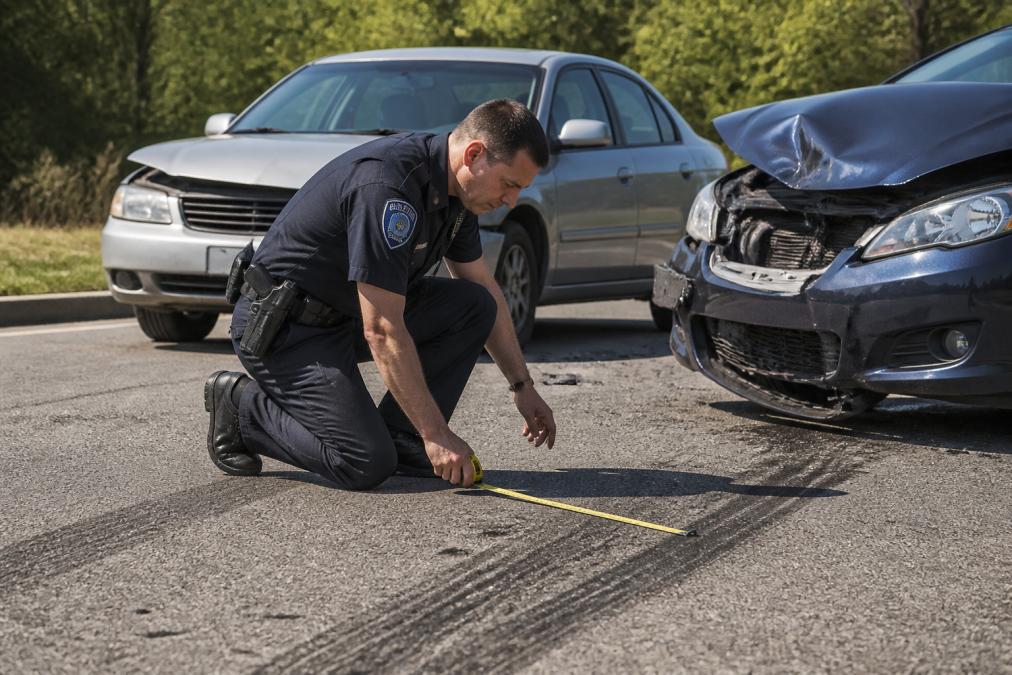
The accident report created by law enforcement is often the starting point for fault determination. Officers document the positions of the vehicles, visible damage, weather conditions, and any citations issued. While a police report is not legally binding, it carries significant weight with insurance adjusters.
Evidence collection goes beyond the report. Photographs of the scene, skid marks, vehicle damage, and traffic signals help establish the sequence of events. The physical evidence can contradict a driver’s version of what happened, which is why documenting the scene thoroughly matters.
Dashcam Footage and Witness Statements
Dashcam footage has become one of the most powerful tools for proving fault. Video evidence removes the “he said, she said” element from a claim by showing exactly what happened. If you have a dashcam, preserve the footage immediately and do not edit it.
Witness statements provide an independent account of the collision. Eyewitnesses who saw the crash can corroborate your version of events. Their contact information should be collected at the scene, and their statements should be given to your attorney as soon as possible.
Insurance Adjuster Assessment
The insurance adjuster is responsible for evaluating liability on behalf of the insurance company. They review the police report, photographs, witness statements, and applicable state laws to assign a percentage of fault to each driver. This assessment determines whether the insurer accepts the claim and how much they are willing to pay.
Adjusters are trained to minimize payouts. They may question the severity of your injuries or argue that you share responsibility for the crash. This is why having legal representation during the claims process is critical.
Memorize the other driver’s insurance information, license plate number, and the names of any witnesses before leaving the scene. This information is essential for your attorney to file a claim and investigate liability.
Comparative Negligence Laws and Shared Fault
Not every accident involves a single clearly at-fault driver. Comparative negligence laws allow fault to be divided between multiple parties based on their respective contributions to the crash. This system is used in most states, but the specific rules vary by jurisdiction.
Under comparative negligence, your financial compensation is reduced by your percentage of fault. For example, if you are found 20% at fault for a collision, your settlement is reduced by 20%. Some states apply a modified version, where you cannot recover any damages if you are found 51% or more at fault.
Schedule a Free Consultation →
A separate system, contributory negligence, is far harsher. In the few states that use it, any fault on your part, even 1%, completely bars you from recovering compensation. Understanding the rule in your state is essential before pursuing a claim.
What Is Bodily Injury Liability Coverage
Bodily injury liability coverage pays for the medical expenses, lost wages, and legal fees of the other party when you cause an accident. It is a core component of auto insurance policies and is required in most states.
This coverage responds when you are the at-fault driver. It pays for the injured person’s hospital bills, rehabilitation costs, and pain and suffering up to your policy’s coverage limits. It also covers your legal defense if the injured party files a lawsuit.
Bodily injury liability does not cover your own injuries. For that, you need personal injury protection or medical payments coverage. Many drivers misunderstand this distinction and assume their liability policy will pay their own medical bills. It will not.
Property Damage Liability vs. Bodily Injury Liability
Property damage liability and bodily injury liability are two separate coverages, though they are often purchased together. Property damage liability pays for damage you cause to another person’s vehicle or other property, such as a fence or building. Bodily injury liability covers the physical harm to people.
The distinction matters because the coverage limits are typically different. A driver may carry high property damage limits but low bodily injury limits, leaving the injured party undercompensated for their medical expenses. This is a common problem after serious accidents.
| Coverage Type | What It Pays For | Who It Protects | Typical Scenario |
|---|---|---|---|
| Bodily Injury Liability | Medical bills, lost wages, pain and suffering | The other driver and their passengers | You run a red light and injure another driver |
| Property Damage Liability | Vehicle repairs, replacement, damage to structures | The other driver’s car or other property | You rear-end a car and damage its bumper |
When the at-fault driver’s coverage limits are too low to cover your damages, you may need to pursue compensation through your own uninsured or underinsured motorist coverage.
Legal Consequences of Being Found at Fault
Being found at fault carries consequences that extend beyond the immediate claim. Your insurance premium will likely increase, and in some cases, your policy may be canceled. The at-fault accident stays on your driving record for several years, affecting your future insurance rates.
If the damages exceed the at-fault driver’s policy limits, they become personally responsible for the difference. This can lead to wage garnishment, liens on property, and significant financial strain. The injured party may also file a lawsuit seeking compensation beyond what insurance covers.
There is also the risk of subrogation. Your own insurance company may pay your claim and then seek reimbursement from the at-fault driver’s insurer. This process can prolong the resolution of your case and complicate settlement negotiations.
Liability in Multi-Vehicle Pileups
Multi-vehicle pileups present complex liability questions because fault may be distributed across several drivers. Each collision in the chain must be analyzed separately to determine who caused each impact and who is responsible for the resulting damages.
In a pileup, the driver who initiates the chain reaction is often found primarily at fault. However, following drivers who fail to maintain a safe distance may also share liability for rear-end collisions. Insurance adjusters examine each impact point to assign percentages of fault.
The legal responsibility in these cases can take months to resolve, especially when multiple insurance companies are involved. Evidence like traffic camera footage and electronic data from the vehicles becomes critical. If you are injured in a pileup, securing legal representation early is essential to protect your right to compensation.
Liability in a car accident comes down to proving negligence. The at-fault driver’s insurance covers damages, but only if you can demonstrate their breach of duty caused your injuries. Evidence, legal knowledge, and timing all determine the outcome of your claim.
Understanding what liability means in a car accident is the first step toward protecting your financial recovery. Proving fault requires navigating negligence law, insurance adjusters, and evidence collection, all while you are dealing with injuries and lost income. The trial team at Merritt & Merritt Law Firm brings over 45 years of experience to these cases, offering 24-hour service and the ability to meet you at home or in the hospital. You pay only if we win. National Conference of State Legislatures overview of auto insurance laws American Bar Association guide on negligence and tort law Insurance Information Institute on auto liability coverage Schedule a free consultation today and get an immediate case evaluation.
Frequently Asked Questions
What happens if someone hits your car and you have liability?
If you are found liable for the accident, your liability insurance covers the other driver’s medical expenses, lost wages, and vehicle repairs up to your coverage limits. You may also face legal consequences, premium increases, and potential out-of-pocket costs if damages exceed your policy limits. The at-fault driver’s insurance company will handle the claim, and you should cooperate with your insurer’s investigation while avoiding direct settlement discussions with the injured party.
How is liability determined in a car accident?
Liability is determined by examining negligence: whether a driver breached their duty of care and caused the accident. Insurance adjusters review police reports, dashcam footage, witness statements, and accident scene evidence. They assess who violated traffic laws, failed to maintain safe speed, or ignored right-of-way rules. In states with comparative negligence laws, both parties may share fault based on their percentage of responsibility for the accident.
What is bodily injury liability coverage?
Bodily injury liability coverage pays for medical expenses, lost wages, pain and suffering, and legal fees of the other party if you are found at fault for an accident. This coverage does not pay for your own injuries; that requires personal injury protection or uninsured motorist coverage. Most states require minimum bodily injury liability limits, and coverage limits determine the maximum amount your insurer will pay per person and per accident.
Does liability insurance pay for my own medical bills?
No. Your liability insurance covers damages to the other party only. Your own medical bills are covered by personal injury protection (PIP), medical payments coverage, or uninsured motorist coverage, depending on your policy and state requirements. If you are partially at fault under comparative negligence laws, you may recover a portion of your damages based on the other driver’s percentage of fault.
Our Locations

Atlanta/Decatur
1 West Court Square
Suite 750
Decatur, GA 30030

Savannah
100 Bull Street
Suite 200
Savannah, GA 31401
Statesboro
15 West Main Street
Statesboro, GA 30458
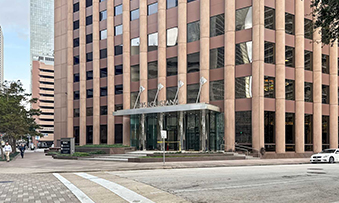
Houston
1415 Louisiana Street,
Suite 1800,
Houston, TX 77002

Jacksonville
841 Prudential Drive
12th Floor
Jacksonville, FL 32207

Contact Us
© Copyright 2026 Merritt & Merritt Law Firm. All rights reserved.