
call us 24/7 1-800-738-WE-WIN
call us 24/7 1-800-738-WE-WIN
Serving All of Georgia, Florida, & Texas
How to Handle Three Car Collision Liability
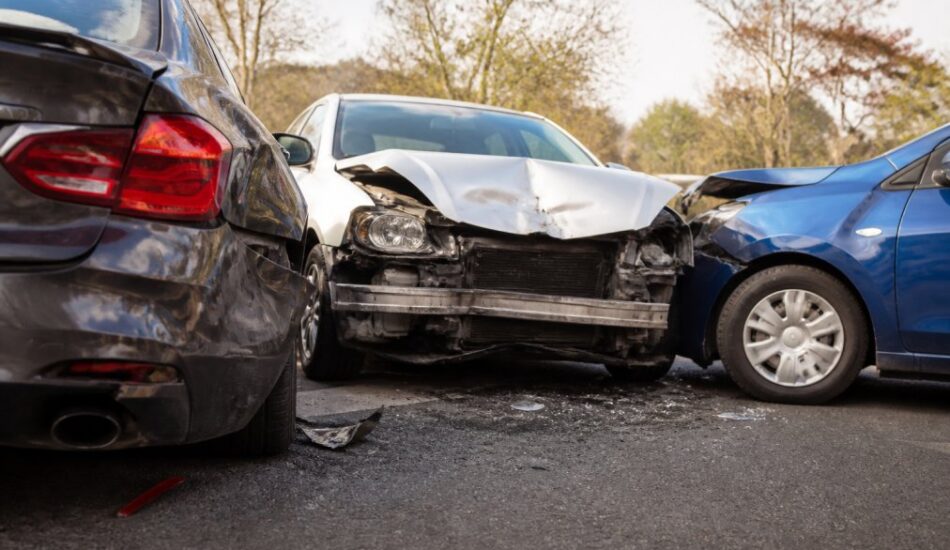
Table of Contents
- Understanding Three Car Collision Liability Basics
- Chain Reaction Accident Fault: Who Caused What
- Steps to Take Immediately After a Three-Car Accident
- How to Prove Fault in a Rear-End Collision
- Multi-Car Accident Insurance Claim Process
- The Middle Car Dilemma and Comparative Negligence
- Uninsured and Underinsured Motorist Protection in Multi-Vehicle Accidents
- Settlement Timeline and What to Expect
Last Updated: August 12, 2026
Understanding Three Car Collision Liability Basics
Call the Merritt & Merritt Law Firm today at 404-975-1775. Offices: Atlanta | Savannah | Statesboro | Houston
A three car collision liability situation occurs when three or more vehicles are involved in a single accident, creating complex questions about who bears responsibility for damages and injuries. Unlike a simple two-car accident, multi-vehicle collisions introduce layers of causation that make determining fault significantly more complicated.
In a three-car accident, liability doesn’t automatically distribute equally among all parties. The driver who initiated the chain reaction, often the rear vehicle in a rear-end pileup, may bear primary responsibility, but the middle vehicle’s actions can shift liability in unexpected ways. Comparative negligence rules apply, meaning you can still recover compensation even if you bear partial fault, but the percentage matters enormously.
Chain Reaction Accident Fault: Who Caused What
When three vehicles collide in sequence, determining chain reaction accident fault requires understanding the impact sequence and each driver’s conduct. The critical distinction is understanding which collision caused your specific injuries.
Consider a typical scenario: Vehicle A stops suddenly for traffic. Vehicle B fails to brake and strikes A from behind. Vehicle C, following too closely, cannot stop and hits B. Vehicle B’s driver is primarily liable for hitting A. Vehicle C’s driver is primarily liable for hitting B. But if Vehicle A brake-checked B intentionally, or if Vehicle B was stopped illegally, liability shifts.
Insurance adjusters will request police reports, witness statements, and vehicle damage photos to establish the impact sequence. The police report documents the traffic citation issued, which creates a legal presumption of fault.
Steps to Take Immediately After a Three-Car Accident
Step 1: Move to Safety and Call 911
Your first priority after a three-car accident is protecting yourself from further harm. If your vehicle is operational and you’re not severely injured, move it out of active traffic lanes if possible. Turn on hazard lights and call 911 immediately, reporting the accident location, number of vehicles involved, and whether anyone appears injured.
Cooperate with police but limit your statements. You are legally required to provide your driver’s license, vehicle registration, and insurance information. You are not required to provide a recorded statement or detailed account of how the accident occurred. Politely decline and say, “I’ll provide a statement through my attorney.”
Step 2: Document the Scene with Photos and Video
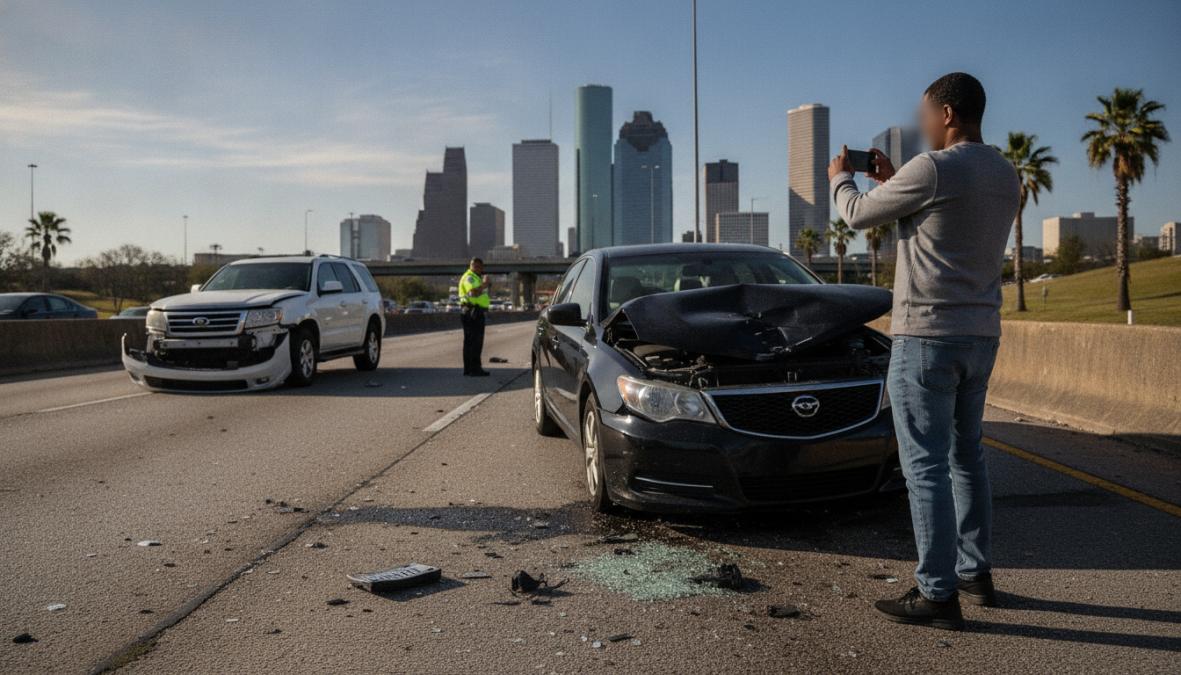
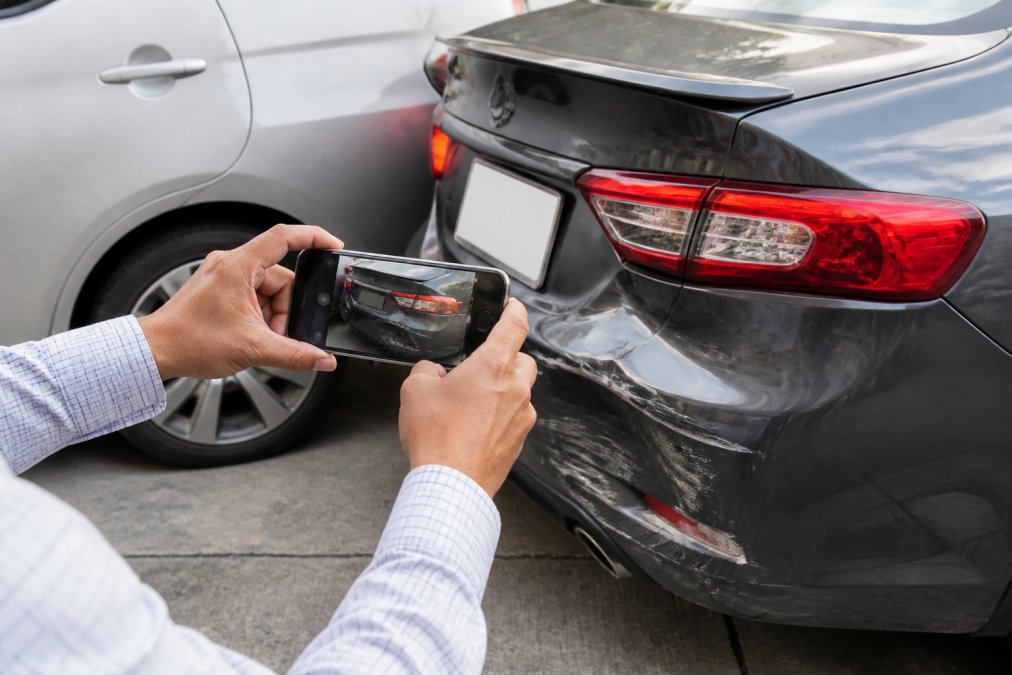
Before leaving the accident scene, photograph everything. Use your smartphone to capture multiple angles of all three vehicles, showing the point of impact, vehicle positioning, traffic signals, and road conditions. Photograph the license plates and vehicle identification numbers of all three vehicles. Capture images of the driver’s licenses and insurance cards of other drivers (with their permission).
Video is even more valuable than still photos. Record a walking tour of the accident scene, narrating what you observe: “Vehicle A is stopped at the red light. Vehicle B struck A from behind. Vehicle C struck B. The roadway is wet from rain.”
Do not move vehicles or debris unless directed by police. Do not accept cash settlements from other drivers at the scene.
Step 3: Collect Witness Information and Police Report Details
Witnesses are invaluable in multi-vehicle accidents because they provide independent accounts of how the collision occurred. Approach bystanders and ask if they saw the accident. Request their name, phone number, email address, and a brief statement of what they observed.
Obtain the police report number from the responding officer. Request the officer’s name and badge number. Contact the police department within a few days and request a copy of the accident report. Review it carefully for errors and file a correction request if needed.
Step 4: Avoid Admitting Fault or Signing Documents
Do not say “I’m sorry” or “It was my fault” at the accident scene. These statements are admissions of liability that insurance companies use against you. Do not post about the accident on social media. Do not provide a recorded statement to the other driver’s insurance company without legal counsel.
Insurance adjusters will contact you and ask you to describe the accident. Politely decline and refer them to your attorney. Do not sign any medical authorization forms or settlement agreements without reviewing them carefully. Do not accept an initial settlement offer from insurance companies, as these offers are typically 30-50% below what your claim is actually worth.
How to Prove Fault in a Rear-End Collision
Proving fault in a rear-end collision is generally straightforward because traffic law creates a presumption that the rear vehicle is at fault. Drivers must maintain a safe following distance and be prepared to stop. If you were struck from behind, the burden shifts to the rear driver to prove you caused the collision through reckless conduct.
However, exceptions exist. If you brake-checked the rear vehicle intentionally, made an unsafe lane change, or reversed your vehicle unexpectedly, you may share liability. The rear driver must prove these exceptions with evidence, not assumptions.
Liability determination relies on several evidence types: police citations establish traffic law violations; witness statements corroborate the sequence of events; vehicle damage analysis shows the point of impact and relative speeds; cell phone records can establish whether the rear driver was distracted. The damage pattern indicates the angle and force of impact, which correlates to speed and driver attention.
Multi-Car Accident Insurance Claim Process
The multi-car accident insurance claim process differs from standard two-vehicle claims because multiple insurance policies and adjusters become involved. Your claim may involve your own insurance company (first-party claim), the at-fault driver’s insurance (third-party claim), and potentially uninsured motorist coverage if one vehicle lacked insurance.
Start by notifying your insurance company within 24-48 hours of the accident. Provide basic information: date, time, location, vehicles involved, and injuries. Do not provide a detailed narrative yet. Request a claim number and the adjuster’s direct contact information.
Next, file a third-party claim against the at-fault driver’s insurance company. Provide the police report number, your contact information, and basic accident details. Do not provide a recorded statement. Obtain repair estimates from at least two body shops and submit them to the insurance company. For injury claims, obtain medical documentation from emergency room visits, doctor appointments, and physical therapy, and provide these records to the insurance company.
The Middle Car Dilemma and Comparative Negligence
The middle car dilemma is a unique aspect of three-car collisions that creates unexpected liability complications. The middle vehicle is struck from behind by the rear vehicle and simultaneously strikes the front vehicle. This positioning creates ambiguity about which collision caused which injuries and damages.
If you’re the middle vehicle driver, you’re liable to the front vehicle for the damage you caused by striking it. Simultaneously, the rear vehicle is liable to you for the damage it caused by striking your vehicle. But if you struck the front vehicle because you were pushed into it by the rear vehicle’s impact, comparative negligence rules may reduce your liability to the front vehicle.
Comparative negligence rules allow you to recover damages even if you bear partial fault, but your recovery is reduced by your percentage of fault. If you’re 20% at fault for striking the front vehicle (because you were pushed into it), you can still recover 80% of your damages from the rear vehicle’s insurance.
Uninsured and Underinsured Motorist Protection in Multi-Vehicle Accidents
Uninsured and underinsured motorist coverage becomes critically important in three-car collisions because the at-fault driver may lack adequate insurance to cover your damages. If the rear vehicle’s driver carries only the state minimum liability coverage (typically $25,000-$50,000 in most states), and your medical expenses and lost wages exceed that amount, you cannot recover the full value of your claim from their insurance.
Your own uninsured/underinsured motorist coverage activates when the at-fault driver’s insurance is insufficient. This coverage pays your damages up to your policy limit. If you carry $100,000 in UM/UIM coverage and the at-fault driver’s liability limit is $50,000, your UM/UIM coverage pays the remaining $50,000 of your claim (up to your policy limit).
UM/UIM coverage also protects you if the at-fault driver has no insurance at all. When filing your claim, notify both the at-fault driver’s insurance company and your own insurance company.
Settlement Timeline and What to Expect
Settlement timelines for three-car collisions vary significantly based on injury severity, liability complexity, and insurance company responsiveness. A straightforward property damage claim with clear liability may settle in 4-8 weeks. A complex injury claim with multiple vehicles and disputed liability may take 6-12 months or longer.
Initial liability determination typically occurs within 2-4 weeks of filing your claim. Medical treatment timelines directly impact settlement delays. Insurance companies will not make a final settlement offer until you’ve completed medical treatment.
Once you’ve completed medical treatment, your attorney or adjuster will calculate your total damages: medical expenses, lost wages, property damage, and pain and suffering. The insurance company will make a settlement offer. Negotiation typically occurs over 2-4 weeks as you counter-offer and the insurance company responds. Most claims settle during this negotiation phase without litigation.
If settlement negotiations stall, your attorney may file a personal injury lawsuit. Litigation extends the timeline to 12-24 months as discovery occurs, depositions are taken, and trial preparation proceeds. However, the threat of litigation often motivates insurance companies to settle rather than risk a jury verdict.
Schedule a Free Consultation →
Merritt & Merritt Law Firm handles this entire process, from initial evidence collection through settlement negotiation or trial. Our 45 years of trial experience means we understand insurance company tactics and know when to settle and when to fight. We operate on a contingency fee basis, you pay only if we win, so you have no upfront costs or financial risk.
Handling a three-car collision is overwhelming when you’re injured and unsure about your rights. Insurance companies count on this confusion to minimize settlements. The steps outlined here, immediate documentation, careful statements, and strategic claim filing, protect your interests and maximize your compensation. However, navigating comparative negligence rules, multiple insurance policies, and settlement negotiations requires legal expertise. Merritt & Merritt Law Firm offers free consultations to evaluate your claim, investigate liability, and negotiate aggressively with insurance adjusters. Contact us today for a case evaluation and learn what your three-car collision claim is actually worth.
Accident Phase | Timeline | Key Actions |
|---|---|---|
Immediate (0-24 hours) | Same day | Call 911, document scene, collect witness info |
Initial claim (1-7 days) | First week | Notify insurers, obtain police report, seek medical care |
Investigation (1-4 weeks) | Weeks 1-4 | Provide statements, submit medical records, damage estimates |
Liability determination (2-6 weeks) | Weeks 2-6 | Adjuster reviews evidence, makes preliminary fault assessment |
Settlement negotiation (4-12 weeks) | Weeks 4-12 | Counter-offer process, medical treatment completion |
Final settlement (8-16 weeks) | Weeks 8-16 | Agreement reached or litigation initiated |
Frequently Asked Questions
What if I was partially at fault for the three-car collision?
Comparative negligence rules allow you to recover damages even if you bear partial fault. Your recovery is reduced by your percentage of fault. If you’re 25% at fault, you recover 75% of your damages. A few states follow “pure comparative negligence” (you can recover even if you’re 99% at fault), while others follow “modified comparative negligence” (you can only recover if you’re less than 50% or 51% at fault, depending on the state).
How much is my three-car collision claim worth?
Claim value depends on medical expenses, lost wages, property damage, and pain and suffering. A minor injury claim with $5,000 in medical expenses might settle for $8,000-$12,000. A serious injury claim with $50,000 in medical expenses and significant lost wages might settle for $150,000-$300,000 or more.
Can I sue if the insurance company denies my claim?
Yes. If the insurance company wrongfully denies your claim, you can file a bad faith lawsuit against them. Bad faith occurs when an insurance company denies a claim without reasonable investigation or misrepresents policy terms.
Should I accept the first settlement offer from insurance?
Almost never. First settlement offers are typically 30-50% below actual claim value. Respond with a higher figure supported by medical documentation and wage loss calculations. Negotiation usually results in a settlement 15-25% higher than the initial offer.
What if one of the three drivers had no insurance?
Your uninsured motorist coverage protects you. File a claim with your own insurance company and provide documentation that the at-fault driver lacked insurance. Your UM coverage will pay your damages up to your policy limit.
Do I need an attorney for my three-car collision claim?
For straightforward property damage claims with clear liability and minor injuries, you may handle the claim yourself. However, for injury claims, complex liability scenarios, or disputes with insurance companies, legal representation significantly increases your settlement value. Most personal injury attorneys work on contingency, so you pay nothing upfront.
How long do I have to file a lawsuit if I’m not satisfied with settlement?
The statute of limitations for personal injury claims is typically 2-3 years from the accident date, depending on your state. However, do not wait to file a lawsuit. The longer you wait, the more evidence deteriorates and witnesses become unavailable.
Can I recover pain and suffering damages in a three-car collision?
Yes. Pain and suffering damages compensate you for physical pain, emotional distress, and reduced quality of life resulting from your injuries. Insurance adjusters calculate pain and suffering by multiplying medical expenses by a factor (typically 1.5-5x) based on injury severity.
What if the police report contains errors about the accident?
Request a correction from the police department. File a supplemental report explaining the errors. This correction becomes part of the official record and can be used in settlement negotiations and litigation.
What evidence is most important in proving three-car collision liability?
The most important evidence is the damage pattern on all three vehicles, which shows the impact sequence and relative speeds. Witness statements that corroborate your account are critical. Police citations establish traffic law violations. Medical documentation proves your injuries.
Can I recover damages if I have pre-existing injuries that were aggravated by the accident?
Yes. The at-fault driver is liable for all damages caused by the accident, including aggravation of pre-existing conditions. If you had a prior back injury that was worsened by the collision, the at-fault driver’s insurance must pay for treatment of the aggravated condition. However, you must prove the accident aggravated your pre-existing injury through medical documentation.
Frequently Asked Questions
Who is typically at fault in a chain reaction rear-end collision?
The driver who initiates the chain reaction by hitting the vehicle in front usually bears primary liability. However, fault can be shared if other drivers failed to maintain safe following distance or if a vehicle was disabled on the roadway. An insurance adjuster examines impact sequence, vehicle positioning, and driver conduct to determine each party's percentage of fault. In some cases, the middle car may share liability if they braked suddenly without cause or failed to signal.
What evidence is needed to prove fault in a three-car accident?
Critical evidence includes the police report, photographs of vehicle damage and scene conditions, witness statements, traffic citations issued at the scene, and digital evidence like dashcam footage or cell phone records showing distraction. The impact sequence—which vehicle hit which first—is essential. Medical records documenting injuries also support your claim. Accident reconstruction experts can analyze damage patterns to determine the order of impacts and negligence. Collect this evidence immediately after the accident before details fade.
How does comparative negligence affect my compensation in a multi-car accident?
Comparative negligence allows you to recover damages even if you're partially at fault, though your compensation is reduced by your percentage of fault. For example, if you're found 20% at fault and your damages total $10,000, you can recover $8,000. Georgia follows modified comparative negligence, meaning you can recover if you're less than 50% at fault. Florida uses pure comparative negligence, allowing recovery even if you're 99% at fault. Your attorney works to minimize your assigned fault percentage during settlement negotiations.
What does it mean that I only pay if you win, and are there hidden costs?
A contingency fee arrangement means Merritt & Merritt Law Firm only collects a fee if we secure a settlement or judgment in your favor. We advance costs for investigation, medical records, expert witnesses, and filing fees—you don't pay these upfront. If we don't win, you owe nothing. However, discuss all cost arrangements during your free consultation so you understand exactly what expenses may apply and when they're due. This transparency ensures you know what to expect.
Our Locations

Atlanta/Decatur
1 West Court Square
Suite 750
Decatur, GA 30030

Savannah
100 Bull Street
Suite 200
Savannah, GA 31401
Statesboro
15 West Main Street
Statesboro, GA 30458
Houston
1415 Louisiana Street,
Suite 1800,
Houston, TX 77002

Jacksonville
841 Prudential Drive
12th Floor
Jacksonville, FL 32207

Contact Us
© Copyright 2026 Merritt & Merritt Law Firm. All rights reserved.