
call us 24/7 1-800-738-WE-WIN
call us 24/7 1-800-738-WE-WIN
Serving All of Georgia, Florida, & Texas
How to Prove Distracted Driving in an Accident
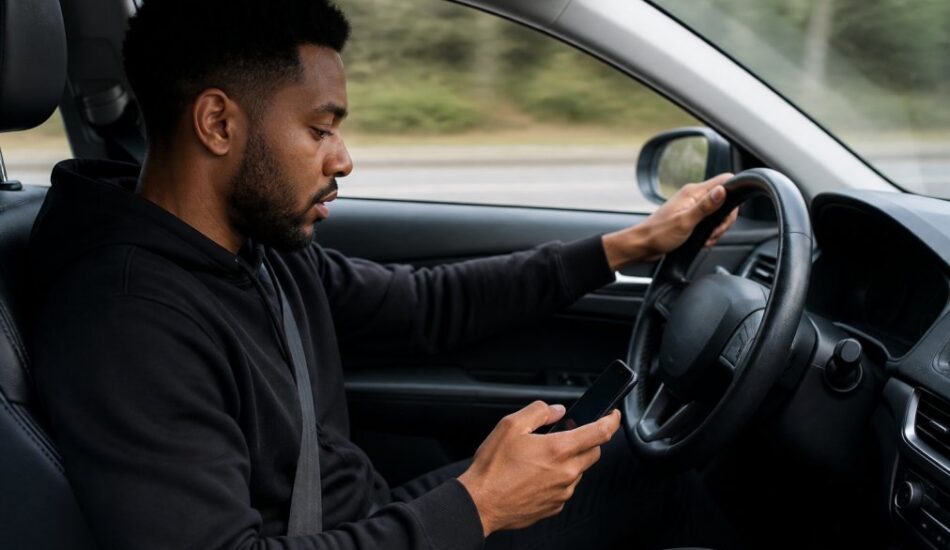
Table of Contents
- Types of Evidence That Prove Distracted Driving
- Obtaining Cell Phone Records in Car Accident Cases
- Collecting Witness Statements for Car Accidents
- How to Get a Police Report for a Car Accident
- Surveillance and Traffic Camera Footage
- Building Your Distracted Driving Case: Step-by-Step
- Common Mistakes to Avoid When Proving Distracted Driving
- Conclusion
Last Updated: August 9, 2026
Types of Evidence That Prove Distracted Driving
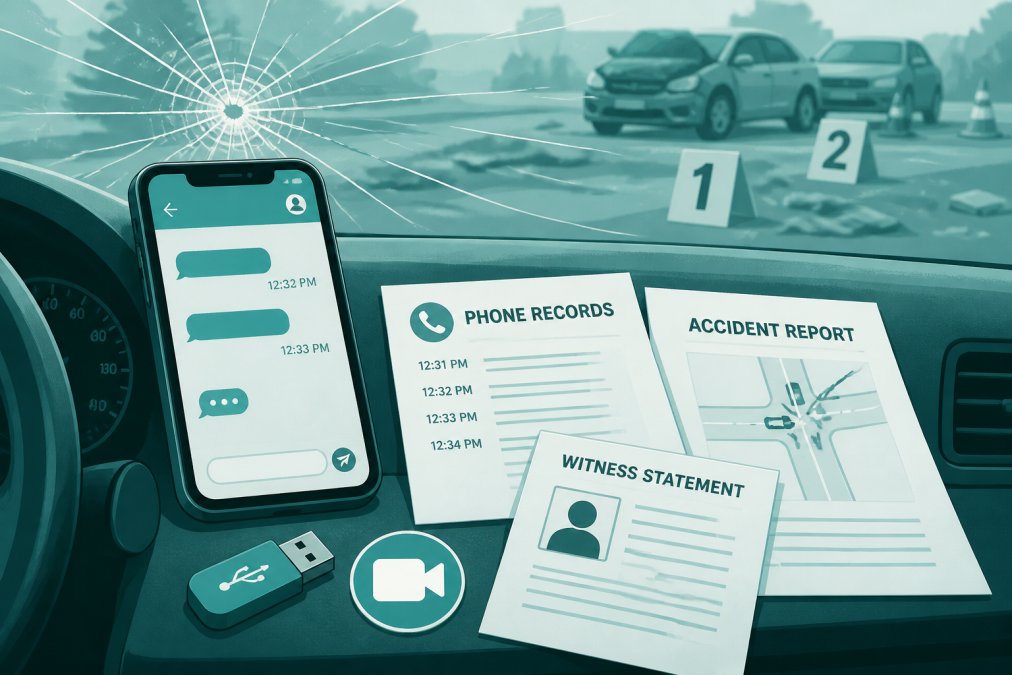
Proving distracted driving requires gathering multiple forms of evidence, digital records, physical evidence, witness accounts, and official documentation, that together establish negligence and liability. The strongest cases combine several corroborating sources; a single text message or witness statement alone may be questioned, but phone records, vehicle data, witness testimony, and police reports pointing to the same conclusion create an undeniable picture.
Call the Merritt & Merritt Law Firm today at 404-975-1775. Offices: Atlanta | Savannah | Statesboro | Houston
Digital Evidence and Phone Data
Cell phone records are among the most compelling evidence in distracted driving cases. Carriers maintain detailed logs of text messages, app usage, social media activity, call logs, GPS location data, and screen-on times, all timestamped to the moment of the accident. This data can be subpoenaed during discovery, though the request must be specific about what information is needed and why it’s relevant.
Modern phones generate extensive digital forensics data beyond basic call and text logs. Infotainment systems, rideshare apps, navigation systems, and messaging applications all create timestamped records of user interaction. When these records align with the accident timeline, they provide nearly irrefutable proof of distraction.
Vehicle Computer Data and Black Box Records
Modern vehicles contain event data recorders (“black boxes”) that capture steering input, brake pressure, throttle position, speed, and safety system engagement in the seconds before and after a crash. A vehicle that doesn’t brake before impact, maintains steady speed into a collision, or shows erratic steering suggests the driver wasn’t monitoring the road ahead.
Accessing this data requires specialized equipment and expertise. Forensic engineers can retrieve information through the vehicle’s OBD-II port or the manufacturer’s proprietary systems. When black box data aligns with phone records showing active texting or app usage at the exact moment the driver failed to brake or correct course, the correlation becomes powerful evidence of causation.
Physical Evidence at the Crash Scene
Skid marks, vehicle damage patterns, debris distribution, and final resting positions reveal what happened in the moments before impact. A vehicle with no skid marks before impact suggests the driver didn’t brake, a strong indicator they didn’t see the hazard. Forensic accident reconstruction experts analyze these details and compare them to what would be expected if the driver had been paying full attention.
Scene investigation must happen quickly; evidence degrades rapidly. Police reports document initial observations, but having your own investigator photograph and measure the scene within hours preserves details that might otherwise be lost.
Obtaining Cell Phone Records in Car Accident Cases
Cell phone records are obtained through the legal discovery process via subpoena to the phone carrier. This requires court involvement or the defendant’s consent and cannot be requested directly from the driver or their insurance company.
Understanding the Subpoena Process
A subpoena compels a third party, in this case, a phone carrier, to produce specific records. It must identify what records are requested, explain their relevance to the case, and include proper legal language. Your attorney drafts the subpoena, serves it on the carrier, and the carrier responds within 14-30 days depending on complexity. The subpoena must be narrowly tailored to the accident date and time; requesting months of records may be denied as overly burdensome.
What Phone Records Reveal
Phone records show exactly what the driver was doing at the moment of the accident. Text message logs include precise timestamps; when records show a text sent at 2:47 p.m. and the police report documents the accident at 2:48 p.m., the timeline becomes undeniable. App activity logs show when social media, navigation, email, or messaging apps were actively in use. Premium carriers often maintain logs of which specific apps were active and how long they were engaged, helping distinguish between passive phone presence and active engagement.
Collecting Witness Statements for Car Accidents
Witness statements from neutral parties who observed the accident firsthand are often the most persuasive evidence. Unlike involved parties, witnesses have no financial interest in the outcome.
Eyewitness Accounts and Testimony
An eyewitness who saw the driver texting, looking at their phone, or otherwise distracted provides powerful testimony. Collect witness statements immediately after the accident while memories are fresh. Get contact information, ask them to describe what they saw, and note specific observations about the driver’s behavior. Ask direct questions: Did you see the driver looking at a phone? Did the driver appear aware of surrounding traffic? Did the driver attempt to brake or swerve before collision?
Witness statements carry more weight when documented in multiple formats: an initial statement at the scene, a follow-up written statement, and later sworn testimony create a consistent record that’s harder to challenge.
Preserving Witness Credibility
A witness who was close to the accident, had a clear view of the driver’s actions, and has no connection to either party is highly credible. Preserve credibility by documenting the witness’s vantage point, how long they observed the driver before impact, and what specifically they saw. Have the witness return to the scene if possible and point out exactly where they stood and what they could see from that location. Specific observations like “I saw the driver looking down at their lap for about five seconds before they hit the other car” are stronger than vague statements like “I think the driver wasn’t paying attention.”
How to Get a Police Report for a Car Accident
The police report creates an official contemporaneous record of the accident, including the officer’s observations, witness statements, scene measurements, and preliminary assessment of liability.
What the Police Report Contains
A police report typically includes the date, time, and location; names and contact information for all parties; vehicle and insurance information; witness statements; the officer’s description of vehicle damage and scene conditions; measurements and photographs; and any citations issued. If the officer noted that the at-fault driver appeared distracted, was holding a phone, or made statements suggesting distraction, this official documentation becomes powerful evidence.
Obtain the police report by filing a public records request with the responding police department. Most departments have online portals; processing typically takes 5-10 business days with a small fee ($10-25). Your attorney can request the report on your behalf, which often expedites the process.
Using the Report in Your Claim
The police report establishes basic facts both parties typically agree on, creating an undisputed foundation. If the officer made observations suggesting distraction, these become official documentation. Any witness statements included can corroborate later testimony. Insurance adjusters give significant weight to official police documentation, and if the report indicates the other driver was at fault or notes evidence of distraction, this strengthens your position considerably.
Schedule a Free Consultation →
However, don’t rely solely on the police report. Officers have limited time at the scene and typically don’t access phone records or vehicle data. The report is one piece of a larger puzzle that should include digital evidence, witness statements, and forensic analysis.
Surveillance and Traffic Camera Footage
Traffic cameras, business security cameras, and dashcam footage can provide video evidence of the accident and the driver’s behavior. Traffic camera footage is often recorded over on a 30-day cycle, so quick action is essential. Business owners may record over security footage regularly.
Your attorney can file a preservation notice demanding that property owners, businesses, or municipalities preserve any video footage related to the accident, creating a legal obligation to maintain it rather than allow it to be recorded over. Once preserved, footage can be obtained through discovery or public records requests.
Video evidence showing the driver looking at their phone, texting, or otherwise distracted is extraordinarily powerful. Combine video evidence with phone records and witness testimony for maximum impact.
Building Your Distracted Driving Case: Step-by-Step
A successful distracted driving case requires systematic collection and organization of evidence.
Step 1: Document Everything at the Scene
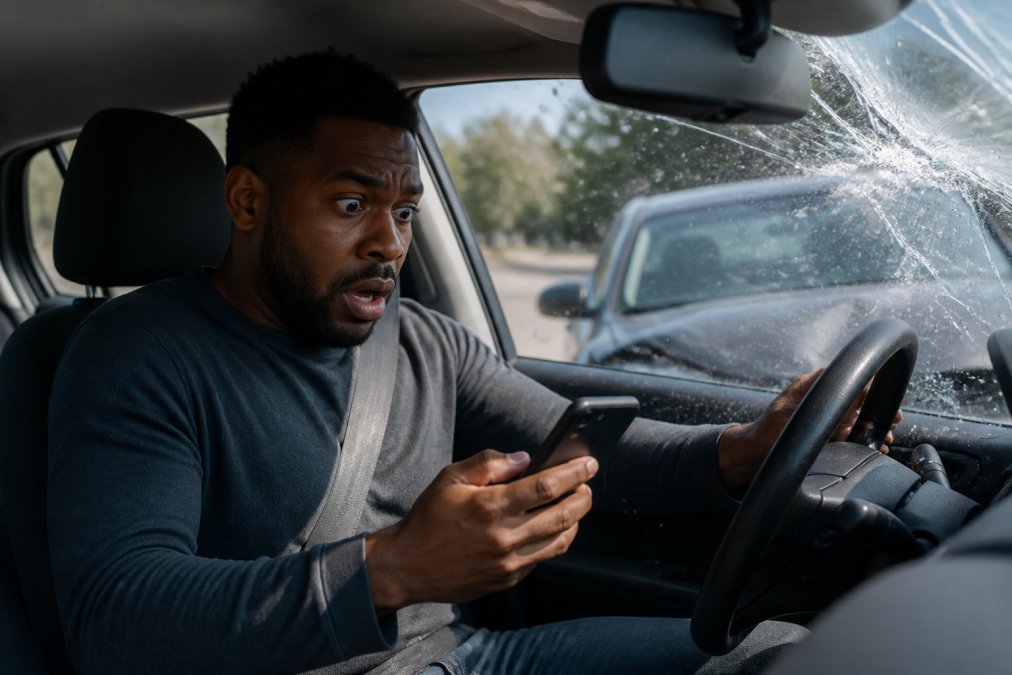
Immediately after the accident, photograph vehicle damage, road conditions, traffic signs, sight lines, and the overall scene from multiple angles. Get contact information from all witnesses and ask them to describe what they saw. Note the driver’s behavior, did they appear distracted? Were they holding a phone? Request the police officer’s name and badge number and ask when the police report will be available. Return to the scene within 24 hours to photograph sight lines and environmental conditions.
Step 2: Request Official Records Immediately
Contact the police department for a copy of the police report. File public records requests for any traffic camera footage. Contact the other driver’s insurance company requesting preservation of all evidence, including vehicle data and phone records. Have your attorney send a preservation notice to the at-fault driver’s phone carrier and vehicle manufacturer. Gather your own medical records, billing statements, and documentation of lost wages.
Step 3: Work With Forensic Experts
Hire a forensic engineer to retrieve and analyze the vehicle’s black box data. If phone records show evidence of texting or app use, consider hiring a digital forensics expert to provide detailed analysis. Depending on your case, you may also need an accident reconstruction expert to analyze collision physics and vehicle damage patterns.
Step 4: File for Discovery and Subpoenas
Once your attorney files a lawsuit or begins settlement negotiations, use discovery to obtain the defendant’s phone records, vehicle data, and any other relevant evidence. File subpoenas with the phone carrier, vehicle manufacturer, and businesses with relevant security footage. Prepare interrogatories asking about phone use, distractions, and actions at the time of the accident. Request production of documents including the defendant’s phone and vehicle maintenance records.
Common Mistakes to Avoid When Proving Distracted Driving
Don’t delay in collecting evidence; witnesses move away, memories fade, and video footage gets recorded over. The first week after an accident is critical. Don’t sign settlement documents or recorded statements from the insurance company without consulting an attorney. Don’t assume the police report includes all relevant information; supplement it with your own investigation, witness statements, and expert analysis.
Don’t rely on a single piece of evidence. Multiple corroborating sources, phone records, vehicle data, witness testimony, video footage, and the police report, create an undeniable case. Don’t attempt to access the defendant’s phone or vehicle data without proper legal process; evidence obtained illegally is inadmissible. Don’t settle too quickly; insurance companies often make low initial offers hoping you’ll accept without fully understanding your case’s value.
Conclusion
Proving distracted driving requires assembling multiple forms of evidence into a cohesive case that clearly establishes negligence and liability. Cell phone records, vehicle computer data, witness statements, police reports, and video footage all contribute to a comprehensive picture of the at-fault driver’s distraction at the moment of impact.
At Merritt & Merritt Law Firm, we have over 45 years of trial experience holding liable parties accountable for distracted driving accidents. Our team immediately launches investigations to preserve evidence, obtain phone records and vehicle data, and interview witnesses while their memories are fresh. We work with forensic experts to analyze digital evidence and accident reconstruction to build cases that insurance companies take seriously. With our contingency fee structure, you pay nothing unless we win. Schedule a Free Consultation with our team today and let us handle the investigation while you focus on recovery.
Frequently Asked Questions
What counts as evidence of distracted driving in a car accident?
Evidence includes cell phone records showing texts or app activity at the time of the accident, vehicle event data recorder data, witness statements describing the driver's behavior, traffic camera or surveillance footage, police reports noting driver statements, and physical evidence like skid marks indicating inattention. Distraction extends beyond texting to include eating, adjusting infotainment systems, or looking away from the road. Your attorney can subpoena phone records and request discovery documents during the civil litigation process to establish causation and breach of duty.
How do attorneys obtain cell phone records in car accident cases?
Your attorney files a subpoena with the phone carrier (AT&T, Verizon, T-Mobile, etc.) requesting records for the at-fault driver's phone during the time of the accident. The subpoena is part of the discovery process in civil litigation. Phone records show call logs, text message timestamps, and app activity, which can prove the driver was distracted. Privacy laws protect personal content, but timestamps and usage data are discoverable. The process typically takes 2-4 weeks. Your attorney handles this as part of the case investigation to build evidence for your personal injury claim.
Can I prove distracted driving without eyewitnesses?
Yes. While witness testimony strengthens your case, you can prove distracted driving through cell phone records, vehicle black box data, traffic camera footage, and accident reconstruction analysis. Forensic experts can analyze event data recorders to determine the driver's actions before impact. Police reports may document driver statements or observations. The burden of proof in civil cases is lower than criminal cases, so multiple types of electronic data and physical evidence can establish negligence and liability even without eyewitness accounts.
How does comparative negligence affect a distracted driving claim?
In Georgia and Florida, comparative negligence rules allow you to recover damages even if you were partially at fault, as long as you were less than 50% responsible. However, your award is reduced by your percentage of fault. If the at-fault driver was distracted and you were not, comparative negligence typically works in your favor. Your attorney presents evidence of the other driver's breach of duty and negligence while minimizing any contributory actions on your part. This impacts your compensatory damages and settlement value.
Our Locations

Atlanta/Decatur
1 West Court Square
Suite 750
Decatur, GA 30030

Savannah
100 Bull Street
Suite 200
Savannah, GA 31401
Statesboro
15 West Main Street
Statesboro, GA 30458
Houston
1415 Louisiana Street,
Suite 1800,
Houston, TX 77002

Jacksonville
841 Prudential Drive
12th Floor
Jacksonville, FL 32207

Contact Us
© Copyright 2026 Merritt & Merritt Law Firm. All rights reserved.