
call us 24/7 1-800-738-WE-WIN
call us 24/7 1-800-738-WE-WIN
Serving All of Georgia, Florida, & Texas
Fender Bender Accident: What to Do Right Now

Table of Contents
- What Constitutes a Fender Bender Accident
- Immediate Steps After a Fender Bender Accident
- How to Document Car Accident Damage
- Exchanging Information at the Accident Scene
- Delayed Injury Symptoms After Car Accident
- When to Hire a Lawyer for a Car Accident
- Reporting Your Accident to Insurance
- Conclusion
Last Updated: August 20, 2026
What Constitutes a Fender Bender Accident
A fender bender accident is a minor collision between vehicles that typically results in minimal property damage and no serious injuries. These low-speed impacts usually occur in parking lots, residential areas, or light traffic situations where vehicles are moving slowly, typically under 10 mph. The damage is primarily cosmetic or easily repairable without affecting the vehicle’s structural integrity.
Call the Merritt & Merritt Law Firm today at 404-975-1775.
However, don’t let the word “minor” mislead you. Even in a fender bender accident, injuries can occur that aren’t immediately obvious. A person can experience whiplash, soft tissue damage, or other delayed symptoms that emerge hours or days after the collision. This is why documentation and proper reporting matter even when the property damage looks insignificant.
The distinction between a true fender bender accident and a more serious collision affects how you handle the situation, what insurance requirements apply, and whether you need legal representation. Some states have different reporting thresholds based on the dollar amount of damage, so understanding where your accident falls on the severity spectrum is important from the start.
Immediate Steps After a Fender Bender Accident
The moments right after a fender bender accident are critical. Your actions in the first few minutes can affect everything from insurance claims to potential legal issues later. The priority is ensuring everyone’s safety, then gathering information systematically.
Move to a Safe Location
If both vehicles are still drivable and you’re in a position where staying creates a traffic hazard, move to a safe location immediately. Turn on your hazard lights and carefully drive to a nearby parking lot, side street, or shoulder where you’re out of the flow of traffic. If you cannot move your vehicle safely, stay inside with seatbelts fastened and hazard lights on. Do not stand in traffic.
Check for Injuries
Before you do anything else, ask yourself and any passengers: “Are you hurt?” In a fender bender accident, injuries aren’t always immediately apparent. Adrenaline can mask pain, and some injuries develop over hours or days. Even if you feel fine now, you may develop symptoms later.
If anyone in either vehicle reports pain or discomfort, call 911. Do not assume that because the damage looks minor, the injuries are minor. Let emergency medical personnel evaluate everyone involved. Their assessment creates an official record that can be important for insurance and legal purposes later.
Call Emergency Services if Needed
Whether to call 911 after a fender bender accident depends on several factors. If anyone is injured or complaining of pain, call immediately. If vehicles are blocking traffic and creating a hazard, call. If either vehicle is leaking fluids or there’s any fire risk, call without hesitation.
In some cases, law enforcement may not respond to minor property-damage-only collisions. However, calling gives you an official record. Some states require a police report for insurance purposes if the damage exceeds a certain threshold. If police don’t respond, you can file a report later at the local police station or online through your jurisdiction’s website.
How to Document Car Accident Damage
Documentation is your protection in a fender bender accident. The photos and information you gather at the scene become evidence if disputes arise later.
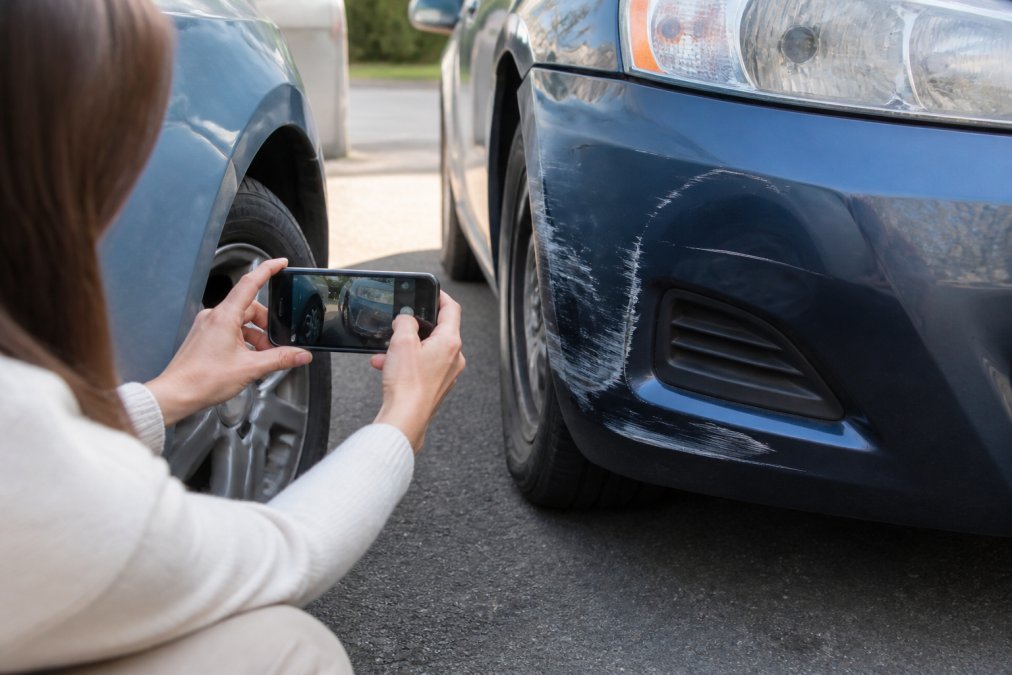
Take photos from multiple angles: the overall scene showing both vehicles’ positions, close-ups of all damage on both vehicles, the license plates of both cars, and the accident location itself. Include photos showing weather and road conditions if relevant.
Get the other driver’s information: full name, phone number, home address, driver’s license number, vehicle make and model, license plate number, and insurance policy number. Write down the name of their insurance company and the policy number. Ask if they were the vehicle owner or if they were driving someone else’s car, and if so, get the owner’s information.
If there are witnesses, get their names, phone numbers, and addresses. Ask them to briefly describe what they saw. Witnesses often disappear after an accident, so capturing their contact information immediately is essential.
Take notes about the accident itself: the date, time, weather conditions, road conditions, traffic signals or signs visible, speed you were traveling, and a description of how the collision occurred. Write down the other driver’s account of what happened. Note whether police arrived and if a report was filed.
Exchanging Information at the Accident Scene
The exchange of information at a fender bender accident scene is straightforward but easy to forget details if you’re stressed or in shock.

Ask the other driver for their full legal name, current phone number, and home address. Request their driver’s license and take a clear photo of both sides. Do the same with their vehicle registration and insurance card. If they resist providing information, remain calm and explain that this is standard procedure. If they refuse, note that in your documentation and call police if you haven’t already.
Be cautious about what you say. Do not apologize for the accident, do not admit fault, and do not speculate about what happened. Stick to factual statements: “I was stopped at the light” or “I was turning into the parking lot.” Anything you say can be used later, so keep your words neutral.
If the other driver is hostile, injured, or impaired, do not engage in a prolonged conversation. Get their information, step back, and wait for police. Your safety is more important than getting a detailed statement from someone who is upset or unstable.
Delayed Injury Symptoms After Car Accident
One of the most common mistakes people make after a fender bender accident is assuming that because they feel fine immediately, they’re uninjured. Delayed injury symptoms are real and surprisingly common, even in low-speed collisions.
Schedule a Free Consultation →
Whiplash is the classic delayed injury. Your neck and upper back can be injured by the sudden acceleration and deceleration of a fender bender accident, but the pain and stiffness may not appear for 12 to 48 hours. Headaches, dizziness, and shoulder pain often accompany whiplash.
Back injuries are equally common and equally delayed. The impact can strain muscles and ligaments in your lower back. You might feel fine at the accident scene but experience pain when you try to bend over or lift something the next day.
Concussions and traumatic brain injuries can occur even in minor collisions if your head struck something or if the impact was severe enough to cause your brain to move inside your skull. Symptoms include headache, dizziness, memory problems, difficulty concentrating, sensitivity to light, and mood changes.
This is why seeking medical evaluation within 24 hours of a fender bender accident is so important, even if you feel fine. A healthcare provider can identify injuries you might not notice and create a medical record documenting your condition immediately after the accident. This record is invaluable if you need to file an insurance claim or pursue legal action later.
When to Hire a Lawyer for a Car Accident
Not every fender bender accident requires a lawyer, but certain situations make legal representation essential. If you’ve suffered significant injuries, if liability is disputed, or if the insurance company is offering an unreasonably low settlement, an attorney can protect your rights and help you recover fair compensation.
You should consider hiring a lawyer if your medical bills exceed a few thousand dollars, if you’ve lost income due to time off work, or if you’re experiencing ongoing pain or limitations. Liability disputes are another clear reason to hire a lawyer. If the other driver is claiming you caused the accident, or if there’s ambiguity about fault, an attorney can investigate the accident, interview witnesses, and build a case supporting your version of events.
Insurance companies sometimes offer settlements that don’t actually cover your full damages. An experienced attorney understands the true value of your claim, including pain and suffering, future medical care, and lost earning capacity. They can negotiate with the insurance company and push back against lowball offers.
At Merritt & Merritt Law Firm, our team has over 45 years of trial experience handling car accident cases. We investigate claims thoroughly to hold liable parties accountable and work to secure fair compensation for our clients. If you’re unsure whether your case warrants legal representation, we offer a free consultation to evaluate your situation and explain your options. We work on a contingency fee basis, meaning you pay nothing unless we win your case.
Reporting Your Accident to Insurance
Reporting your accident to your insurance company promptly is important, but do so carefully. Insurance companies are looking for reasons to minimize payouts, so how you present information matters.
Contact your insurance company as soon as possible, ideally within 24 hours of the fender bender accident. Have your policy number ready and a clear account of what happened. Provide the facts: date, time, location, the other driver’s information, and a straightforward description of the collision.
Do not speculate or admit fault when speaking with your insurance adjuster. Stick to what you know directly. Say “I was turning left when the other vehicle entered the intersection” rather than “I didn’t see the other car coming.” Let the adjuster and the investigation process determine fault based on evidence.
Be cautious about recorded statements. Insurance companies often request recorded statements, and they have the right to ask for them. However, you can decline and instead provide a written statement. A written statement gives you time to think carefully about your words and prevents misquotes. Consult with an attorney before giving a recorded statement if your case is complex or if significant injuries are involved.
Provide your documentation: photos of the damage, photos of the accident scene, the other driver’s information, witness contact information, and any police report number. Keep records of all medical treatment related to the accident. Save receipts, medical records, and documentation of time off work. These records support your claim for damages and help justify the compensation you’re seeking.
A fender bender accident can feel minor in the moment, but the consequences can be significant. Even small collisions can cause injuries that develop over time, and insurance companies don’t always offer fair settlements without pushback. Taking thorough documentation steps immediately after the accident, seeking medical evaluation even if you feel fine, and understanding when to involve legal representation protects your rights and your financial future.
If you’ve been injured in a fender bender accident and the insurance company is offering an inadequate settlement, or if you’re uncertain about your legal rights, Merritt & Merritt Law Firm can help. Our team evaluates cases 24 hours a day, with attorneys available to visit you at home, your office, or the hospital. We investigate thoroughly to hold liable parties accountable and work to secure the compensation you deserve. With over 45 years of trial experience, we understand how insurance companies operate and how to negotiate effectively on your behalf. Contact us for a free consultation, you pay nothing unless we win your case.
Frequently Asked Questions
What is a fender bender accident?
A fender bender accident is a low-speed collision involving minor property damage, typically to bumpers, fenders, or paint. These accidents usually occur in parking lots or at low speeds on roadways. While property damage may appear minimal, injuries can still occur—whiplash, back pain, and head injuries are common even in low-impact collisions. Don't assume you're unharmed immediately after the accident; some injuries develop over hours or days.
Can injuries appear days after a fender bender?
Yes. Delayed injury symptoms after car accidents are common, even in minor collisions. Adrenaline and shock can mask pain initially. Whiplash, soft tissue injuries, and internal bruising may not cause noticeable symptoms for 24-72 hours after impact. Seek medical attention promptly and document any symptoms that develop later. This documentation strengthens your claim if you later file for compensation. If you experience headaches, neck stiffness, back pain, or dizziness in the days following a fender bender, contact a healthcare provider.
Should you admit fault at the accident scene?
No. Avoid admitting fault, apologizing excessively, or making statements about who caused the accident. Even a casual 'I'm sorry' can be interpreted as admission of liability. Exchange only factual information: names, phone numbers, driver's license numbers, vehicle registration details, and insurance policy information. Let insurance adjusters and, if necessary, attorneys determine fault based on evidence, police reports, and witness statements.
When should you hire a lawyer for a car accident?
Consider hiring a lawyer if injuries persist beyond minor bruising, medical bills exceed your insurance deductible, the other driver was uninsured or underinsured, fault is disputed, or the insurance company denies your claim or offers an unreasonably low settlement. A lawyer can investigate the accident, negotiate with insurers, and protect your legal rights. Many personal injury attorneys work on contingency—you pay only if you win—making legal representation accessible regardless of your financial situation.
Our Locations

Atlanta/Decatur
1 West Court Square
Suite 750
Decatur, GA 30030

Savannah
100 Bull Street
Suite 200
Savannah, GA 31401

Statesboro
15 West Main Street
Statesboro, GA 30458
Houston
1415 Louisiana Street,
Suite 1800,
Houston, TX 77002

Jacksonville
841 Prudential Drive
12th Floor
Jacksonville, FL 32207

Contact Us
© Copyright 2026 Merritt & Merritt Law Firm. All rights reserved.