
call us 24/7 1-800-738-WE-WIN
call us 24/7 1-800-738-WE-WIN
Serving All of Georgia, Florida, & Texas
Texas Comparative Negligence Laws Explained
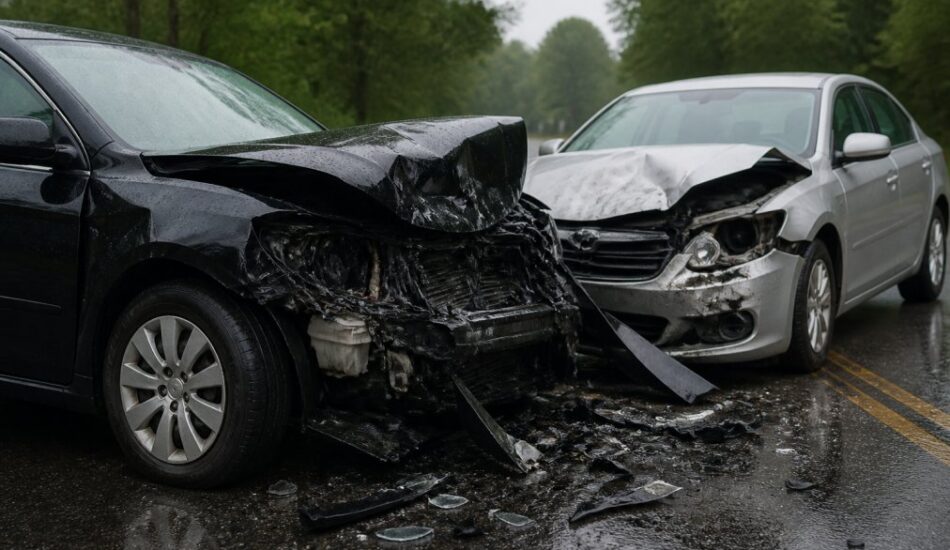
Table of Contents
- What Is Comparative Negligence in Texas?
- Understanding the 51 Percent Bar Rule
- How Fault Is Determined in a Car Accident
- How Shared Fault Reduces Your Compensation
- Personal Injury Settlement Examples With Shared Fault
- Why Expert Witnesses Matter in Fault Disputes
- What You Should Do After an Accident
- Conclusion
Last Updated: August 21, 2026
What Is Comparative Negligence in Texas?
Comparative negligence is a legal principle that allows accident victims to recover damages even when they share some responsibility for the accident. Rather than applying an all-or-nothing rule, comparative negligence laws reduce your compensation based on your percentage of fault. If you’re 20% responsible for a car accident, you can still recover 80% of your damages. This framework recognizes that most accidents involve shared responsibility rather than one party bearing 100% of the blame.
Call the Merritt & Merritt Law Firm today at 713-535-7051.
Understanding comparative negligence laws is crucial for anyone injured in an accident. The rules governing how fault is assigned directly affect how much compensation you receive. At Merritt & Merritt Law Firm, we’ve helped clients navigate these complex calculations to ensure they receive fair settlements despite being partially at fault.
The comparative negligence system operates differently across states. Some jurisdictions follow a “pure” comparative negligence approach, allowing recovery regardless of fault percentage. Others use a “modified” system with specific thresholds. Knowing which system applies to your case fundamentally changes your strategy and potential recovery.
Understanding the 51 Percent Bar Rule
The 51 percent bar rule is a modified comparative negligence standard that prevents plaintiffs from recovering damages if they are 51% or more responsible for the accident. Under this rule, you must be less than 50% at fault to collect any compensation. If you’re found to be equally at fault (50/50) or more responsible, you recover nothing.
This threshold creates a critical distinction in personal injury claims. A plaintiff who is 49% responsible can recover their full proportionate damages. A plaintiff who is 50% responsible cannot recover anything. That single percentage point determines whether you walk away with a settlement or leave empty-handed.
The 51 percent bar rule applies in many states, though the specific terminology and thresholds vary by jurisdiction. Some states use a “50% bar” (you must be less than 50% at fault), while others use a “49% bar” (you cannot recover if you’re 49% or more at fault). Understanding your state’s specific rule is essential because it defines whether your case has viable recovery potential.
Insurance adjusters and defense attorneys use the 51 percent bar strategically. They often attempt to assign you more than 50% responsibility to eliminate your claim entirely. This is where detailed evidence gathering and expert witnesses become invaluable. Disputing a 51% fault assignment requires demonstrating that your actual responsibility falls below that threshold.
How Fault Is Determined in a Car Accident
Determining fault in a car accident involves analyzing multiple factors, including traffic laws, driver behavior, vehicle positions, environmental conditions, and witness accounts. Insurance adjusters and attorneys examine police reports, physical evidence, photographs, and testimonies to establish what actually happened and who violated their duty of care.
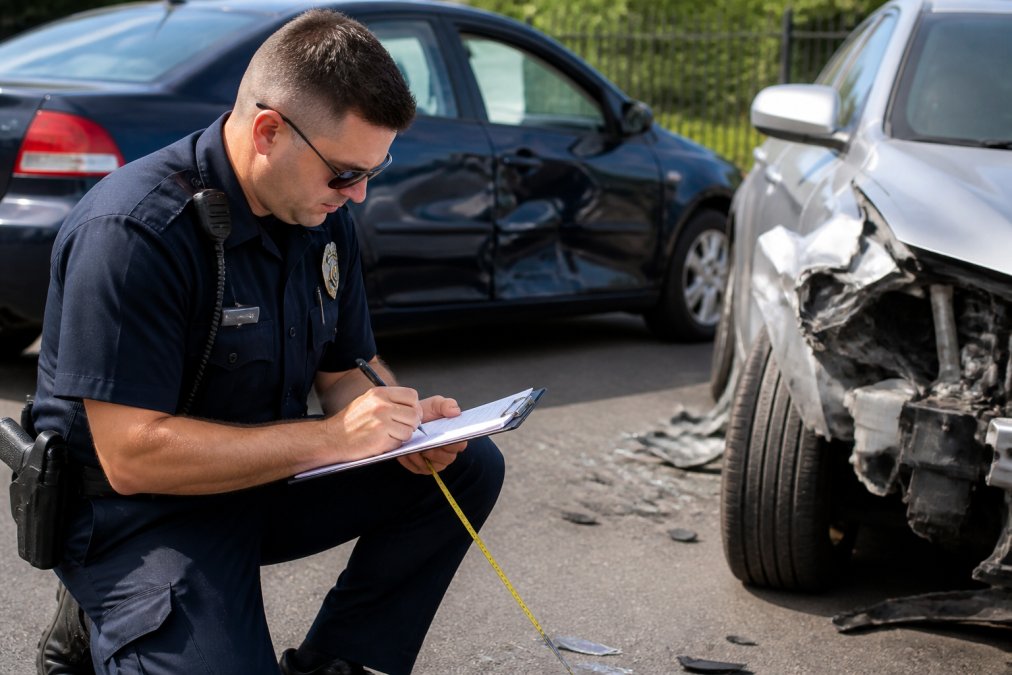
The process begins with understanding each driver’s duty of care. Every driver has a legal obligation to operate their vehicle safely, obey traffic laws, and avoid actions that could harm others. When a driver breaches this duty, by speeding, running a red light, texting while driving, or failing to maintain their vehicle, they create liability for resulting injuries.
Evidence That Establishes Fault
Physical evidence at the accident scene provides objective data about what occurred. Vehicle damage patterns reveal impact angles and force. Skid marks indicate braking distance and speed estimates. Debris scatter shows collision points. Photographs of vehicle positions, road conditions, and traffic signals create a visual record that supports or contradicts witness accounts.
Accident reconstruction experts analyze this physical evidence using engineering principles, physics, and specialized software. They can determine vehicle speeds, impact angles, and whether a driver had time to react. Their expert testimony often proves decisive in disputed liability cases, particularly when insurance adjusters attempt to assign fault unfairly.
The Role of Police Reports and Witness Testimony
Police reports document the accident scene and often include the officer’s preliminary fault assessment. However, police fault determinations are not binding in civil cases. They serve as one data point among many. What matters legally is the actual evidence, not what the responding officer initially believed.
Witness testimony provides human perspective on how the accident occurred. Credible witnesses who observed the accident from clear vantage points can describe driver actions, traffic signal status, and pre-collision behavior. Multiple consistent witness accounts strengthen liability arguments significantly. Conversely, conflicting testimonies create ambiguity that defense attorneys exploit to dispute fault assignments.
How Shared Fault Reduces Your Compensation
When you share responsibility for an accident, your total recoverable damages are reduced proportionally to your percentage of fault. This reduction applies directly to your settlement or jury verdict. If you’re entitled to $100,000 in damages but found to be 30% at fault, your recovery is reduced to $70,000.
The mathematics seem straightforward, but the real-world impact is substantial. A 20% fault assignment reduces your recovery by $20,000 on a $100,000 claim. A 40% assignment eliminates $40,000. Insurance adjusters understand this dynamic and often inflate your fault percentage to minimize their payout obligations. Challenging inflated fault assignments requires detailed evidence and sometimes expert testimony.
Proportionate responsibility means the defendant pays only their share of liability. If you’re found 40% at fault and the defendant 60% at fault, the defendant pays 60% of your total damages. This system incentivizes fair settlements because both parties bear consequences for their negligence. It also discourages frivolous claims by accident victims who bear significant fault.
Personal Injury Settlement Examples With Shared Fault
Consider a rear-end collision where the rear driver was texting while driving but the front driver had a broken brake light. The rear driver bears primary responsibility for the collision, but the missing brake light contributed to the accident. An insurance adjuster might assign 70% fault to the rear driver and 30% to the front driver.
If the front driver’s damages total $50,000, they would recover $35,000 (70% of $50,000) rather than the full amount. The 30% reduction reflects their proportionate contribution to the accident. While this seems unfair at first glance, it acknowledges that the front driver’s failure to maintain their vehicle created a hazard that the rear driver couldn’t avoid.
Another example: a side-impact collision at an intersection where both drivers claim the other ran a red light. Witness testimony conflicts. One witness says the plaintiff had a green light; another says the defendant did. Police report is inconclusive. In this scenario, a jury might find both drivers partially at fault, perhaps 55% defendant, 45% plaintiff. The plaintiff recovers 55% of their damages.
Schedule a Free Consultation →
These scenarios illustrate why fault determination is rarely black-and-white. Most accidents involve multiple contributing factors and shared responsibility. Understanding how these percentages affect your recovery helps you evaluate settlement offers realistically. At Merritt & Merritt Law Firm, we analyze every case factor to ensure fault assignments accurately reflect the evidence.
Why Expert Witnesses Matter in Fault Disputes
Expert witnesses provide specialized knowledge that judges and juries lack. Accident reconstruction experts use engineering principles to determine vehicle speeds, impact angles, and causation. Medical experts establish the connection between accident forces and your injuries. Vocational experts quantify lost earning capacity. Each expert strengthens your case by translating technical evidence into understandable testimony.
In comparative negligence disputes, expert witnesses often prove decisive. An insurance adjuster might claim you were speeding, but an accident reconstruction expert can analyze skid marks, vehicle damage, and road conditions to determine your actual speed. Their objective analysis contradicts the adjuster’s narrative and supports your lower fault percentage.
Defense attorneys also use expert witnesses to inflate your fault assignment. They may hire experts who testify that you were partially responsible for the accident through your own negligence. Countering their testimony requires your own qualified experts who can credibly challenge their analysis. This expert-versus-expert dynamic often determines the outcome in close liability cases.
The admissibility and credibility of expert testimony depends on their qualifications, methodology, and consistency with scientific principles. Courts apply rigorous standards to ensure expert testimony is reliable. A well-qualified expert with sound methodology carries significant weight. A poorly-qualified expert with questionable analysis damages your case.
What You Should Do After an Accident
Immediately following an accident, your actions can significantly impact your ability to prove fault and liability. Move to safety if possible, check for injuries, and call emergency services if anyone needs medical attention. Your health is the absolute priority.

Once safety is established, document the accident scene thoroughly. Take photographs of vehicle positions, damage patterns, traffic signals, road conditions, and any visible hazards. Photograph the other vehicle’s license plate and driver’s license if possible. These photographs create objective evidence that supports your account of what happened.
Exchange information with the other driver, but avoid admitting fault or discussing the accident in detail. Statements like “I’m sorry” or “This was my fault” can be used against you later, even if you didn’t cause the accident. Simply exchange names, phone numbers, addresses, insurance information, and vehicle details.
Contact police and request an accident report. The police officer’s observations and preliminary findings become part of the official record. Even if the officer doesn’t assign definitive fault, their report documents the scene and circumstances. Request the report number and follow up to obtain a copy.
Seek medical attention promptly, even if you feel fine. Some injuries develop over hours or days after an accident. Medical records create documentation of your injuries and establish a causal connection to the accident. This medical evidence becomes crucial if you later pursue a claim.
Preserve evidence by keeping all accident-related documents: medical records, repair estimates, photographs, police reports, and correspondence with insurance companies. Avoid posting about the accident on social media, as insurers monitor social platforms for evidence to dispute claims. Anything you post can be used to minimize your injuries or suggest you’re less injured than you claim.
Contact an experienced personal injury attorney before speaking extensively with insurance adjusters. Insurance companies employ skilled negotiators trained to minimize payouts. An attorney protects your rights and ensures you don’t inadvertently harm your case through statements to adjusters.
Understanding comparative negligence laws helps you to evaluate settlement offers and hold insurance companies accountable for fair fault determinations. When shared responsibility reduces your compensation, you deserve representation that challenges inflated fault assignments and fights for your proportionate recovery. Merritt & Merritt Law Firm has over 45 years of trial experience investigating accident claims, disputing unfair fault assignments, and securing settlements that reflect your actual responsibility. Our team provides immediate case evaluation, conducts thorough investigations to establish liability, and negotiates settlements with the confidence that comes from proven trial experience. If you’ve been injured in an accident and face a shared fault dispute, schedule a free consultation to discuss your case with attorneys who understand how comparative negligence laws affect your recovery.
Fault Percentage | Recovery Rate | Example Recovery |
|---|---|---|
0-10% | 90-100% | $90,000 on $100,000 claim |
20-30% | 70-80% | $75,000 on $100,000 claim |
40-49% | 51-60% | $55,000 on $100,000 claim |
50%+ | 0% | $0 recovery (51% bar rule) |
According to the American Bar Association’s guidance on personal injury claims, comparative negligence principles vary significantly across jurisdictions, making it essential to understand your state’s specific rules. The National Highway Traffic Safety Administration’s accident investigation standards establish best practices for documenting accident scenes and preserving evidence that courts rely on in liability disputes. Research from the Insurance Information Institute on fault determination in auto accidents demonstrates that professional accident reconstruction significantly improves outcomes in cases involving disputed liability.
Frequently Asked Questions
Q: What is the 51% rule in personal injury cases?
Texas follows a modified comparative negligence system. Under the 51 percent bar rule, you can recover damages only if you are 50% or less at fault for the accident. If you are found 51% or more responsible, you cannot recover any compensation. This rule directly impacts your ability to pursue a personal injury claim, even if you suffered significant injuries. Insurance adjusters and defendants often argue for higher fault percentages to bar recovery entirely.
Q: Can I still recover damages if I'm partially at fault for an accident?
Yes, under Texas comparative negligence law. If you are found 50% or less at fault, you can recover damages. However, your compensation is reduced by your percentage of fault. For example, if you are 30% at fault and your total damages are $100,000, you would recover $70,000. The key is staying at or below the 50% threshold. This is why establishing lower fault percentages is critical to maximizing your recovery.
Q: How is fault percentage determined in an accident?
Fault is determined by examining evidence including police reports, witness testimony, accident reconstruction reports, and physical evidence from the scene. Insurance adjusters, juries, and judges evaluate whether each party breached their duty of care and caused the accident. Factors include traffic violations, road conditions, vehicle speeds, and driver actions before impact. Expert witnesses often analyze accident reconstruction to establish fault percentages. The burden of proof and quality of evidence directly influence the final fault determination.
Q: What happens if both parties are 50% at fault?
If fault is split exactly 50-50, you can still recover damages under Texas law because you meet the threshold requirement of being 50% or less at fault. Your recovery would be reduced by 50%, meaning you receive half of your total damages. However, disputes about whether fault is truly equal are common. Insurance companies may argue for higher percentages against you. Having strong legal representation to defend against inflated fault assessments is essential to protect your recovery in these borderline cases.
Our Locations

Atlanta/Decatur
1 West Court Square
Suite 750
Decatur, GA 30030

Savannah
100 Bull Street
Suite 200
Savannah, GA 31401
Statesboro
15 West Main Street
Statesboro, GA 30458
Houston
1415 Louisiana Street,
Suite 1800,
Houston, TX 77002

Jacksonville
841 Prudential Drive
12th Floor
Jacksonville, FL 32207

Contact Us
© Copyright 2026 Merritt & Merritt Law Firm. All rights reserved.