
call us 24/7 1-800-738-WE-WIN
call us 24/7 1-800-738-WE-WIN
Serving All of Georgia, Florida, & Texas
Personal Injury Lawyer Houston Texas: Your Complete Guide

Table of Contents
- Why You Need a Personal Injury Lawyer in Houston
- How Much Is My Personal Injury Claim Worth?
- Texas Statute of Limitations for Personal Injury Claims
- What to Do After a Car Accident in Houston
- Houston Personal Injury Lawyer Contingency Fee Structure
- Choosing the Right Personal Injury Lawyer in Houston
- Frequently Asked Questions
Last Updated: July 1, 2026
When you’re injured due to someone else’s negligence, finding the right personal injury lawyer houston texas becomes critical to protecting your rights and securing fair compensation. At Merritt & Merritt Law Firm, we understand the urgency and complexity of personal injury claims. With over 45 years of trial experience, our team is committed to holding liable parties accountable and ensuring accident victims receive the compensation they deserve.
Why You Need a Personal Injury Lawyer in Houston
Handling a personal injury case alone is like navigating a legal minefield without a map. Insurance companies have teams of adjusters trained to minimize payouts, and Texas law contains specific requirements that, if missed, can cost you thousands in recoverable damages.
A qualified personal injury lawyer houston texas protects your interests in ways most people don’t realize. Insurance adjusters will contact you within days of an accident, asking recorded statements. Anything you say can be used against you later. An attorney acts as a buffer between you and these tactics, handling all communication and negotiation. A skilled attorney also investigates your claim thoroughly, gathering police reports, medical records, witness statements, and expert testimony to build a compelling case.
How Negligence Works in Texas Personal Injury Cases
Negligence is the legal foundation of most personal injury claims. To win your case, your attorney must prove four elements: duty, breach, causation, and damages.
First, the defendant owed you a duty of care. A driver on the road owes all other drivers a duty to follow traffic laws. A property owner owes visitors a duty to maintain reasonably safe premises. Second, the defendant breached that duty through negligent action or inaction. Third, that breach caused your injury, your attorney must show a direct link between the defendant’s negligence and your harm. Finally, you suffered actual damages: medical bills, lost wages, pain and suffering, or permanent disability.
Texas also recognizes comparative negligence, meaning you can recover damages even if you were partially at fault, as long as you were less than 51% responsible. If you were 30% at fault and the defendant 70%, you can recover 70% of your damages. This nuance makes skilled legal representation essential.
Types of Personal Injury Cases We Handle
Personal injury law covers a broad range of accidents and injuries.
Car accidents are the most common personal injury claims, often involving clear liability and documented injuries. Slip and fall accidents fall under premises liability law when property owners fail to maintain safe conditions or warn of hazards. Trucking accidents involve commercial vehicles and are more complex, with federal regulations governing operations and multiple potentially liable parties. Workplace injuries covered by workers’ compensation may also involve third-party liability if a defective tool or product caused the injury. Product liability cases arise when a defective or dangerous product causes injury. Medical malpractice occurs when a healthcare provider deviates from the standard of care, resulting in patient harm. Wrongful death claims are filed when someone dies due to another’s negligence.
How Much Is My Personal Injury Claim Worth?
The answer depends on several factors: severity of injury, medical expenses, lost wages, permanence of damage, and insurance policy limits. Most personal injury settlements fall between $3,000 for minor injuries and $1 million-plus for severe, permanent injuries. A broken arm with full recovery might settle for $15,000 to $50,000. Permanent spinal cord damage could exceed $500,000.
Compensatory Damages and Pain and Suffering
Compensatory damages are divided into economic and non-economic categories.
Economic damages are straightforward to calculate: medical bills (emergency room, surgery, physical therapy, ongoing treatment), lost wages (time away from work during recovery), and future medical expenses. Gather all receipts, medical records, and pay stubs to document these losses.
Non-economic damages are harder to quantify but often represent the largest portion of a settlement. Pain and suffering compensates you for physical pain, emotional distress, anxiety, depression, and reduced quality of life. Judges and juries consider severity and duration of pain, permanence of injury, impact on daily activities, and age of the plaintiff. A 25-year-old with permanent nerve damage will receive higher pain and suffering damages than a 65-year-old with the same injury.
Punitive Damages in Houston Cases
Punitive damages punish the defendant for grossly negligent or intentional conduct and discourage similar behavior. Texas allows punitive damages only in cases involving gross negligence, fraud, or intentional misconduct, not ordinary negligence. A manufacturer who conceals a known product defect to save money may face punitive damages.
Punitive damages are capped in Texas. Generally, they cannot exceed the greater of: (1) two times the amount of economic damages plus up to $750,000 in non-economic damages, or (2) $200,000. Punitive damages are rare and require strong evidence of intentional wrongdoing, not just carelessness.
Texas Statute of Limitations for Personal Injury Claims
Time is not your friend in personal injury law. Texas imposes strict deadlines for filing lawsuits, and missing them means losing your right to recover forever.
For most personal injury claims, you have two years from the date of injury to file suit. This applies to car accidents, slip and falls, and general negligence cases. Medical malpractice has a tighter deadline: two years from the date you discovered (or should have discovered) the malpractice, with an absolute cap of ten years from the negligent act itself. Wrongful death claims must be filed within two years of the death.
There are limited exceptions. If the injured person is a minor, the statute of limitations may be tolled (paused) until they reach age 18. If the defendant leaves Texas, the time they’re absent may not count toward the deadline.
What to Do After a Car Accident in Houston
The first hours after an accident are critical. Your actions can significantly impact your claim’s value and your ability to prove liability.
Immediately after the collision: Ensure everyone’s safety and move to a safe location if possible. Call 911 if anyone is injured or if there’s significant property damage. Never admit fault or apologize for the accident.
At the scene: Exchange information with the other driver: name, phone number, address, insurance company, policy number, and vehicle details. Take photos of vehicle damage from multiple angles and the accident scene, including road conditions, traffic signs, and weather. Get witness names and contact information. Request a police report number. Do not discuss accident details with the other driver or their insurance company.
After leaving the scene: Seek medical attention even if you feel fine. Some injuries don’t show symptoms immediately. Report the accident to your insurance company, but keep your statement brief and do not provide a recorded statement without consulting an attorney first.
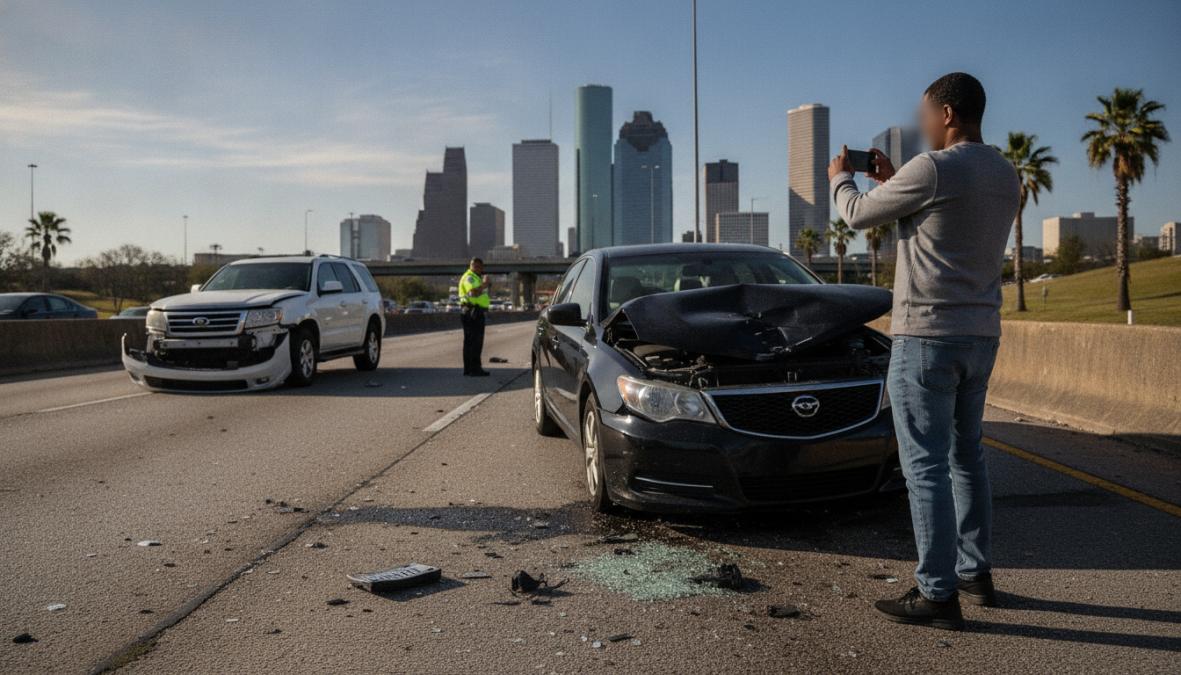
Documenting Your Accident and Gathering Evidence
Evidence is the backbone of your claim. Medical records prove you were injured and establish the extent of your injuries. Keep every receipt, bill, and medical report, including emergency room visits, surgeries, physical therapy, and follow-up appointments.
Wage loss documentation proves your economic damages. Obtain pay stubs from before and after the accident. If you’re self-employed, provide tax returns and business records showing lost income.
Photos and video of the accident scene, vehicle damage, and your injuries are powerful evidence. Video testimonials of how the injury affects your daily life can be compelling to a jury.
Witness statements corroborate your version of events. Get contact information from anyone who saw the accident. Police reports document the accident officially. Communications with insurance adjusters should be documented. Keep emails and written correspondence.
Dealing with Insurance Adjusters
Insurance adjusters work for the insurance company, not for you. Their job is to minimize the payout. Within days of your accident, an adjuster will contact you with questions designed to gather information that reduces your claim’s value.
Do not provide a recorded statement. Anything you say can be twisted and used against you. Do not accept the first settlement offer. Initial offers are typically 30-50% below what your claim is actually worth. Do not sign medical authorizations without consulting an attorney. These give the insurance company access to your entire medical history, which could be used to argue your injuries are pre-existing.
Once you’ve retained an attorney, direct all communication to them. Your lawyer negotiates with adjusters, protecting you from these tactics.
Houston Personal Injury Lawyer Contingency Fee Structure
One of the biggest barriers to pursuing a personal injury claim is cost. A contingency fee means you pay your attorney only if you win. The attorney takes a percentage of your settlement or judgment, typically 25-40% depending on the complexity of the case and whether it goes to trial.
You retain an attorney at no upfront cost. They investigate your claim, negotiate with insurance companies, and handle all legal work. If they secure a settlement, they take their fee from the proceeds. If you lose, you owe them nothing. This arrangement aligns the attorney’s interests with yours. They only make money if you recover money.
Why No Win No Fee Protects You
“No win, no fee” is another term for contingency representation. It eliminates financial risk, you’re not paying hourly rates or upfront retainers. It ensures your attorney is committed because they won’t get paid unless they win. It levels the playing field against well-resourced insurance companies. It’s also standard in personal injury law. If an attorney demands upfront payment for a personal injury case, that’s a red flag.
At Merritt & Merritt Law Firm, we work exclusively on contingency. You pay nothing unless we win. We handle all investigation, negotiation, and litigation costs upfront.
Choosing the Right Personal Injury Lawyer in Houston
Not all personal injury attorneys are created equal. Choosing the right attorney directly impacts your settlement amount. A skilled negotiator might secure 50% more than an inexperienced one.
What to Look for in Trial Experience and Board Certification
Trial experience matters. Insurance companies are less likely to offer fair settlements if they think your attorney can’t credibly threaten trial. Look for an attorney who has actually tried cases to juries. Ask how many trials they’ve handled, what types of cases, and what verdicts they’ve obtained.
Board certification is another credential worth considering. The Texas Board of Legal Specialization certifies attorneys who demonstrate expertise in specific practice areas. A board-certified personal injury attorney has met rigorous standards: years of experience, continuing education, peer review, and examination.
Ask about the attorney’s background: How many years have they practiced personal injury law? How many cases have they handled? What’s their trial record? Do they regularly speak at legal conferences or teach other attorneys?
Local Expertise and Houston-Specific Knowledge
Houston is a unique legal market. An attorney with deep local roots understands the city’s traffic patterns, demographics, local judges, and jury composition. Local expertise means knowing which judges are fair and which are biased, understanding jury demographics in Harris County, and knowing which opposing counsel are reasonable.
An attorney who’s practiced in Houston for decades has relationships with judges, opposing counsel, and court staff. These relationships facilitate better settlements and smoother litigation. Local expertise also means understanding Houston’s medical community and being able to find credible expert witnesses.
At Merritt & Merritt Law Firm, we’ve been serving Houston injury victims for over 45 years. We know Houston’s courts, its judges, its juries, and its legal landscape. We’re available 24 hours a day and can meet with you at your home, office, or hospital.
Factor | Why It Matters | What to Look For |
|---|---|---|
Trial Experience | Judges and juries respect experienced trial attorneys | Ask about specific verdicts and settlements |
Board Certification | Demonstrates specialized expertise and commitment | Certification from Texas Board of Legal Specialization |
Local Knowledge | Understanding Houston courts and judges | Years practicing in Houston and Harris County |
Contingency Fee | Aligns attorney’s interests with yours | No upfront costs, fee only if you win |
Availability | Responsive communication during crisis | 24-hour service and flexible meeting locations |
Finding the right personal injury lawyer houston texas is one of the most important decisions you’ll make after an injury. The difference between hiring an experienced, dedicated attorney and a generalist handling too many cases can mean tens of thousands of dollars in your pocket.
At Merritt & Merritt Law Firm, we bring over 45 years of trial experience to every case. We investigate thoroughly, negotiate aggressively, and aren’t afraid to take cases to trial when necessary. We work exclusively on contingency, meaning you pay nothing unless we win. Our team is available 24 hours a day. Schedule a free case review today and let us fight for the compensation you deserve.
Texas Board of Legal Specialization
State Bar of Texas Personal Injury Practice Resources
Harris County District Courts Case Information
Frequently Asked Questions
How much does a personal injury lawyer cost in Houston?
Most personal injury lawyers in Houston, including Merritt & Merritt Law Firm, work on a contingency fee basis—meaning you pay nothing unless we win your case. Our fees are typically a percentage of your settlement or judgment, usually 25-40% depending on case complexity. This structure ensures your lawyer is motivated to maximize your recovery, and you have no upfront costs or financial risk.
What is the statute of limitations for personal injury in Texas?
In Texas, the statute of limitations for most personal injury claims is two years from the date of injury. However, this deadline varies by case type—wrongful death claims also have a two-year limit, but it runs from the date of death. Missing this deadline typically bars you from filing a lawsuit entirely. Contact a personal injury lawyer immediately if you’ve been injured to protect your legal rights.
How long does a personal injury case take to settle in Houston?
Settlement timelines vary significantly based on case complexity, injury severity, and insurance company responsiveness. Simple car accidents may settle in 3-6 months, while cases involving serious injuries, multiple parties, or litigation can take 1-3 years. Our team works to resolve cases efficiently while ensuring you receive fair compensation for medical bills, lost wages, and pain and suffering.
What damages can I recover in a Houston personal injury lawsuit?
You can recover compensatory damages including medical bills, lost wages, property damage, and pain and suffering. In cases involving gross negligence or intentional misconduct, punitive damages may also be available to punish the liable party. A personal injury lawyer can evaluate your specific circumstances and help determine what damages apply to your claim, maximizing your recovery potential.
Our Locations

Atlanta/Decatur
1 West Court Square
Suite 750
Decatur, GA 30030

Savannah
100 Bull Street
Suite 200
Savannah, GA 31401

Statesboro
15 West Main Street
Statesboro, GA 30458

Houston
1415 Louisiana Street,
Suite 1800,
Houston, TX 77002

Jacksonville
841 Prudential Drive
12th Floor
Jacksonville, FL 32207

Contact Us
© Copyright 2026 Merritt & Merritt Law Firm. All rights reserved.