
call us 24/7 1-800-738-WE-WIN
call us 24/7 1-800-738-WE-WIN
Serving All of Georgia, Florida, & Texas
Common Defenses Used by Insurance Companies in Slip and Fall

Table of Contents
- Why Insurers Fight Slip and Fall Claims
- The Open and Obvious Hazard Defense
- Notice of Dangerous Condition in Slip and Fall Cases
- Slip and Fall Comparative Negligence and Fault Allocation
- Assumption of Risk and Lack of Duty Claims
- How Insurers Investigate Slip and Fall Claims
- Your Slip and Fall Evidence Checklist to Rebut Each Defense
- Frequently Asked Questions
Last Updated: October 14, 2026
Why Insurers Fight Slip and Fall Claims
Call the Merritt & Merritt Law Firm today at 404-975-1775. Offices in Atlanta, Savannah, Statesboro, and Houston.
The common defenses used by insurance companies in slip and fall cases attack one of four things: notice, fault, duty, or causation.
A slip and fall claim is a premises liability case: you must prove the owner knew or should have known about a dangerous condition and failed to fix it.
The Open and Obvious Hazard Defense
The open and obvious hazard defense argues you should have seen the danger and avoided it. If a hazard was visible to a reasonable person, the owner may owe no duty to warn.
What Counts as Open and Obvious
Courts ask whether a reasonable person in your position would have noticed the condition. Examples include:
- A wet floor with visible standing water
- A clearly uneven sidewalk with a raised edge
- A spill marked by a warning sign
How to Challenge This Defense
This defense is beatable. We attack it with:
- Distraction: You were watching traffic, carrying items, or navigating a crowd.
- Lighting: The area was dim, or glare hid the surface.
- No warning: No sign, cone, or barrier marked the hazard.
Notice of Dangerous Condition in Slip and Fall Cases
Notice of dangerous condition in slip and fall cases is often the whole ballgame. If the owner had no notice, they argue they had no chance to fix the problem. The law splits notice into two types, and insurers attack both the same way: shrink the window of time the hazard existed.
Actual Notice vs. Constructive Notice
Actual notice means the owner knew about the hazard before you fell, a work order, logged complaint, radio call to maintenance, or witness who told staff all prove it.
Constructive notice means the owner should have known: the hazard existed long enough that a reasonable inspection would have caught it.
The ‘Transient Condition’ Argument
This is the defense adjusters lean on hardest. A transient condition appears and disappears quickly, a dropped cup, a tracked-in puddle, a single grape.
The argument flips the burden: instead of the owner proving they inspected, you must prove the condition lingered. The fight over notice is really a fight over time.
How Time Gets Proven, and Destroyed
Insurers move fast to lock in a short timeline. Within days, an adjuster may:
- Pull surveillance footage and review only the minutes before the fall
- Interview employees about when they last walked the aisle
- Photograph the scene after it has been cleaned
You need the opposite: evidence the condition was there long enough to matter, such as:
- Store camera footage showing the hazard present across multiple camera angles or time stamps
- Maintenance logs and inspection schedules showing when the aisle was last checked
- Prior incident reports at the same location for the same condition
The Inspection-Gap Inference
If a store has no inspection schedule, or one that exists only on paper, that gap helps you: a business that never inspects its floors cannot argue it reasonably would have discovered a hazard. A missing or backdated log shifts the question from ‘when did this happen’ to ‘why was no one looking.’
The Spoliation Fight
Surveillance footage is the most contested and perishable evidence in a notice case. Many systems overwrite within days or weeks, and some businesses claim the footage was never retained.
A preservation letter matters here: an early written demand to the owner and insurer puts them on notice that the footage and records are relevant, and destruction after that notice can become part of your case.
Why Notice Often Decides the Claim
Notice is usually the hinge. Prove actual notice and the case is about damages; prove only constructive notice and it is about time; prove neither and the insurer has a clean denial. That is why the earliest hours and days after a fall matter most.
Slip and Fall Comparative Negligence and Fault Allocation
Slip and fall comparative negligence rules let an insurer shift part of the blame onto you: your payout drops by your share of responsibility. If a jury finds you 30% at fault, you recover 30% less. Adjusters use this defense most often because it works on almost any claim and does not require winning outright, only moving the number.
How Adjusters Actually Assign a Fault Percentage
Adjusters do not wait for a jury. They assign a preliminary fault percentage in the first weeks, often before you hire a lawyer, and build the reserve around it.
Common inputs an adjuster uses to justify a fault number:
- Attention: Were you looking at your phone, a shopping list, or a child?
- Speed and gait: Were you running, hurrying, or carrying something that blocked your view?
- Warnings: Was there a sign, cone, or barrier you walked past?
None of these facts automatically reduce your recovery, only if the insurer can tie them to the fall. That tie is where the argument lives.
How the Percentage Moves the Settlement Number
The math is brutal: if damages are valued at $100,000 and the insurer assigns you 30% fault, exposure drops to $70,000; at 50%, to $50,000.
This is why the first offer often arrives with a fault percentage baked in that you never agreed to. The percentage is not a finding.
The State Rule Changes Everything
Where you fell determines how much fault matters. The rules fall into three categories:
Schedule a Free Consultation →
- Pure comparative fault: You can recover even if you are mostly at fault, with your recovery reduced by your share. A handful of states follow this approach.
- Modified comparative fault: You can recover only if your fault is below a threshold, commonly 50% or 51%, depending on the state (comparative negligence | Wex | US Law). Cross the line and recovery is barred entirely.
- Contributory negligence: In the few states that still follow the old rule, any fault on your part can bar recovery. This is the harshest framework and the one insurers most prefer.
Because the rule varies by state, the same facts can produce a recovery in one jurisdiction and a denial in another. The location of the fall is a threshold question, not a detail.
How Fault Allocation Affects Damages Categories
Fault does not reduce every damages category the same way. Economic damages, medical bills, lost wages, future care, are easier to document and harder to dispute.
A common pattern: the insurer concedes medical bills but argues the fall was largely your fault, so the non-economic portion should be discounted heavily.
Practical Responses to a Fault Allocation
You do not have to accept the insurer’s percentage. What moves it:
- Video: Footage showing you were attentive and the hazard was not visible
- Witness statements: Independent accounts of what you were doing at the moment of the fall
- Scene photos: Evidence that warnings were absent, obscured, or placed after the fact
How Fault Interacts With Coverage Limits
Fault allocation does not operate in a vacuum. If the owner’s liability coverage is limited, the insurer may argue fault aggressively to fit the claim within the policy. Sometimes the dispute is less about who was at fault than how much coverage exists, a separate fight that shapes how hard the fault argument is pushed.
Why This Defense Rarely Ends the Case
Unlike lack of notice or duty, comparative fault rarely produces a clean denial, it produces a discount. That is why it appears in almost every slip and fall claim, and why the practical question is not whether fault will be raised but how much you can push back.
Assumption of Risk and Lack of Duty Claims
Assumption of risk argues you knowingly accepted a known danger; lack of duty argues the owner owed you no duty of care at all.
Assumption of risk shows up in cases like:
- Walking on a marked construction path
- Entering an area roped off for repairs
- Using a surface with a posted hazard warning
Lack of duty is more technical. A property owner may owe a lower duty to a trespasser than to a business invitee. Status matters.
Where it falls short: assumption of risk requires that you understood the specific danger. A general awareness that “accidents happen” is not enough.
How Insurers Investigate Slip and Fall Claims
Insurers investigate fast, often before you have called anyone.
Here is what they look for:
- Video showing the hazard was obvious or short-lived
- Witness statements that undercut your account
- Gaps in your medical records
The insurer’s file is built to defend, not to pay. Early action matters: evidence disappears, cameras overwrite footage, employees move on.
The Federal Trade Commission guidance on injury claim practices explains how insurers handle consumer claims and what they must disclose.
Your Slip and Fall Evidence Checklist to Rebut Each Defense
A slip and fall evidence checklist turns a weak claim into a strong one. Each defense above fails when you have the right proof.

Preserving Evidence Early
Move quickly. Most of this evidence vanishes within weeks.
- Photographs of the hazard from multiple angles
- Photos of lighting conditions at the time of the fall
- The incident report filed with the property owner
Defense | What Beats It | Evidence to Gather |
|---|---|---|
Open and obvious | Poor lighting, distraction, no warning | Scene photos, lighting photos, witness statements |
Lack of notice | Proof hazard existed for hours | Surveillance footage, maintenance logs |
Comparative fault | Proof you were attentive | Witness statements, video, your account |
Assumption of risk | Proof you did not know the risk | Photos of missing signs, incident report |
For claims involving a serious injury, the National Highway Traffic Safety Administration injury data and similar official sources can help document the severity and cause of harm.
Frequently Asked Questions
What are the most common defenses insurance companies use in slip and fall claims?
Insurers typically raise several defenses: the hazard was open and obvious, the property owner had no notice of the dangerous condition, the injured person was comparatively negligent, or the person assumed the risk by entering a known hazardous area. They may also argue the fall was caused by a pre-existing condition or that no duty was owed. Understanding these defenses helps you build a stronger claim with evidence that directly counters each argument.
How can I prove a property owner had notice of a dangerous condition?
You can show notice through maintenance records, surveillance footage, witness statements, or prior incident reports. Actual notice means the owner knew about the hazard; constructive notice means the hazard existed long enough that a reasonable inspection would have found it. Photographs of the scene, timestamps, and testimony from employees or other visitors can help establish that the owner should have known and fixed the condition before your fall.
What should I do if the insurance company says I caused my own fall?
If the insurer alleges comparative negligence, gather evidence that shows the property owner’s fault: photos of the hazard, witness accounts, and any lack of warning signs. In many states, you can still recover damages even if you share some fault, though your award may be reduced. An attorney can help you challenge unfair fault allocation and present a clear picture of what actually happened.
Should I give a recorded statement to the insurance adjuster after a slip and fall?
It is generally best to avoid giving a recorded statement to the insurance adjuster without consulting a lawyer first. Adjusters may use your words to minimize or deny your claim. You are not legally required to provide a recorded statement to the other party’s insurer. Instead, refer the adjuster to your attorney, who can handle communication and protect your rights while you focus on recovery.
Insurance companies count on one thing: that you will face these defenses alone and accept a low offer. You do not have to. Merritt & Merritt Law Firm brings over 45 years of trial experience to slip and fall claims, with 24-hour service and visits to your home, office, or hospital when you cannot come to us. You pay only if we win. Schedule a free consultation with Merritt & Merritt Law Firm and get a clear, honest read on what your claim is worth.
Our Locations

Atlanta/Decatur
1 West Court Square
Suite 750
Decatur, GA 30030

Savannah
100 Bull Street
Suite 200
Savannah, GA 31401
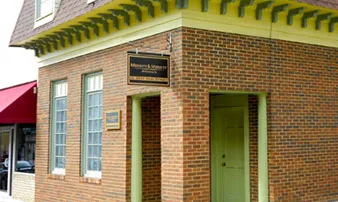
Statesboro
15 West Main Street
Statesboro, GA 30458
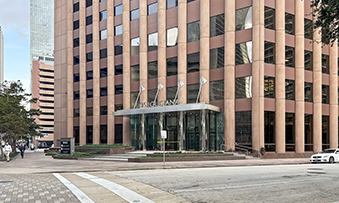
Houston
1415 Louisiana Street,
Suite 1800,
Houston, TX 77002

Jacksonville
841 Prudential Drive
12th Floor
Jacksonville, FL 32207

Contact Us
© Copyright 2026 Merritt & Merritt Law Firm. All rights reserved.