
call us 24/7 1-800-738-WE-WIN
call us 24/7 1-800-738-WE-WIN
Serving All of Georgia, Florida, & Texas
Both Drivers at Fault: What Happens Next
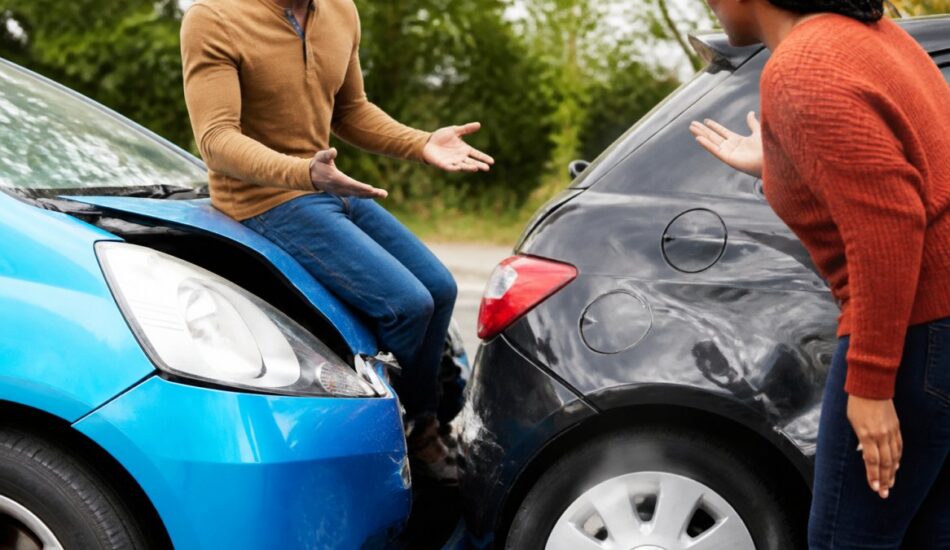
Table of Contents
- How Car Accident Fault Determination Works
- What Happens When Both Drivers Are at Fault
- What to Do After a Car Accident
- Disputed Fault: Car Accident Insurance Claim Challenges
- Partly at Fault Car Accident Compensation
- Disputing Your Insurer’s Liability Decision
- When to Seek Legal Advice
- Frequently Asked Questions
Last Updated: October 13, 2026
How Car Accident Fault Determination Works
Call the Merritt & Merritt Law Firm today at 404-975-1775. Offices in Atlanta, Savannah, Statesboro, and Houston.
When a car accident happens, determining who caused it matters enormously. The process starts with an investigation of how the collision occurred. (Source: the National Highway Traffic Safety Administration (NHTSA))
Fault determination weighs road conditions, traffic violations, mechanical failures, and negligence, drawing on the accident scene, vehicle damage, witness statements, and police reports.
In most states, fault follows negligence: a driver is negligent when they fail to exercise reasonable care, speeding, running a red light, texting, or skipping vehicle maintenance.
The challenge arises when both drivers contributed to the crash, shared fault, or comparative negligence.
What Happens When Both Drivers Are at Fault
When both drivers share responsibility, neither can point to the other as wholly to blame. That division drives whose insurer pays and how much you recover.
Comparative Negligence and Liability Apportionment
Comparative negligence assigns fault when both drivers contributed, weighing each driver’s conduct to produce a percentage.
A common pattern looks like this:
- Driver A turns across traffic and is struck.
- Driver B was speeding and had a reduced reaction window.
- The investigation apportions 60% to Driver A and 40% to Driver B.
Liability apportionment is the arithmetic that follows: if your damages are $10,000 and you are 40% responsible, you recover $6,000. The reduction applies to your own recovery, not the other driver’s liability.
How Fault Percentages Are Actually Decided
Percentages are not formulaic. They emerge from negotiation between insurers, each pushing the number its way, working from recurring fact patterns:
- Rear-end collisions, the following driver is presumptively at fault for failing to keep a safe distance, but the presumption weakens if the lead vehicle braked suddenly, reversed, or had faulty brake lights.
- Right-of-way and give-way failures, the driver who failed to give way usually carries the larger share, but a speeding or distracted driver can absorb part of it.
- Intersection collisions, traffic signal phase, dashcam footage, and independent witnesses often decide the split.
Where facts are genuinely contested, insurers may agree to a 50/50 split rather than litigate a marginal difference.
How Insurers Investigate Shared Blame
Adjusters gather evidence and build a fault position by:
- Reviewing the police event report and scene documentation
- Inspecting damage patterns and point of impact
- Interviewing both drivers and independent witnesses
Damage patterns carry real weight: a rear-end impact points to the following driver, a side impact at an intersection to a give-way failure, a sideswipe to a lane-change failure. Reconstructionists use these patterns, with skid marks and crush depth, to test whether a driver’s account is physically possible.
The Injury and Property Split in Practice
Injury claims. If you were injured, your claim for compensation may be reduced by your share of responsibility. This typically covers treatment, lost earnings, and, for serious injuries, lump-sum damages for pain and suffering.
Property-damage claims. Repairs, hire car, towing, and write-off value are recovered through your own comprehensive insurer (who then pursues the other driver’s insurer) or directly from the other driver or their insurer.
What This Means for You
The practical consequence of shared fault is that your recovery is discounted, not eliminated. The size of the discount depends on the evidence, the fact pattern, and which claim type you are pursuing, so the next sections focus on what you do at the scene and how to challenge a percentage you believe is wrong.
What to Do After a Car Accident
First, check for injuries. Call 911 if anyone needs medical attention.
Next, move vehicles to safety if possible. Turn on hazard lights.
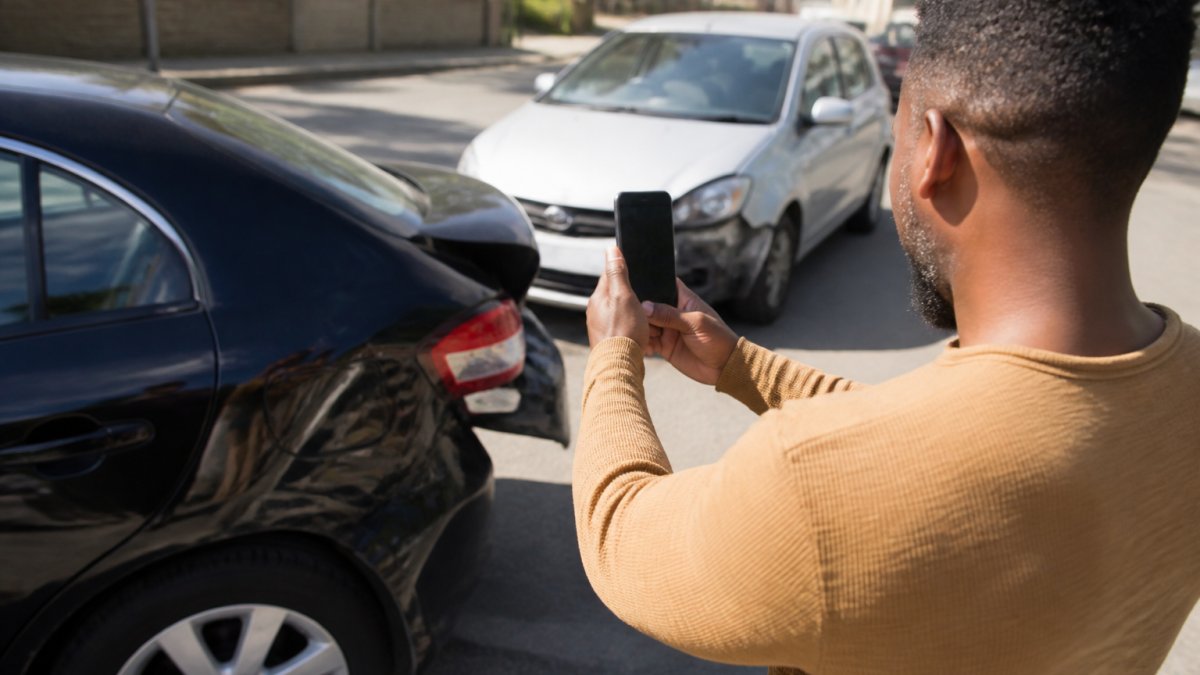
Document the accident scene thoroughly:
- Take photos of all vehicle damage from multiple angles
- Photograph the accident scene, road conditions, and traffic signals
- Record the weather and lighting conditions
Call the police and file a report. Request the police report number.
Seek medical attention even if you feel fine, some injuries appear hours or days later.
Contact your insurance company promptly. Report the accident and provide basic information.
Disputed Fault: Car Accident Insurance Claim Challenges
When insurers disagree about fault, your claim gets disputed, frequently when both drivers are at fault. Each insurer may argue their client bears less responsibility.
When Both Insurers Allege Fault
A common scenario: both insurers blame the other driver. Your insurer says you’re not at fault; the other driver’s insurer says you are. This deadlock delays settlement.
When this happens, several paths forward exist:
- Your insurer may send a formal demand letter to the other insurer
- The insurers may agree to split fault 50/50
- Either party can request mediation or arbitration
Insurers have a financial incentive to minimize liability and may argue facts in their favor, which is why strong documentation of what happened matters, it supports your position.
At Merritt & Merritt Law Firm, we’ve represented many clients in disputed fault situations.
Evidence That Matters in Fault Disputes
Certain evidence carries more weight than other documentation. Understanding what matters helps you gather the right proof. (Source: the U.S. Department of Transportation’s Federal Highway Administration)
Photographs and video footage are extremely powerful, showing the scene, vehicle positions, traffic signals, and damage patterns.
Witness statements from neutral parties carry significant weight.
Schedule a Free Consultation →
Police reports document an official investigation.
Traffic camera footage from nearby intersections can be decisive, showing exactly what happened and who violated traffic laws.
Medical records connect your injuries to the accident, establishing that the collision caused your harm, not a preexisting condition.
Partly at Fault Car Accident Compensation
When you are partly at fault, you can still recover, but the amount, route, and risks differ sharply depending on whether you claim for injury or property damage. Treating them as one claim is the most common and most expensive mistake.
How Fault Percentages Affect What You Recover
Your share of responsibility reduces your recovery proportionally. At 30% at fault, you recover 70% of your assessed damages; at 70%, you recover 30%.
The reduction applies to each head of damage separately, because insurers assess injury and property losses on different evidence and timelines.
Injury Compensation Through the CTP Scheme
Injury compensation may involve a reduction for your share of responsibility.
Heads of damage typically include:
- Medical, hospital, and rehabilitation costs
- Lost earnings, both past and future
- Care and domestic assistance where medically required
If you disagree with the insurer’s application of your percentage of fault, you may challenge it through their review process.
Property Damage: Repairs, Excess, and Recovery
Property damage is recovered through your own comprehensive policy, the other driver’s property insurer, or directly from the other driver.
How the money actually moves:
- If you claim on your own comprehensive policy, your insurer pays to repair or replace your vehicle, you pay your excess, and your insurer then pursues the other driver’s insurer to recover what it paid. If your insurer decides you were partly at fault, it may not recover the full amount, and in some policies your excess can be affected.
- If you claim directly against the other driver, you must prove their negligence and your own losses, and your recovery is reduced by your share of fault.
- If the other driver claims against you, your insurer defends you under your policy, and any agreed percentage reduces what your insurer pays out.
A worked example: repairs are assessed at $8,000 and you are 30% at fault. Claiming directly against the other driver, you recover $5,600 and absorb $2,400. Claiming on your own comprehensive policy, your insurer pays the repairer, you pay your excess, and your insurer recovers what it can from the other side.
Write-Offs and Agreed Value
Older vehicles change the arithmetic. If repairs exceed a set proportion of the vehicle’s value, the insurer treats it as a total loss and pays market or agreed value, less your excess and your share of fault, so a modest repair bill on an older car can produce a much smaller payout than the repair figure suggests.
How a Disputed Percentage Is Challenged
If you believe the fault split is wrong, the process is sequential:
- Request the reasons in writing. Ask the insurer for the specific evidence and reasoning behind the percentage.
- Submit contrary evidence. Dashcam footage, independent witness statements, police event details, and repair or reconstruction reports are the levers that move a percentage.
- Use the insurer’s internal complaints process. Every insurer must maintain one, and it produces a written outcome.
- Escalate externally if unresolved. For insurance conduct issues, the relevant external dispute-resolution body can review the decision.
Percentages move when the evidence changes, not when the argument gets louder. A single piece of objective footage routinely shifts a split by 20 points or more.
When the Numbers Justify Legal Help
Legal representation tends to pay for itself where the disputed amount is large, the injury is serious, or the insurer has denied liability outright. Where the dispute is a few hundred dollars over a repair, the cost of pursuing it may exceed the recovery. The test: does the gap between the insurer’s position and a realistic outcome exceed the cost of challenging it?
Disputing Your Insurer’s Liability Decision
If your insurer assigns you too much fault, you can dispute their decision. This process requires patience and documentation.
Review their decision carefully: does the fault assessment match the evidence?
If you disagree, submit a formal written response. Include evidence supporting your position. Reference specific facts that contradict their assessment.
Many disputes resolve through the insurer’s internal appeals process.
When to Seek Legal Advice
Certain situations demand professional legal guidance. Recognizing them protects your interests.
Seek legal advice when:
- Both insurers dispute fault and cannot reach agreement
- Your injuries are serious or require ongoing treatment
- Medical bills exceed $5,000
An attorney reviews your case objectively, understands how insurers operate and what fair compensation looks like, and knows when to negotiate and when to litigate.
At Merritt & Merritt Law Firm, we offer free consultations for accident victims. Our team has over 45 years of trial experience handling car accident claims.
When both drivers are at fault, the path forward becomes complicated. Insurers dispute responsibility. Settlement negotiations stall. Your recovery hangs in the balance.
Frequently Asked Questions
Can both drivers be at fault in a car accident?
Yes. Both drivers can share responsibility under comparative negligence rules. For example, one driver may have run a red light while the other was speeding. Fault is often split as percentages—60/40 or 50/50—based on each driver’s actions and their contribution to the accident. Your compensation may be reduced by your percentage of fault, but you can still recover damages in most cases.
How do insurers decide who is at fault after a car accident?
Insurers investigate by reviewing police reports, witness statements, photographs, video footage (including dashcam recordings), vehicle damage patterns, and road conditions. They assess whether each driver violated traffic laws or failed in their duty of care. Adjusters may also consult accident reconstruction experts. Both drivers’ statements and the physical evidence are weighed to determine liability and apportion fault percentages.
Will insurance pay out if I was partly at fault in a car accident?
Yes, you can typically recover compensation even if you were partly at fault. Your payout is reduced by your percentage of responsibility. For instance, if you are found 30% at fault and your damages total $10,000, you may recover $7,000. However, some states have stricter rules. An attorney can explain how your specific situation affects your claim and help you challenge an unfair fault assessment.
What should I do if the other driver and I both claim the other was at fault?
Document everything immediately: take photos and video at the scene, collect witness contact information, and file a police report. Request a copy of the report once filed. Notify your insurer promptly and provide a detailed account. Avoid signing recorded statements or settlement offers until you understand the full extent of your injuries and damages. If the dispute persists, consider legal representation to protect your rights and ensure fair apportionment of liability.
Our Locations

Atlanta/Decatur
1 West Court Square
Suite 750
Decatur, GA 30030

Savannah
100 Bull Street
Suite 200
Savannah, GA 31401
Statesboro
15 West Main Street
Statesboro, GA 30458
Houston
1415 Louisiana Street,
Suite 1800,
Houston, TX 77002

Jacksonville
841 Prudential Drive
12th Floor
Jacksonville, FL 32207

Contact Us
© Copyright 2026 Merritt & Merritt Law Firm. All rights reserved.