
call us 24/7 1-800-738-WE-WIN
call us 24/7 1-800-738-WE-WIN
Serving All of Georgia, Florida, & Texas
Common Causes of Bicycle Accidents in Georgia Intersections
Table of Contents
- Why Intersections Are the Most Dangerous Place for Georgia Cyclists
- 1. Failure to Yield to Bicyclists: The Leading Cause of Intersection Crashes
- 2. Left-Turn Bicycle Accidents: When Drivers Misjudge Speed and Distance
- 3. Right-Hook Bicycle Accidents: The Danger of the Right-Turning Vehicle
- 6. Dangerous Road Conditions: Potholes, Bike-Lane Hazards, and Poor Visibility
- What to Do After a Bicycle Accident in Georgia
- Frequently Asked Questions
Last Updated: October 16, 2026
Why Intersections Are the Most Dangerous Place for Georgia Cyclists
Call the Merritt & Merritt Law Firm today at 404-975-1775. Offices in Atlanta, Savannah, Statesboro, and Houston.
Intersections concentrate more collision points than any other stretch of road: a cyclist can be struck by a left-turning car, a right-turning truck, a red-light runner, or a distracted driver. When we review bicycle accidents at Merritt & Merritt Law Firm, the same patterns recur: a driver fails to yield, misjudges speed, or never sees the rider.
The research backs up what cyclists already feel in their gut. According to NHTSA’s bicycle safety data, intersections are where a disproportionate share of bicyclist injuries and fatalities occur, because they are the one place where turning, crossing, and merging traffic all converge on the same patch of asphalt.
Below, we break down the six crash patterns behind most intersection bicycle accidents, the laws that govern them, and what to do if you are hit.
1. Failure to Yield to Bicyclists: The Leading Cause of Intersection Crashes
Failure to yield means a driver proceeds when a cyclist has the legal right of way, and it is the single most common cause of intersection bicycle accidents.
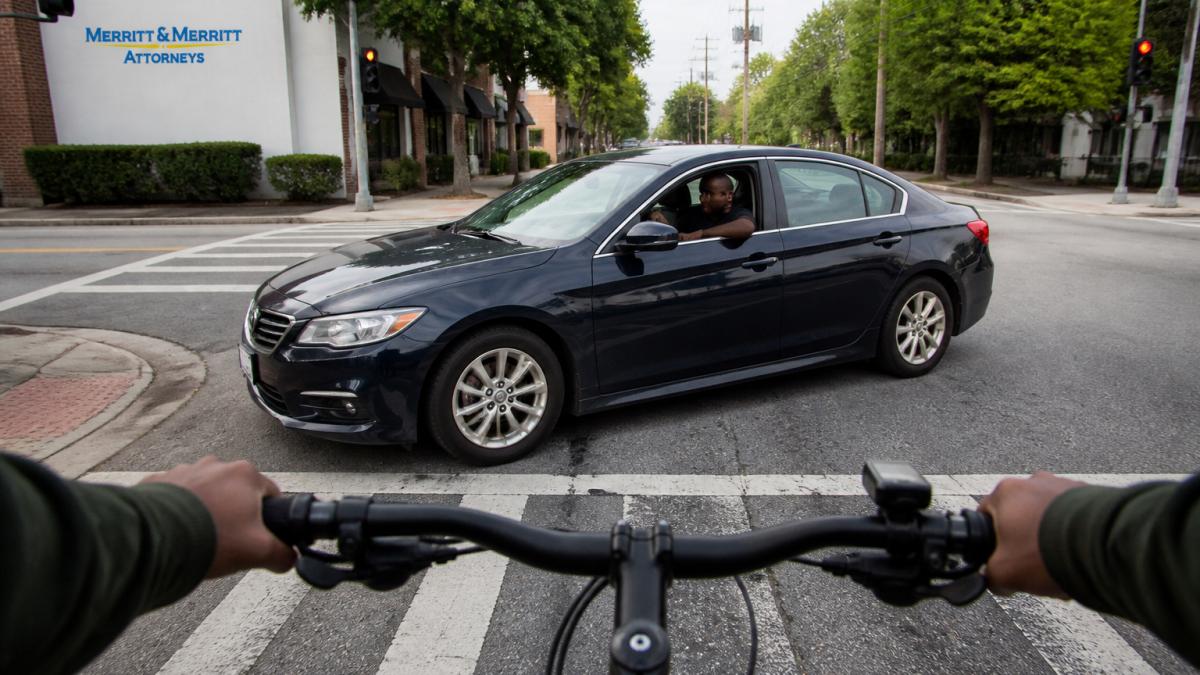
The legal backbone is O.C.G.A. § 40-6-291 (traffic laws apply to bicycles) and O.C.G.A. § 40-6-72 (stop signs and yield signs), which together require drivers to yield to any vehicle lawfully in or approaching an intersection, bicycles included.
How failure to yield actually plays out by intersection type
The same violation produces different crash mechanics by intersection type.
- Signalized intersections with dedicated left-turn phases. A driver with a protected arrow may still cross a cyclist who entered on the previous green, a timing mismatch, not just inattention.
- Two-way stop-controlled intersections. The driver on the stop-controlled leg must yield to through traffic, and cyclists are frequently misjudged because their speed is harder to read than a car’s.
- All-way stop intersections. Disputes come down to who arrived first; a cyclist who stops fully can still be cut off by a driver who ‘waves through’ the wrong vehicle.
The four failure-to-yield patterns that dominate
- A driver turning left crosses the cyclist’s path without checking
- A motorist pulls out from a stop sign into a rider’s lane
- A driver entering from a side street misjudges how fast the cyclist is moving
The common thread: the driver looked but did not register the cyclist as traffic, a perception failure, not a vision failure, which is why ‘I never saw them’ is so common after these crashes.
What riders can actually do
- Take the lane on approach. Moving toward the center puts you where a driver is already scanning for cars.
- Make eye contact before committing. If the driver’s eyes are not on you, assume they have not registered you.
- Use a front light in daylight. A flashing or steady front light increases detection distance where sun angle washes out silhouettes.
Why this matters for a claim
Because failure to yield is a statutory violation, it often supports a negligence per se theory, shifting the conversation from ‘who was careless’ to ‘who broke a specific rule.’ Preserving evidence of the signal phase, the driver’s approach path, and witness statements makes that argument stick.
2. Left-Turn Bicycle Accidents: When Drivers Misjudge Speed and Distance
Left-turn bicycle accidents happen when a driver turning left across traffic fails to see the oncoming cyclist or underestimates how quickly the rider is closing the gap.
Left turns are hard for drivers to judge. Research from the Federal Highway Administration on intersection safety has long identified the left-turn-across-path crash as a persistent problem at intersections, and cyclists sit squarely in the conflict zone.
3. Right-Hook Bicycle Accidents: The Danger of the Right-Turning Vehicle
A right-hook bicycle accident occurs when a driver overtakes a cyclist and then turns right across their path.
(https://www.nsc.org/road/safety-topics/distracted-driving/distracted-driving-home?srsltid=AU7gw4WDhoJItJsIQ8iweXYzAxf4fI85UIe34cxSlH-kmH3CoVetdtRH) notes that visual, manual, and cognitive distractions all impair a driver’s ability to spot and react to hazards.
Cyclists cannot control a driver’s attention, but bright clothing, daytime lights, a predictable lane position, and riding slightly outside the door zone all improve their odds.
Schedule a Free Consultation →
6. Dangerous Road Conditions: Potholes, Bike-Lane Hazards, and Poor Visibility
Dangerous road conditions cause bicycle accidents even when every driver behaves correctly. A pothole, cracked bike lane, or debris can force a rider to swerve into traffic or lose control, and poor intersection lighting compounds the risk.
A more useful frame: intersection hazards are usually design and maintenance decisions, not random bad luck, which changes what riders can do about them.
The intersection-specific hazards that cause the most crashes
- Potholes and broken pavement at the approach. These cluster where heavy vehicles brake and turn, exactly where cyclists try to hold a line.
- Bike-lane markings worn away or blocked. Faded paint and missing symbols reduce driver expectation that a cyclist will be present.
- Storm drains and grates that catch a front wheel. Grates parallel to travel are the worst; a front wheel can drop in and stop the bike instantly.
Why intersection design matters more than individual hazards
A single pothole is a maintenance problem; a pattern of crashes at the same intersection is usually a design problem. The conflict points that generate bicycle crashes, left-turn-across-path, right-hook, and merge conflicts, are baked into how lanes, signals, and turn radii are laid out. Add a slip lane or drop a bike lane at the intersection instead of carrying it through, and crash risk rises regardless of how careful any individual driver is.
Engineering remedies that actually reduce intersection crashes
Interventions traffic engineers most commonly point to:
- Protected intersections. Separated bike lanes carried through with corner islands and dedicated signal phases.
- Leading bicycle intervals. A few seconds of green for cyclists before drivers get theirs, so riders clear the intersection before turning traffic moves.
- Bike boxes. A marked area ahead of the stop line that lets cyclists position in front of cars at a red light.
- Signal timing and detection. Adjusting clearance intervals and ensuring loops or cameras actually detect bicycles, not just cars.
What riders can do in the meantime
- Scan the pavement ahead, not just the traffic. Look through the intersection to the exit side.
- Take the lane when a bike lane is unsafe. A worn, blocked, or debris-filled lane is not a safe lane.
- Report serious road hazards. Submitting a report to the Georgia Department of Transportation creates a record of the condition, which matters both for repair and for any later claim.
- Ride with lights and high-visibility gear. This is the cheapest way to reduce the visibility half of the risk.
Most intersection bicycle accidents trace back to a driver who failed to yield, failed to see the cyclist, or failed to obey a traffic signal. But the conditions that make those failures more likely, lane layout, signal timing, and maintenance, are often fixable.
What to Do After a Bicycle Accident in Georgia
Knowing what to do after a bicycle accident protects both your health and your legal claim. The first hours and days can shape whether you recover fair compensation.
- Call 911 and get medical attention. Even if you feel fine, injuries can surface later.
- Do not negotiate with the driver or their insurer. Anything you say can be used against you.
- Document everything. Photograph the scene, your bike, your injuries, and any road hazards.
- Collect witness information. Names and phone numbers matter if liability is disputed.
- Preserve your bike and gear. Do not repair or discard them before they are examined.
- Contact an attorney before signing anything.
Situation | Immediate Action | Why It Matters |
|---|---|---|
Driver disputes fault | Gather witness statements | Supports your version of events |
Adjuster requests a statement | Decline until you have counsel | Protects you from self-incrimination |
Injuries appear minor | Get a full medical exam | Hidden injuries surface later |
Bike lane hazard caused the crash | Report it to the state | Creates a record of the condition |
If you were injured in an intersection bicycle crash, Merritt & Merritt Law Firm can evaluate your case at no cost. With over 45 years of trial experience, our team investigates claims, holds liable drivers accountable, and offers 24-hour service with visits to your home, office, or hospital.
Frequently Asked Questions
What is the most common cause of bicycle accidents at intersections?
Failure to yield is the most common cause of bicycle accidents at intersections. This happens when a driver turns left across a cyclist’s path, pulls out from a stop sign without seeing the bike, or runs a red light. Drivers often misjudge a cyclist’s speed or simply do not look for bikes before proceeding. In Georgia, bicyclists have the same right-of-way rights as motorists at intersections, so a driver who fails to yield can be held liable for resulting injuries.
Can a driver be liable for hitting a bicyclist at an intersection in Georgia?
Yes. Under Georgia law, bicyclists are granted the same rights and responsibilities as drivers of motor vehicles. If a driver fails to yield, turns into a cyclist’s path, runs a traffic signal, or otherwise violates traffic laws and causes a crash, that driver can be held liable for the bicyclist’s medical bills, lost wages, and pain and suffering. An attorney can help gather evidence such as traffic camera footage, witness statements, and police reports to support your claim.
What should a bicyclist do after an intersection crash?
After a bicycle accident, call 911 immediately and do not leave the scene. Get the driver’s name, insurance information, and license plate number. Accept medical attention even if you feel fine, since injuries like concussions or internal bleeding may not show symptoms right away. Photograph the scene, your bike, and any visible injuries. Do not give a recorded statement to an insurance adjuster before speaking with a lawyer. Then contact a Georgia bicycle accident attorney to protect your rights.
How do left-turning vehicles cause bicycle accidents?
Left-turn bicycle accidents occur when a driver turning left across an intersection fails to see an oncoming cyclist or misjudges the bike’s speed. The driver focuses on larger vehicles and overlooks the narrower profile of a bicycle. The result is a head-on or angled collision that often throws the cyclist onto the pavement or into other traffic. These crashes tend to produce severe injuries because the cyclist absorbs the full impact with little protection.
Intersection bicycle accidents in Georgia usually come down to a driver who failed to yield, misjudged a turn, or simply was not paying attention. If you have been hurt, you should not have to fight an insurance company alone while you recover. Merritt & Merritt Law Firm brings over 45 years of trial experience, a free case evaluation, and a contingency fee structure where you pay only if we win. Get started with Merritt & Merritt Law Firm and get the representation your recovery deserves.
Our Locations
Atlanta/Decatur
1 West Court Square
Suite 750
Decatur, GA 30030
Savannah
100 Bull Street
Suite 200
Savannah, GA 31401
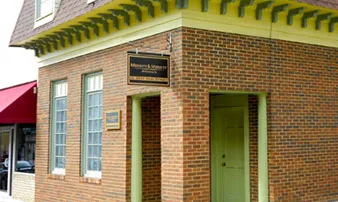
Statesboro
15 West Main Street
Statesboro, GA 30458
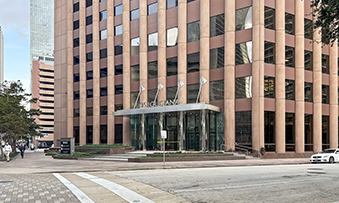
Houston
1415 Louisiana Street,
Suite 1800,
Houston, TX 77002
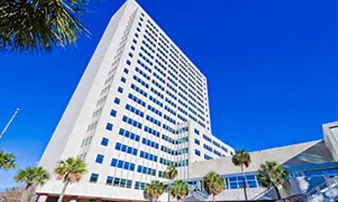
Jacksonville
841 Prudential Drive
12th Floor
Jacksonville, FL 32207

Contact Us
© Copyright 2026 Merritt & Merritt Law Firm. All rights reserved.