
call us 24/7 1-800-738-WE-WIN
call us 24/7 1-800-738-WE-WIN
Serving All of Georgia, Florida, & Texas
How to Handle Property Damage Claims After an Accident
Last Updated: November 7, 2026
Quick Summary
Property damage claims cover the cost of repairing or replacing what was damaged in a crash, usually your vehicle, plus items like personal property, rental car costs, and towing or storage fees. Start by documenting everything, getting at least two repair estimates, and sending one organized package to the adjuster. Review any offer line by line before you sign a release.
- Document damage with timestamped photos from several angles, and keep every receipt and call log.
- Get at least two independent repair estimates before accepting any settlement offer.
- Ask the adjuster directly about rental costs, towing, storage, and personal property coverage.
- Request the valuation report and check comparables if your vehicle is declared a total loss.
- Do not sign a release until every line of the settlement has been read and the numbers are settled.
Table of Contents
- What Property Damage Claims Cover After a Car Accident
- Immediate Steps at the Accident Scene
- Documenting the Damage and Gathering Evidence
- Choosing Between Your Insurer and the At-Fault Driver’s Insurer
- What Not to Tell the Insurance Company After an Accident
- How to Settle a Property Damage Claim
- Car Accident Property Damage Settlement: Challenging a Low Offer or Total-Loss Valuation
- Claim Timelines, Deadlines and Follow-Up
- What to Do When the Other Driver Is Uninsured, Underinsured or Unidentified
- Scheduling Your Next Step: When to Call a Property Damage Lawyer
- Frequently Asked Questions
Hit by another driver and wondering what happens to your car? Our complete checklist of what to do after a car accident walks you through the scene and the days that follow. (Source: National Association of Insurance Commissioners consumer guides)
Property damage claims cover the cost of fixing or replacing what was damaged in a crash.
- Vehicle repairs or replacement value
- Rental car costs while your vehicle is out of service
- Towing and storage charges
The rules for who pays and how much depends on your policy and your state’s laws. Your insurer or the National Association of Insurance Commissioners consumer guides can explain the basics of auto coverage.
What Property Damage Claims Cover After a Car Accident
The phrase “property damage claim” covers more than most people expect. Many drivers think it only means body work, but it can reach several categories of loss, so itemize every one from day one.
Property damage is any harm to something you own. A claim asks the at-fault driver’s insurer to pay for that loss, though your own collision coverage may also pay.
The full inventory of recoverable losses
Most policies and state rules treat the following as potentially recoverable. Availability depends on your policy language and state law, so confirm each item with your adjuster in writing.
- Vehicle repairs or replacement value. If repairable, the measure is reasonable repair cost. If a total loss, it is usually actual cash value (ACV), what the vehicle was worth just before the crash, not what a new one costs.
- Rental car or loss of use. If your car is in the shop or totaled, you may recover rental cost or a daily loss-of-use payment for the reasonable repair period. Ask about daily and day-count caps before you pick a rental.
- Towing and storage. Reasonable, documented emergency towing, winching, and storage fees are commonly recoverable. Storage fees pile up fast, so move the vehicle as soon as the insurer authorizes it.
What is usually not covered
- Mechanical wear or pre-existing damage that the crash did not cause
- Aftermarket modifications unless they were disclosed and insured
- Sentimental value, insurers pay market value, not emotional value
Watch out: Do not assume the at-fault driver’s insurer will volunteer every category. Ask about each one directly. Bring your itemized list to the first conversation and ask which items are included, which are excluded, and why.
Your insurer or the National Association of Insurance Commissioners consumer guides can explain the basics of auto coverage and how these categories interact with your policy.
Immediate Steps at the Accident Scene
What you do in the first hour matters. Safety comes first, property second.
- Check yourself and passengers for injuries, and call 911 if anyone needs help
- Move vehicles out of traffic if they are safe to move
- Turn on hazard lights and set up flares or cones if you have them
Ask for the names and badge numbers of any responding officers. Request a copy of the police report. Many agencies post accident reports online within a few days.
Watch out: Do not admit fault at the scene, even if you think you caused the crash. Stick to the facts when you talk to the other driver and the police.
Documenting the Damage and Gathering Evidence
Good documentation is the backbone of any property damage claim. Clear and organized evidence makes a claim easier to review.
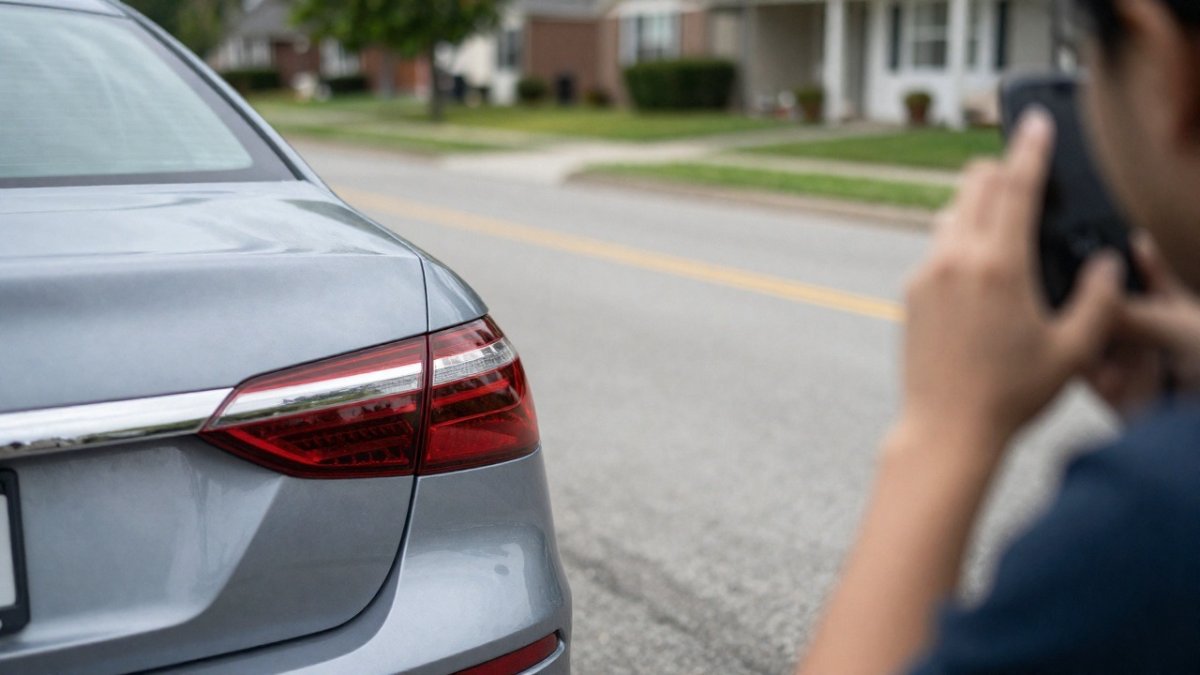
Take photos from several angles, close up and from a distance. Capture damage to both vehicles, license plates, road conditions, and nearby signs or signals.
Keep a simple claim folder. Include:
- The police or accident report
- Repair estimates from at least two body shops
- Receipts for towing, rental cars and other expenses
A common mistake is throwing away receipts or deleting photos too early. Hold onto everything until your claim is fully closed.
Choosing Between Your Insurer and the At-Fault Driver’s Insurer
You can usually file a property damage claim in one of two ways. Each route has trade-offs.
File with your own insurer if:
- You have collision coverage and want faster payment
- The other driver is uninsured or hard to identify
- You want your insurer to handle the paperwork
File with the at-fault driver’s insurer if:
- You do not have collision coverage
- You want to avoid paying your deductible up front
- Fault is clear and the other insurer is cooperative
If you go through your own insurer, you may need to pay your deductible first; your insurer can then try to recover that money from the other driver’s insurer through subrogation.
Insurers do not always agree on who is at fault. If that happens, you may need to push harder or consider legal help.
What Not to Tell the Insurance Company After an Accident
Insurance adjusters gather information as part of evaluating a claim. You do not have to answer every question, and you should be careful with what you say.
- Do not guess about speed, distance or who had the right of way
- Do not say you feel fine if you are still hurting, even a little
- Do not sign a release or settlement form until you have read every line (Source: U.S. Department of Transportation’s National Highway Traffic Safety Administration (NHTSA))
It is reasonable to say, “I am still gathering information and will get back to you,” and to ask for the request in writing.
The practical rule: give facts you know for certain, and decline the rest until you are ready.
How to Settle a Property Damage Claim
Settling a property damage claim usually follows a clear pattern. Knowing the steps, and what to do when a number looks wrong, helps you avoid lowball offers.
- Get at least two independent repair estimates. Choose shops that put the estimate in writing, with parts, labor rates, and paint materials broken out. A dealer estimate and an independent-shop estimate give you a useful range.
- Send the adjuster your documentation in one organized package. Include the police report, photos, estimates, receipts, and your itemized loss list. One complete package is easier to review than a stream of emails.
- Review the offer against your estimates and records. Compare line by line for omitted items, labor-rate differences, and parts described as ‘aftermarket’ or ‘used’ when you expected new OEM parts.
- Ask for an itemized breakdown if any figure seems wrong. A clear answer is a good sign; a vague one is a reason to keep pushing.
- Accept only when you are sure the payment covers your losses. A signed release usually ends the claim, so do not sign until the numbers and scope of repairs are settled.
How to challenge a low repair estimate
Insurers and body shops often disagree on scope, not hourly rate. The adjuster’s estimate may omit hidden damage that only appears after the bumper comes off.
If the insurer insists on aftermarket or salvage parts and you believe OEM parts are appropriate, ask for the policy language and your state’s rules on parts disclosure. Rules on parts disclosure and OEM parts vary by state.
How to challenge a total-loss valuation
When a vehicle is declared a total loss, the insurer pays actual cash value based on a valuation report. Ask for that report and check it closely.
- Confirm the trim, options, and mileage. A base-model comparable is not a match for a loaded trim with the same year and mileage.
- Check the comparables’ location and condition. Vehicles listed hundreds of miles away or in rougher condition may not support the assigned value.
- Look at the adjustments. A large negative ‘condition’ adjustment deserves an explanation.
Make your case in writing. Keep the tone calm and factual. State the figure you believe is correct, attach your evidence, and set a clear deadline for a response. If the insurer will not move, ask for the denial or final position in writing, that document matters if you later involve a regulator or a lawyer.
When to involve a regulator
Most states have an insurance department that accepts consumer complaints about claims handling. A complaint is not a lawsuit.
Complete paperwork helps a claim move forward, and a documented, itemized dispute is easier to pursue than an informal phone call.
The settlement process follows a clear sequence, and the steps below summarise what to do at each stage and how long it typically takes.
Step | What to do | Time or frequency |
|---|---|---|
Get repair estimates | Obtain at least two independent estimates | Before accepting any offer |
Send documentation | Submit one organized package to the adjuster | Once, complete |
Review the offer | Compare line by line against estimates and records | Before signing |
Request breakdown | Ask for an itemized explanation of any unclear figure | As needed |
Accept the offer | Sign only when payment covers all losses | After numbers are settled |
Car Accident Property Damage Settlement: Challenging a Low Offer or Total-Loss Valuation
A low offer is common and does not always mean bad faith, but you have the right to dispute it. Our guide to warning signs your insurance settlement offer is too low covers what to look for.
Warning signs your offer may be too low:
- The payment ignores one or more repair estimates
- Your vehicle is deemed a total loss, but the value seems low
- Rental car costs or towing fees are left out
If your car is declared a total loss, ask for the valuation report. Check the comparable vehicles it used. Look for ones that match your model, trim, mileage and condition.
Claim Timelines, Deadlines and Follow-Up
Timing matters more than many people realize. Deadlines for filing claims and lawsuits are set by state law and vary, so check the rules for your state.
- Report the accident to your insurer as soon as possible
- Follow up on your claim at least once a week
- Note the date of every call and every letter
Many claims take several weeks, and some take months. Keep your own timeline so you can spot delays and push back.
What to Do When the Other Driver Is Uninsured, Underinsured or Unidentified
Sometimes the other driver has no insurance, not enough coverage, or cannot be found. These situations need a different plan.
If your policy includes uninsured motorist property damage coverage, contact your insurer right away. This coverage can pay for your losses when the at-fault driver cannot.
If the driver fled the scene, report it to the police as soon as possible.
Scheduling Your Next Step: When to Call a Property Damage Lawyer
Some claims can be handled on your own. Others may benefit from legal help, especially when the stakes grow.
Consider calling a property damage lawyer if:
- The insurer denies your claim or disputes fault
- Your offer is far below your documented losses
- Your car was totaled and the valuation seems wrong
Merritt & Merritt Law Firm offers a free consultation to review your situation. You pay only if we win, and attorneys can visit clients at home, at the office or in the hospital. book a free case review
Frequently Asked Questions
How do I settle a property damage claim after a car accident?
Start by gathering the police or accident report, your photos, and at least one written repair estimate from a licensed body shop. Submit the claim to the at-fault driver’s insurer or your own insurer, and keep a written record of every call, date, and adjuster name. Review any settlement offer against your estimate before signing anything, since a signed release usually ends the claim for that damage. If the offer does not cover the repair cost, you can request a re-inspection or a supplemental estimate. A property damage attorney can review the offer if the dispute continues.
What should I not tell the insurance company after an accident?
Avoid guessing about fault, speculating about injuries, or agreeing that the accident was minor. Keep statements factual: the date, location, and what you observed. Do not sign a release or accept a settlement until you know the full extent of the damage. You are generally not required to give a recorded statement to the other driver’s insurer, so you can politely decline until you have reviewed your options. Keeping communications in writing helps you track what was said.
Can I sue for property damage after a car accident?
Yes, if the at-fault driver is responsible and the insurer does not offer fair compensation, you may pursue the claim in small claims or civil court. Recoverable amounts typically include repair costs or the vehicle’s actual cash value if it is totaled, plus rental costs and towing or storage fees in many cases. Court limits and filing rules vary by state, so check the official court website for the state where the accident happened. Consulting an attorney can clarify what applies to your situation.
Do I need a lawyer for a property damage claim with no injuries?
Not always. Many property damage claims settle directly with an insurer when the damage is clear and the offer is reasonable. A lawyer becomes more useful when fault is disputed, the insurer denies the claim, the total-loss valuation seems low, or the claim is mixed with injuries that may surface later. Many attorneys offer a free initial consultation, so you can ask about your specific case before deciding. Pricing for legal services depends on the case, so contact the firm directly for current terms.

Our Locations

Atlanta/Decatur
1 West Court Square
Suite 750
Decatur, GA 30030

Savannah
100 Bull Street
Suite 200
Savannah, GA 31401
Statesboro
15 West Main Street
Statesboro, GA 30458
Houston
1415 Louisiana Street,
Suite 1800,
Houston, TX 77002

Jacksonville
841 Prudential Drive
12th Floor
Jacksonville, FL 32207

Contact Us
© Copyright 2026 Merritt & Merritt Law Firm. All rights reserved.