
call us 24/7 1-800-738-WE-WIN
call us 24/7 1-800-738-WE-WIN
Serving All of Georgia, Florida, & Texas
How to Estimate a Fender Bender Settlement Timeline

Quick Summary
A fender bender settlement often takes several months for a clean claim with completed treatment. Disputed liability or injuries that need ongoing care usually extend the timeline. The exact length depends on your injuries, who is at fault, and how quickly the paperwork moves.
- Insurers commonly wait until medical treatment ends before valuing an injury claim.
- A clearly at-fault driver moves faster than a disputed one.
- Gather police reports, photos, bills and treatment notes from the day of the accident.
- Accepting a quick offer before treatment ends can leave medical costs uncovered later.
- Following up in writing after about two weeks of silence keeps the claim moving.
Table of Contents
- Understanding the Typical Car Accident Settlement Timeline
- Step 1: Gather Your Documentation Early
- Step 2: Track the Insurance Claim Process Stage by Stage
- Step 3: Know When to Hire a Car Accident Lawyer
- Step 4: Take Steps to Speed Up a Car Accident Settlement
- Step 5: What Happens After You Sign the Settlement Agreement
- Start Your Claim Review With Merritt & Merritt
- Frequently Asked Questions
Last Updated: November 10, 2026
How long does a fender bender settlement take? For a clean claim with completed treatment, settlements often take several months, while disputed liability or injuries that need more care usually extend the timeline. Readers in Georgia can find a timeline specific to their state, from filing the claim through receiving the check, in Georgia Car Accident Settlement Timeline: What to Expect. The honest answer depends on the injuries, who is at fault, and how quickly the paperwork moves. (Source: the National Association of Insurance Commissioners (NAIC))
A minor collision can still turn into a serious claim. Vehicle damage alone does not tell you how long a claim will take or what it is worth.
A clean, straightforward claim may settle within months after treatment is complete. When liability is unclear, or when a case involves ongoing treatment, disputed fault, or litigation, the process commonly takes longer. Your own timeline will depend on your injuries, the facts of the crash, and how quickly the paperwork moves.
Understanding the Typical Car Accident Settlement Timeline
Most fender bender claims follow a predictable path. The insurer reviews the claim, the injured person completes treatment, a demand is sent, and the parties negotiate. Each stage can add weeks.
Here is what usually drives the timeline:
- Medical treatment: Insurers commonly wait until treatment has ended or a doctor can predict the long-term outcome before valuing an injury claim.
- Liability questions: A clear at-fault driver moves faster than a disputed one.
- Documentation: Missing bills or records slow every step.
- Negotiation: Each round of offers and counteroffers takes time.
Watch out: Accepting a quick offer before your treatment is finished can leave medical costs uncovered later.
Step 1: Gather Your Documentation Early
Strong documentation shortens the timeline. Start collecting records the day of the accident.
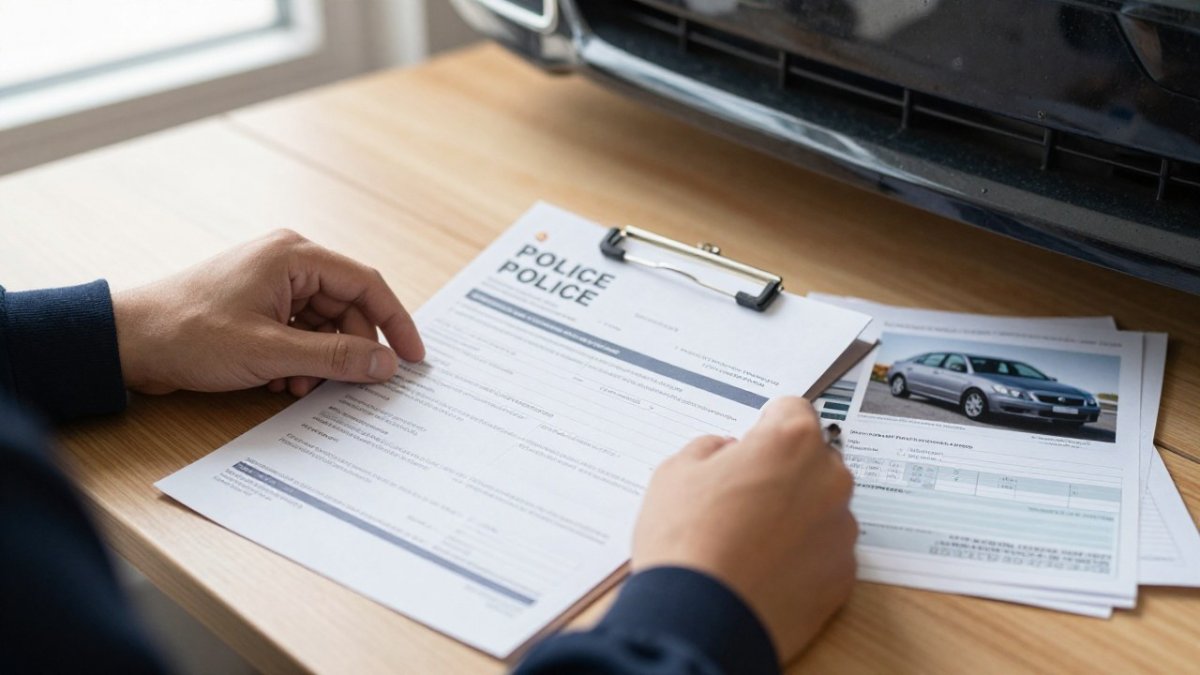
Keep these items in one place:
- The police or accident report
- Photos of both vehicles and the scene
- Names and contact information for witnesses
- Every medical bill, receipt, and treatment note
- Records of lost wages, including pay stubs and an employer letter
- Any written statements you have given
!Close-up of hands organizing a police accident report, medical bills and photos of a car’s rear bumper on a wooden table
Organized records let an attorney or adjuster evaluate your claim without repeated requests. Missing paperwork can slow settlements.
Step 2: Track the Insurance Claim Process Stage by Stage
A claim moves through distinct stages, and each one has its own typical duration. Tracking those stages by date lets you spot a stalled file early, before a delay turns into months of silence.
The usual stages run in this order:
- Claim opened: The insurer assigns an adjuster and a claim number. Note both immediately.
- Liability investigation: The adjuster reviews the police report, statements, and photos. This stage is short when fault is clear and longer when drivers dispute the facts.
- Treatment and documentation period: Medical care continues while bills and records are collected. Most insurers wait for treatment to end or stabilize before valuing an injury claim.
- Demand submission: A written demand lays out injuries, costs, and the amount requested.
- Negotiation: Offers and counteroffers are exchanged. Each round commonly takes several weeks.
- Settlement and release: Terms are agreed and the release is signed.
A simple tracker helps you see where the file sits. Build a spreadsheet with these columns: date, stage, action taken, who you spoke with, next deadline, and notes. Add a row for every phone call, letter, email, and records request. When a row shows no response for more than about two weeks, that is a signal to follow up in writing.
Liability Determination and Fault Assessment
Liability is the first substantive question. The insurer must decide who caused the crash before it values your claim. If the other driver clearly rear-ended you, this stage can be quick. If both drivers dispute the facts, the investigation can extend the timeline considerably.
Fault rules differ by state, and the rule that applies to your crash changes how much you can recover. Some states use pure comparative fault, which reduces recovery by your percentage of blame. Others use modified comparative fault, which bars recovery above a certain threshold. A smaller group uses contributory negligence, which can bar recovery entirely if you share any fault. Your state’s statutes, available through your state legislature’s website, and your state department of insurance set out which rule applies to you.
Common Delays in Insurance Payouts
Delays are common, and many are avoidable. Watch for these problems:
- Adjusters requesting recorded statements before you are ready
- Requests for records that were already sent
- Lowball offers that arrive before treatment ends
- Slow responses after you submit a demand
When you respond to a records request, send the documents with a cover letter that lists each item and its date. That single step prevents the common cycle of repeated requests for the same records. (Source: the U.S. Department of Transportation’s National Highway Traffic Safety Administration (NHTSA))
If your offer seems too low or the claim has stalled, our guide on 5 Signs Your Insurance Settlement Offer Is Too Low explains the warning signs to look for.
The claim moves through distinct stages, and each has a typical duration that shapes the overall timeline.
Stage | What happens | Typical duration |
|---|---|---|
Claim opened | Adjuster assigned, claim number issued | Immediate |
Liability investigation | Police report, statements, and photos reviewed | Short if fault is clear, longer if disputed |
Treatment and documentation | Medical care continues and records are collected | Until treatment ends or stabilizes |
Demand submission | Written demand lists injuries, costs, and amount requested | Once treatment and records are complete |
Negotiation | Offers and counteroffers are exchanged | Each round commonly takes several weeks |
Settlement and release | Terms agreed and release signed | After negotiation concludes |
Step 3: Know When to Hire a Car Accident Lawyer
Many people wonder whether a fender bender justifies a lawyer. The answer depends on your injuries and how the insurer responds.
Consider getting legal help if:
- You have ongoing pain, missed work, or unpaid medical bills
- The insurer disputes fault or denies the claim
- You have been pressured to sign documents or give a recorded statement
- The offer does not cover your documented costs
Whether a lawyer is worth it for your specific fender bender is a question worth answering with an expert. Our article Is It Worth Getting a Lawyer for a Fender Bender? walks through the factors to weigh.
Merritt & Merritt Law Firm offers contingency fee representation, which means you pay only if we win. The firm also provides 24-hour service and can meet you at home, your office, or the hospital.
Step 4: Take Steps to Speed Up a Car Accident Settlement
You can help move your claim along. Small actions early can save weeks later.
- Report the accident promptly to your insurer and keep copies of everything.
- Follow your treatment plan and keep every appointment. Gaps in care give insurers a reason to delay.
- Respond quickly to records requests.
- Avoid posting about the accident on social media.
- Get legal guidance before accepting any offer.
For a broader view of how long each stage takes, our overview How Long Do Personal Injury Cases Take: A Timeline covers the process from claim to settlement. If you want a step-by-step walkthrough for filing, see How to File a Car Accident Claim: Step-by-Step Guide.
Step 5: What Happens After You Sign the Settlement Agreement
Signing the settlement agreement is not the last step, and it does not mean the money arrives the next day. Fender bender claims often move through a disbursement sequence after signing, and knowing that sequence helps you set realistic expectations about the check in your hand.
Here is how the process usually unfolds:
- Release execution. The release of liability is the document that ends your claim against the at-fault driver’s insurer. Once you sign it, you generally cannot reopen the claim later, even if new symptoms appear. Read it before signing and confirm that it covers only the parties and claims you intend to settle.
- Lien identification. Before any money leaves the insurer, outstanding claims against the settlement must be identified. These commonly include health insurer reimbursement claims, recovery rights where applicable, hospital or provider liens, and in some cases other government or support claims. Each lien holder has its own process for confirming the amount owed.
- Lien negotiation. Many liens can be reduced, particularly when the settlement is modest relative to total medical charges. Lien holders often accept less than the full billed amount, but they usually require written documentation and a request before they will agree to a reduction.
- Attorney fee and cost deduction. If you used a contingency fee attorney, the agreed percentage and reimbursed case costs come out of the gross settlement. Your attorney should provide a written settlement statement showing every deduction before any funds are disbursed.
- Check or electronic transfer. Once liens are resolved and the statement is signed, the insurer issues payment to the designated payee, which is often the attorney’s trust account. Funds usually reach the injured person after the attorney’s trust account clears them and disburses to the client.
Watch out: Spending the settlement before liens are resolved can leave you personally liable for medical debts the release did not eliminate.
A practical way to track this stage is to keep a simple log with four columns: the item, the date requested, the date received, and the amount. Recording each lien request, reduction letter, and payment confirmation gives you a clear record if a payee disputes an amount later. Ask your attorney for the final closing statement and keep it with your records.
The disbursement phase can add time after the release is signed, and it can take longer when several lien holders must respond. Planning for that window is the difference between a settlement that feels delayed and one you can account for step by step.
Start Your Claim Review With Merritt & Merritt
Every fender bender claim is different, and no one can promise an exact date. If you were hurt in a crash in Georgia or Florida, Merritt & Merritt Law Firm can review your situation and explain your options. Schedule a Free Consultation to get answers about your timeline.
Frequently Asked Questions
What is the average time to settle a minor car accident claim?
A clean minor-accident claim with completed treatment often settles within several months, though the timeline varies widely by case. Claims with unclear liability, ongoing treatment or disputed medical bills commonly take longer. Your own timeline will depend on how quickly records arrive and how the insurer responds.
Does the severity of injuries affect settlement time?
Yes. Minor soft-tissue injuries with a short, documented treatment course usually resolve faster than claims involving fractures, surgery or long-term symptoms. More serious injuries require time for you to reach maximum medical improvement, which means your doctors can judge the full extent of your recovery. Insurers also tend to request more records in serious cases, which adds weeks or months before an offer is made.
What steps can delay a car accident insurance settlement?
The most common delays include disputes over fault, missing or incomplete medical records, gaps in treatment, and slow responses from the insurance adjuster. Claims also stall when a demand letter is not supported by documentation or when a claim is denied and must be appealed. Keeping your records complete and responding promptly to requests can prevent many of these holdups.
When should I hire an attorney for a fender bender?
Consider speaking with a car accident attorney if you have been injured, if the insurer disputes fault, if an adjuster is pressing you for a recorded statement or a quick settlement, or if your medical treatment is ongoing. Merritt & Merritt Law Firm offers a free consultation and works on a contingency fee basis, meaning you pay only if the firm wins your case. Fee terms and any case costs should always be confirmed directly with the firm before you sign an agreement.

Our Locations

Atlanta/Decatur
1 West Court Square
Suite 750
Decatur, GA 30030

Savannah
100 Bull Street
Suite 200
Savannah, GA 31401

Statesboro
15 West Main Street
Statesboro, GA 30458

Houston
1415 Louisiana Street,
Suite 1800,
Houston, TX 77002

Jacksonville
841 Prudential Drive
12th Floor
Jacksonville, FL 32207

Contact Us
© Copyright 2026 Merritt & Merritt Law Firm. All rights reserved.