
call us 24/7 1-800-738-WE-WIN
call us 24/7 1-800-738-WE-WIN
Serving All of Georgia, Florida, & Texas
How Trucking Insurance Policies Work: A Guide
Table of Contents
- What Trucking Company Insurance Policies Cover
- Primary Liability and Physical Damage Coverage Explained
- FMCSA Insurance Requirements for Commercial Trucking
- Filing Trucking Accident Liability Claims
- How to File a Claim Against a Trucking Company
- Factors That Affect Your Trucking Insurance Premiums
- What Happens When Policy Limits Are Exceeded
- Frequently Asked Questions
Last Updated: September 30, 2026
What Trucking Company Insurance Policies Cover
Trucking insurance policies combine multiple coverage types to protect your business, drivers, and cargo from accidents and liability claims. Understanding what each covers before you need it is essential.
A typical trucking insurance policy includes primary liability, physical damage, cargo insurance, and non-trucking liability. Each has limits determining how much the insurer pays. Many trucking companies carry insufficient limits or misunderstand what their coverage includes.
Primary liability covers bodily injury and property damage you cause to others. Physical damage covers damage to your own trucks. Cargo coverage protects goods you’re hauling. Non-trucking liability (bobtail insurance) covers personal use of the truck when not hauling freight.
Many owner-operators skip non-trucking liability coverage because they believe it’s unnecessary. But a single accident while deadheading, driving an empty truck between loads, can wipe out your business if you’re uninsured. Non-trucking liability is cheap relative to the risk it covers.
Primary Liability and Physical Damage Coverage Explained
Primary liability coverage is the foundation of trucking insurance policies. It covers bodily injury and property damage claims when your truck or driver causes an accident, paying medical bills, lost wages, and vehicle repairs up to your policy limit.
Most trucking operators set liability limits too low. Federal regulations require a minimum of $750,000 in primary liability for most for-hire carriers, but this is often insufficient. A single catastrophic accident can generate claims exceeding $2 million. Once your policy limit is exhausted, remaining liability falls on you personally.
Physical damage coverage protects your trucks and equipment through collision coverage (accident damage) and comprehensive coverage (theft, vandalism, weather). Deductibles typically range from $1,000 to $2,500; higher deductibles lower premiums but increase your out-of-pocket risk.
Underinsuring physical damage is a common mistake that forces owner-operators to park trucks instead of repairing them. A truck sitting idle generates zero revenue while repair costs pile up. Adequate physical damage coverage keeps your fleet operational.
FMCSA Insurance Requirements for Commercial Trucking
The Federal Motor Carrier Safety Administration (FMCSA) sets minimum insurance requirements for commercial trucking operations, varying by carrier type and defining baseline coverage required to legally operate.
For-hire carriers must maintain $750,000 in primary liability for general freight; hazmat carriers must carry $5 million. Private carriers must maintain $300,000. Owner-operators must meet the same requirements as the carriers they work for.
These minimums are set by the FMCSA under federal motor carrier safety regulations. The regulations also require carriers to file proof of insurance using the MCS-90 form, which certifies to the FMCSA that your insurance is in place and meets minimum requirements. Without this filing, your authority to operate is suspended, and you face fines up to $10,000 per day of non-compliance.
Federal minimums protect the public, not your business. A $750,000 primary liability limit is insufficient for serious accidents. Medical costs for catastrophic injuries routinely exceed $1 million per person. A three-vehicle accident with two seriously injured occupants can generate $3 million in claims against a $750,000 policy, leaving a $2.25 million gap.
Excess liability (umbrella) coverage sits above your primary policy and covers claims exceeding your primary limits. A trucking company with $750,000 in primary liability and $1 million in excess liability has $1.75 million total coverage.
Filing Trucking Accident Liability Claims
When a trucking accident occurs, prompt filing and cooperation with your insurer determines how smoothly the claim moves toward settlement or denial.

Report the accident to your insurance company within 24 hours. Provide basic information: date, time, location, vehicles involved, injuries, and a brief description. Do not speculate about fault or liability; stick to facts.
Your insurer will assign a claims adjuster and request a recorded statement. Before giving a recorded statement, consult with an attorney, especially if injuries are involved. A recorded statement is evidence that can be used against you in litigation.
The claims adjuster will inspect the truck and request documentation: police report, accident scene photos, witness information, medical records, and repair estimates. Provide this information promptly and completely.
Schedule a Free Consultation →
The claims process typically takes 30 to 90 days for straightforward accidents with clear liability. Complex accidents involving multiple parties, serious injuries, or disputed fault can take 6 months to over a year. During this time, your truck may be sitting in a repair shop, and you’re not generating revenue. Adequate physical damage coverage and a clear understanding of your policy limits help you plan for this downtime.
How to File a Claim Against a Trucking Company
If injured in an accident with a commercial truck, filing a claim against the trucking company’s insurance is the first step toward compensation. The trucking company’s insurer will be skeptical and motivated to minimize what they pay.
Gather evidence: obtain the police report, take photos of the accident scene and vehicle damage, get witness contact information, keep all medical records and bills, and document lost wages with employer letters.
Send a demand letter via certified mail to the trucking company’s insurer, summarizing the accident, describing injuries and damages, and requesting compensation. Include copies of supporting documentation but keep the originals.
The trucking company’s insurer will respond with either an offer to settle or a denial. If they offer to settle, carefully review the amount. Many first offers are significantly below what your claim is worth. Do not accept the first offer without consulting an attorney. An experienced personal injury attorney can evaluate whether the offer fairly compensates you for medical expenses, lost wages, pain and suffering, and long-term effects of your injuries.
If the insurer denies your claim or offers an amount you believe is unfair, you have the right to file a lawsuit. This is where having an attorney becomes critical. The trucking company will hire a defense attorney, and litigation involves discovery, depositions, and potentially a trial. An attorney handles all communication with the other side, protects your rights, and builds a case to support your claim.
At Merritt & Merritt Law Firm, we handle trucking accident claims on a contingency basis, you pay nothing unless we win your case. We investigate the accident, determine liability, quantify your damages, and negotiate with the insurer or litigate if necessary. Our team has over 45 years of trial experience in tractor-trailer accident cases, and we’re available 24 hours a day.
Factors That Affect Your Trucking Insurance Premiums
Your trucking insurance premiums are determined by multiple factors, and understanding what drives your rates helps you identify where you can reduce costs without sacrificing coverage. Insurance companies assess risk based on your driving record, accident history, the type of cargo you haul, the age and condition of your fleet, and your safety practices.
Your driving record is the single largest factor affecting your premium. A clean record with no accidents or violations results in lower rates. Each accident or moving violation increases your premium, and the effect compounds if you have multiple incidents. Owner-operators with a history of accidents pay significantly more than those with clean records.
The type of cargo you haul affects your premium. Hauling hazmat materials or specialized cargo like fuel or chemicals carries higher risk and results in higher premiums. Hauling general freight has lower risk and lower premiums. If you have the flexibility to choose between hazmat and general freight, shifting toward general freight reduces your insurance costs.
The age and condition of your fleet also matters. Newer trucks with advanced safety features and lower mileage are cheaper to insure than older trucks with higher mileage. Trucks equipped with electronic logging devices, collision avoidance systems, and lane-departure warnings may qualify for safety discounts.
Improving your CSA score through driver training, vehicle maintenance, and safety compliance is one of the most effective ways to lower your insurance costs. A single serious violation can increase your CSA score and your premiums for years, while consistent safe operations gradually improve your score and reduce your rates.
What Happens When Policy Limits Are Exceeded
When damages from an accident exceed your policy limits, the excess liability becomes your personal responsibility. This is the scenario that can bankrupt a trucking business or owner-operator. Understanding how this works and what options you have to protect yourself is critical.
| Coverage Type | Typical Limit | Annual Cost | When to Use |
|---|---|---|---|
| Primary Liability | $750K-$2M | $2,500-$5,000 | All for-hire carriers; higher limits for hazmat |
| Physical Damage | Full Replacement | $1,500-$3,500 | All truck owners; higher deductible = lower cost |
| Cargo Insurance | Cargo Value | $500-$2,000 | Required for most freight; protects shipper’s goods |
| Non-Trucking Liability | $750K-$1M | $300-$600 | Owner-operators; covers personal use of truck |
| Excess Liability | $1M-$5M | $300-$800 | Recommended for all carriers; fills gaps above primary |
Frequently Asked Questions
What is the difference between primary liability and physical damage coverage in trucking insurance?
Primary liability covers bodily injury and property damage you cause to others in an accident. Physical damage coverage protects your own truck from collision, comprehensive loss, and cargo damage. Primary liability is required by law; physical damage is optional but protects your assets. Together, they form the foundation of a trucking insurance policy and address different types of losses.
What are the FMCSA insurance requirements for commercial trucking companies?
The Federal Motor Carrier Safety Administration (FMCSA) requires for-hire carriers to carry minimum liability coverage based on cargo type. General freight typically requires $750,000 in coverage. Hazardous materials require higher limits. Owner-operators and private carriers have different requirements. You must file an MCS-90 insurance endorsement with the FMCSA to operate legally. Check FMCSA.dot.gov for current minimum requirements specific to your operation.
How do I file a claim against a trucking company after an accident?
Report the accident to the trucking company’s insurance carrier immediately. Gather documentation including the police report, photos, medical records, and witness statements. File a formal claim with the insurance company with all supporting evidence. If the claim is denied or undervalued, consult an attorney who handles trucking accident liability claims. An attorney can investigate the accident, establish liability, and negotiate or litigate for fair compensation.
What happens if a trucking company’s insurance policy limits are exceeded?
If damages exceed the policy limit, the trucking company may be personally liable for the difference. This is why many carriers carry umbrella policies for additional protection. If you’re injured in an accident, you may pursue a claim against the company directly or its assets. An attorney can help identify all available sources of recovery and ensure you receive full compensation for your injuries and losses.
Our Locations

Atlanta/Decatur
1 West Court Square
Suite 750
Decatur, GA 30030

Savannah
100 Bull Street
Suite 200
Savannah, GA 31401
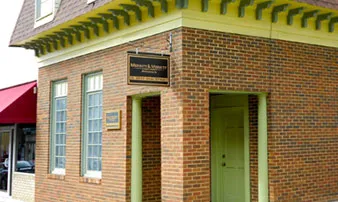
Statesboro
15 West Main Street
Statesboro, GA 30458
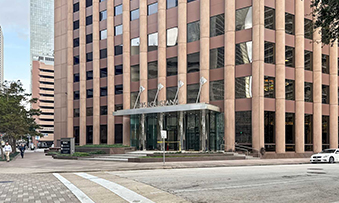
Houston
1415 Louisiana Street,
Suite 1800,
Houston, TX 77002

Jacksonville
841 Prudential Drive
12th Floor
Jacksonville, FL 32207

Contact Us
© Copyright 2026 Merritt & Merritt Law Firm. All rights reserved.