
call us 24/7 1-800-738-WE-WIN
call us 24/7 1-800-738-WE-WIN
Serving All of Georgia, Florida, & Texas
How to Document Injuries for a Personal Injury Case
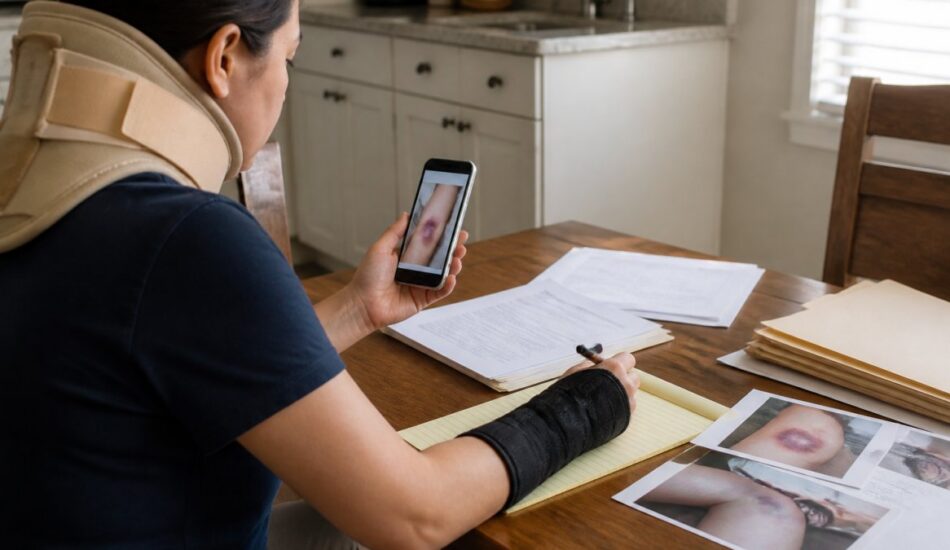
Table of Contents
- Why Documentation Makes or Breaks Your Personal Injury Claim
- What You’ll Need to Start Documenting Injuries
- Step 1: Photographing Injuries for Legal Evidence
- Step 2: How to Keep a Pain and Suffering Journal
- Step 3: Organizing Medical Records, Bills, and Lost Wages
- Digital Evidence, Mental Health Notes, and the Gap in Treatment Risk
- Statute of Limitations for Personal Injury Claims in Georgia
- Conclusion: Turn Your Records Into a Strong Case
- Frequently Asked Questions
Last Updated: October 2, 2026
Why Documentation Makes or Breaks Your Personal Injury Claim
If you were hurt in an accident, learning how to document injuries for a personal injury case is one of the most important steps you can take. Strong records connect your injuries to the crash, support your pain and suffering, and give your attorney the proof needed to pursue full compensation. At Merritt & Merritt Law Firm, we have represented injury victims for over 45 years. Memory fades, bruises heal, and insurance adjusters question anything they cannot see on paper. Documentation is how you protect yourself. (Source: National Highway Traffic Safety Administration (NHTSA) data)
Call the Merritt & Merritt Law Firm today at 404-975-1775. Offices in Atlanta, Savannah, Statesboro, and Houston.
This guide walks you through each step: photographing injuries, keeping a pain and suffering journal, organizing medical records and lost wages, and avoiding the gaps that weaken cases. Start today, even if you are still in pain or still in the hospital.
What You’ll Need to Start Documenting Injuries
You do not need special tools to document injuries. A phone, a notebook, and a folder will do.
Gather these basics:
- A smartphone with a camera and a notes app
- A paper notebook and pen as a backup
- A folder or envelope for receipts and paperwork
- A calendar to track dates and treatments
- Contact info for witnesses and providers
Keep everything in one place. A common mistake is scattering photos across phones and receipts across drawers. When your attorney asks for records, you want one organized file, not a scavenger hunt.
Step 1: Photographing Injuries for Legal Evidence
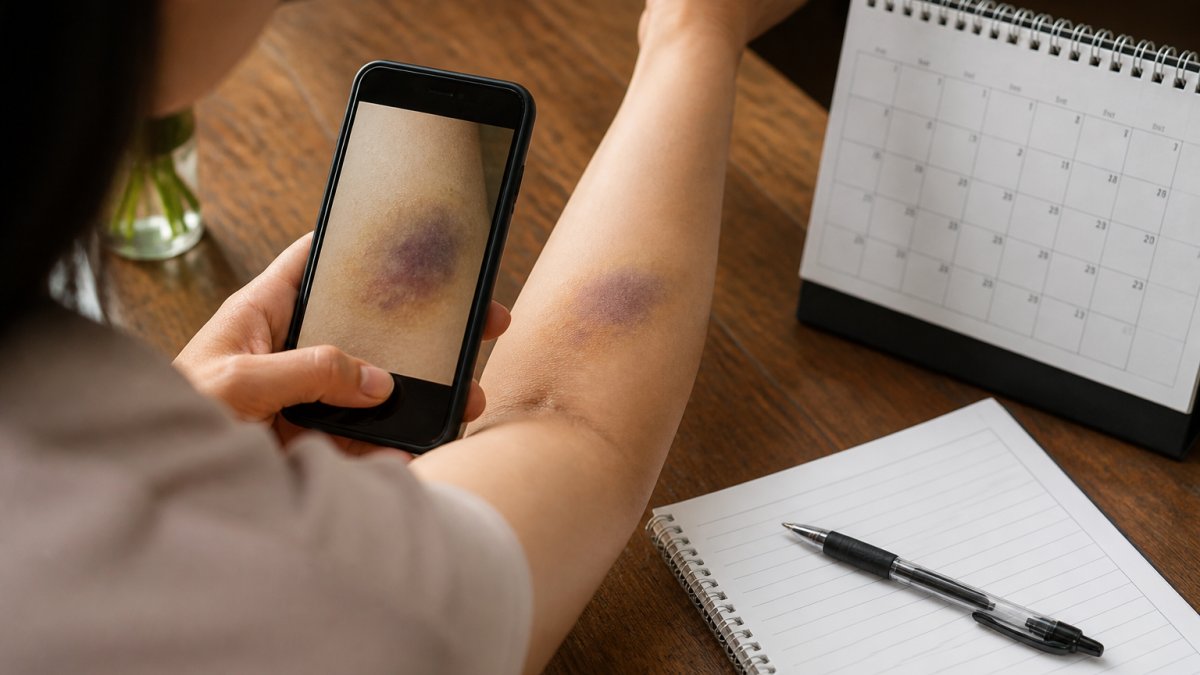
Photographing injuries for legal evidence means taking clear, dated photos of every visible injury from multiple angles, starting as soon as possible after the accident. Bruises fade, cuts heal, and swelling goes down.
Follow these steps:
- Take wide shots that show the injury and its location on your body
- Take close-ups that show color, swelling, and detail
- Use good lighting, and avoid filters
- Include a ruler or coin for scale
- Photograph property damage, the accident scene, and any hazards
- Save copies to the cloud so they are not lost
Step 2: How to Keep a Pain and Suffering Journal
Learning how to keep a pain and suffering journal gives your case something photos cannot: a record of how the injury affects your daily life.
Write in your journal every day. Include:
- Your pain level on a scale of 1 to 10
- Where it hurts and what makes it worse
- Sleep problems, headaches, or dizziness
- Missed work, missed events, and canceled plans
- Help you needed with chores, driving, or childcare
- Mood changes, anxiety, or stress
Keep entries in chronological order. Do not exaggerate, and do not skip bad days. Honest, consistent notes carry weight with insurers and juries. This is also where psychological injury documentation begins, which many victims overlook.
Step 3: Organizing Medical Records, Bills, and Lost Wages
Organizing medical records, bills, and lost wages turns a pile of paper into a clear money trail. Medical records prove your injuries and treatment. Bills and pay stubs prove your damages. Together, they show the full cost of the accident.
Track these items:
- Doctor visits, ER trips, and specialist care
- Diagnostic tests like X-rays, MRIs, and CT scans
- Prescriptions and rehabilitation notes
- Medical bills and out-of-pocket expenses
- Lost wages and missed work days
- Mileage to and from appointments
Request your medical records in writing and keep a log of each request. Save every receipt, even small ones. Pharmacy co-pays and parking fees add up, and they are recoverable.
What to Track | Why It Matters | How Often |
|---|---|---|
Medical records | Prove injury and treatment | After each visit |
Bills and receipts | Show out-of-pocket expenses | Same day |
Lost wages | Support lost income claims | Each pay period |
Journal entries | Document pain and suffering | Daily |
Photos | Capture injury severity | Weekly |
Digital Evidence, Mental Health Notes, and the Gap in Treatment Risk
Most guides stop at photos and paper records. The three areas below are where cases are quietly won or lost, and where the average injury victim gets no guidance at all.
Preserving Digital Evidence the Right Way
Your phone is now the primary evidence locker in most injury claims, and it is also the easiest place to accidentally destroy proof. Treat it like a chain-of-custody file, not a camera roll.
- Back up to the cloud immediately. Upload photos and videos to iCloud, Google Photos, or another synced service the same day. If your phone is lost, stolen, or damaged in a later accident, the originals survive.
- Do not edit, crop, or apply filters. Metadata, the hidden timestamp, GPS coordinates, and device information attached to each file, is what makes a photo credible. Editing strips or alters it. Keep the original file and, if you want a marked-up version, save it as a copy.
- Screenshot text messages, then export them. Screenshots are easy to challenge as incomplete. On most phones you can export a full text thread as a PDF or forward it to your own email so the date, sender, and full conversation are preserved.
- Save voicemails and call logs. A voicemail from the other driver apologizing, or a call log showing you tried to reach the insurance company, can matter later.
- Preserve dashcam and surveillance footage fast. Many businesses overwrite security video within 7 to 30 days. Send a written preservation request to the property owner or fleet operator as soon as you can, and note the date you sent it.
- Log every file. Keep a simple spreadsheet with the file name, the date it was captured, the date you backed it up, and where it is stored. If your attorney ever has to authenticate a photo, that log does the work.
Turn on automatic cloud backup today, before you do anything else. It is the single cheapest form of insurance against losing evidence. ::: (Source: Occupational Safety and Health Administration (OSHA) guidelines)
Documenting Psychological Injuries
Pain and suffering is not only physical. Anxiety, trouble sleeping, nightmares, fear of driving, and symptoms of post-traumatic stress are compensable harms, but they are almost impossible to prove after the fact unless you build a record in real time.
- Tell your doctor, not just your journal. A note in your medical chart that you are not sleeping or that you feel anxious in traffic is far stronger than a private diary entry. Ask for a referral to a counselor or behavioral health provider if symptoms persist.
- Track symptoms on a fixed schedule. Note sleep hours, nightmares, panic episodes, and avoidance behaviors (skipping the highway, refusing to drive at night) with dates. Patterns matter more than single bad days.
- Keep the paper trail from mental health treatment. Therapy notes, psychiatric evaluations, and prescription records are protected but can be used to support your claim when you choose to disclose them.
- Document the ripple effects. Missed family events, canceled vacations, strained relationships, and reduced participation in hobbies you used to enjoy are all part of the harm. Write them down while they are fresh.
Understanding and Avoiding the Gap in Treatment Risk
A gap in treatment is any stretch, even a few weeks, where you had no medical care after an accident. Insurance adjusters treat gaps as evidence that you were not really hurt, and they will point to them in settlement negotiations and at trial.
Schedule a Free Consultation →
Common reasons gaps happen:
- You feel a little better and decide to skip a follow-up.
- You cannot get an appointment for weeks.
- You are worried about cost or missing work.
- You assume the pain will go away on its own.
How to protect yourself:
- Keep a standing appointment. Even a brief check-in with your primary care provider counts as continuous care.
- Call instead of disappearing. If you have to reschedule, document the call, the reason, and the new date.
- Ask about alternatives. Telehealth visits, nurse practitioner appointments, and physical therapy sessions all keep the treatment record active.
- Tell your provider about new symptoms. A new complaint, headaches, numbness, back pain, is a reason to be seen, not a reason to wait.
- Never exaggerate and never hide. Consistent, honest reporting is what makes the record credible.
Posting about your recovery on social media can sink your claim. An adjuster who sees you hiking, lifting weights, or dancing at a wedding will use that post to argue your injuries are minor, and will often pair it with a treatment gap to argue you were never seriously hurt at all.
State bar association guide to evidence preservation
Statute of Limitations for Personal Injury Claims in Georgia
Georgia law sets a deadline to file a personal injury lawsuit, and missing it can end your case. The general rule is two years from the date of injury. Claims against a government entity, a city, county, or state agency, carry much shorter notice requirements, often measured in months rather than years, and the notice must go to the correct office in the correct form. Because the rules can differ based on who was at fault and where the injury happened, check the official source or speak with an attorney about your specific deadline.
Documentation and deadlines work together. Records you build now make it easier to file on time and back up every claim you make. Do not wait until the last month to gather evidence.
Documenting Workplace Injuries and Lost Earning Capacity
Report the injury in writing. Tell your supervisor the same day, and follow up with an email or a written incident report.
Track every dollar of lost income.
- Pay stubs before and after the injury, so the drop in hours or overtime is visible.
- A letter from your employer confirming missed days, reduced hours, or a light-duty assignment.
- If you are self-employed, profit-and-loss statements, 1099s, and client invoices showing canceled or postponed work.
- Mileage and parking for medical appointments, which are recoverable in many cases.
Preserve the workers’ compensation paper trail. If you filed a workers’ comp claim, keep every form, adjuster email, and benefit statement.
A single well-documented workplace file, incident report, pay stubs, accommodation letter, and lost-opportunity confirmation, can be worth more at settlement than months of journal entries. Build it early, while your employer’s records are still easy to obtain.
Merritt & Merritt Law Firm offers a free consultation and works on a contingency fee, so you pay only if we win.
Conclusion: Turn Your Records Into a Strong Case
Documenting injuries takes effort, but it is the difference between a fair settlement and a lowball offer. Photograph everything, journal daily, and keep every bill. If you are overwhelmed, you do not have to do it alone.
Merritt & Merritt Law Firm brings over 45 years of trial experience to injury cases, with 24-hour service and home, office, or hospital visits. We investigate your claim, hold liable parties accountable, and give you clear, realistic expectations. Schedule a free consultation with Merritt & Merritt Law Firm and turn your records into the case you deserve.
Frequently Asked Questions
What evidence is needed for a personal injury claim?
Key evidence includes medical records, bills, and diagnostic tests; photographs of injuries and property damage; a pain and suffering journal; witness statements; the police report; and proof of lost wages. Together, these document injury severity, causation, and financial losses. An attorney can help you gather and organize these items to support your claim.
How do you prove pain and suffering in a personal injury case?
Prove pain and suffering with a detailed journal noting daily symptoms, treatment, and how injuries affect your life. Medical records showing diagnoses, prescriptions, and rehabilitation notes also help. Photographs of visible injuries and testimony from you, family, or experts can support non-economic damages. Consistency between your journal and medical records strengthens your claim.
Should I keep a journal of my injuries after an accident?
Yes. A journal creates a chronological record of your pain, treatment, and recovery. Note symptoms, medication, missed work, and daily limitations. This helps demonstrate the injury’s impact on your life and supports claims for pain and suffering. Keep entries factual and consistent, and avoid gaps in treatment that could raise questions about severity.
What role do medical records play in a personal injury settlement?
Medical records link your injuries to the accident and show the extent of harm. They document diagnoses, treatment plans, diagnostic tests, prescriptions, and rehabilitation notes. Insurers and courts rely on them to assess injury severity and calculate damages like medical bills and lost wages. Complete, timely records also help counter claims that your injuries are pre-existing or exaggerated.
Our Locations

Atlanta/Decatur
1 West Court Square
Suite 750
Decatur, GA 30030

Savannah
100 Bull Street
Suite 200
Savannah, GA 31401

Statesboro
15 West Main Street
Statesboro, GA 30458

Houston
1415 Louisiana Street,
Suite 1800,
Houston, TX 77002

Jacksonville
841 Prudential Drive
12th Floor
Jacksonville, FL 32207

Contact Us
© Copyright 2026 Merritt & Merritt Law Firm. All rights reserved.