
call us 24/7 1-800-738-WE-WIN
call us 24/7 1-800-738-WE-WIN
Serving All of Georgia, Florida, & Texas
Florida Car Accident Injury Claims: Complete Legal Guide

Table of Contents
- Understanding Florida Car Accident Injury Claims
- How to File a Car Accident Claim in Florida
- The 14-Day Rule and Serious Injury Threshold
- Types of Recoverable Damages in Florida
- Statute of Limitations and Legal Deadlines
- Average Car Accident Settlement in Florida
- Car Accident Settlement Timeline Florida
- Insurance Bad Faith and Uninsured Motorist Coverage
Last Updated: July 6, 2026
Understanding Florida Car Accident Injury Claims
When injured in a car accident in Florida, understanding how claims work is essential to protecting your rights and securing fair compensation. Florida’s no-fault insurance system and modified comparative fault rules create both opportunities and pitfalls that most accident victims don’t anticipate. This guide covers how to file a claim, what damages you can recover, and when to escalate to a lawsuit. Many victims accept the first settlement offer without realizing they’re entitled to far more, while others miss critical deadlines and lose their right to sue entirely.
Call Merritt & Merritt Law Firm today at 904-222-6343.
Florida’s No-Fault Insurance System
Florida operates under a “no-fault” insurance system where your own auto insurance policy, specifically Personal Injury Protection (PIP) coverage, pays your medical bills and lost wages up to your policy limits, typically $10,000, regardless of who caused the accident. However, you can only sue the at-fault driver for pain and suffering if your injury meets Florida’s “serious injury threshold.” Many accident victims discover too late that their injury doesn’t legally qualify.
Personal Injury Protection (PIP) Requirements
PIP coverage covers up to 80% of reasonable and necessary medical expenses and 60% of lost wages, capped at $10,000 total. Report the accident to your insurance company within 14 days, though some policies allow up to 30 days. You’ll need the accident report, medical records, and documentation of lost wages. PIP is a “first-party” benefit from your own policy, separate from a liability claim against the at-fault driver’s insurance.
How to File a Car Accident Claim in Florida
Filing a claim involves multiple steps across two parallel tracks: your own insurance company and the at-fault driver’s insurer. Getting this sequence right is crucial.
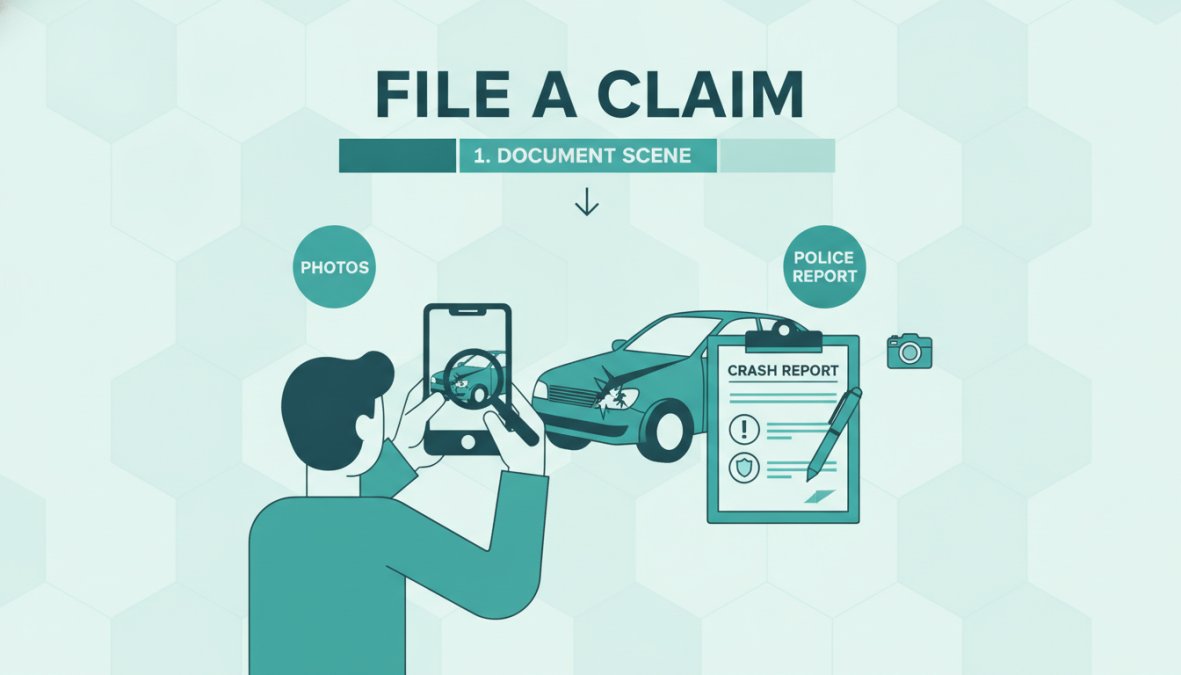
Step 1: Document the Scene and Collect Evidence
Take photos of vehicle damage, the accident scene, road conditions, and any visible injuries from multiple angles. Get the names, phone numbers, and insurance information of the other driver and all witnesses. Request the police report number and file a formal report if the accident resulted in injury or significant property damage.
Preserve digital evidence immediately. Take screenshots of text messages, emails, or social media posts from the other driver that admit fault. Dashcam footage carries significant weight with adjusters and juries. Seek medical attention even if injuries seem minor, as serious injuries like spinal cord damage or traumatic brain injury may not present obvious symptoms immediately. A medical record created within 72 hours of the accident establishes direct causal link between the crash and your injuries.
(/blog/how-to-choose-the-right-car-accident-attorney-in-atlanta-ga/) Claim in Florida]
Step 2: Report to Your Insurance Company
Contact your insurance company within 14 days to initiate your PIP claim. Provide the police report number, the other driver’s information, and a factual description of what happened. Avoid admitting fault or speculating about how the accident occurred. Request the name and direct contact information of your assigned adjuster. Ask about the claims process timeline, required documentation, and expected payment timing.
Review what medical records the insurer requests. Some adjusters ask for more than necessary, including unrelated medical history that could be used to argue your injuries are pre-existing. Limit authorization to records directly related to the accident injury.
Step 3: Notify the At-Fault Driver’s Insurer
Once you’ve filed with your own insurance, notify the at-fault driver’s liability insurer with the accident report, your injuries, and medical documentation. This initiates a separate liability claim. Be cautious in communications with the at-fault driver’s insurance company, unlike your own insurer, they have no obligation to act in your best interest. Avoid recorded statements without legal representation if your injuries are serious.
Request written confirmation that the claim has been received and assigned. Document all communication with dates and names of representatives. Insurance companies rely on victims not following up, which allows them to delay payments or deny claims based on procedural grounds.
The 14-Day Rule and Serious Injury Threshold
Florida’s 14-day rule is critical: you have 14 days from the accident date to receive medical treatment. If you don’t seek treatment within this window, you lose access to PIP benefits and cannot sue for non-economic damages like pain and suffering. This means you must initiate treatment, even a telehealth visit or urgent care appointment, within 14 days.
To sue the at-fault driver for pain and suffering beyond what PIP covers, your injury must meet one of four legal definitions:
- Permanent injury: Damage lasting a lifetime, such as scarring, chronic pain, or permanent loss of function
- Significant and permanent loss of an important bodily function: Inability to perform daily activities or work
- Permanent disfigurement: Visible scarring or deformity from the accident
- Death: Wrongful death claims by family members
Soft tissue injuries like whiplash often fall short of this threshold, even if they cause significant pain. Insurance adjusters know this and use it to pressure victims into low settlements.
Types of Recoverable Damages in Florida
Understanding what damages you can recover is essential to evaluating settlement offers. Florida law recognizes economic damages (quantifiable losses) and non-economic damages (subjective losses).
Economic Damages
Economic damages include:
- Medical expenses: All treatment related to the accident, including emergency room visits, surgery, physical therapy, and ongoing care
- Lost wages: Income missed while recovering, including salary, tips, commissions, and self-employment income
- Property damage: Repair or replacement cost of your vehicle and personal property
- Future medical costs: Ongoing treatment, medications, or assistive devices needed long-term
- Loss of earning capacity: Reduced income potential if the injury permanently limits your ability to work
Obtain itemized medical bills from every provider, not just summary statements. Request wage verification letters from your employer showing your hourly rate or salary. For self-employed individuals, provide tax returns and business records proving your income. Work with your attorney to obtain reasonable fee schedules from medical providers, which often reduces bills by 20-40%.
Non-Economic Damages
Non-economic damages compensate for subjective losses:
- Pain and suffering: Physical pain and ongoing discomfort
- Emotional distress: Anxiety, depression, or PTSD resulting from the accident
- Loss of enjoyment of life: Inability to participate in hobbies, sports, or activities you enjoyed
- Loss of consortium: Impact on your relationship with your spouse or family
- Disfigurement: Visible scarring or permanent changes to appearance
Insurance companies use formulas, typically multiplying economic damages by 1.5 to 5 times, to cap settlement offers. However, juries often award significantly more. Keep a pain journal describing daily symptoms, limitations, and emotional impact. Gather photos of visible injuries and scars. Collect statements from family, friends, or colleagues describing changes in your behavior or abilities.
Statute of Limitations and Legal Deadlines
The statute of limitations for florida car accident injury claims is four years from the accident date. However, multiple other deadlines embedded within the claims process can eliminate your right to sue before then. The 14-day rule is the first critical deadline. The second involves your own insurance company, most policies require notification of intent to sue within 30 to 60 days after the accident if you plan to pursue a liability claim beyond PIP benefits.
Document all deadlines in writing. Create a checklist with the accident date and calculate 14 days, 30 days, 60 days, and four years forward. Set phone reminders for each deadline.
Average Car Accident Settlement in Florida
Settlement amounts in Florida car accident injury claims vary based on injury severity, liability clarity, and insurance policy limits. The average settlement ranges from $15,000 to $25,000 for injuries meeting the serious injury threshold, though cases with permanent disfigurement or significant disability often settle for $50,000 to $150,000 or more.
Liability clarity matters enormously. If the at-fault driver ran a red light, liability is obvious and the insurer settles quickly. If liability is disputed, the settlement drops significantly. Insurance policy limits create a ceiling on recovery. If the at-fault driver has only $25,000 in bodily injury liability coverage and your damages total $100,000, you can only recover $25,000 from their insurance. Underinsured motorist coverage on your own policy bridges this gap.
Car Accident Settlement Timeline Florida
Most straightforward cases settle within 90 to 180 days. Complex cases with serious injuries can take 12 to 24 months or longer.
Medical treatment completion is the primary driver of timeline. Insurance companies won’t finalize settlements until you’ve completed medical treatment or reached Maximum Medical Improvement (MMI), the point where your condition stabilizes. Rushing to settle before MMI typically results in underpayment.
Liability disputes dramatically extend timelines. If the at-fault driver’s insurance contests fault, they’ll conduct their own investigation and potentially hire experts to reconstruct the accident, adding 60 to 120 days.
Insurance adjuster responsiveness varies widely. Document all communication attempts and escalate to the adjuster’s supervisor if response times exceed five business days. Delays often signal the insurance company is stalling.
Policy limits investigation adds time if the at-fault driver’s coverage is unclear. You may need to file a subpoena to verify their policy limits, taking 30 to 60 days.
Factor | Typical Timeline | Impact on Settlement |
|---|---|---|
Medical treatment completion | 60-180 days | Delays settlement until MMI reached |
Liability disputes | 60-120 days | Extends negotiation period significantly |
Adjuster responsiveness | 5 business days per response | Compounds delays across multiple interactions |
Policy limits investigation | 30-60 days | Necessary before finalizing settlement amount |
Underinsured motorist claims | 90-180 days additional | Required if at-fault driver’s limits insufficient |
Proactive communication accelerates settlements. Send written settlement demands with detailed documentation of damages every 30 days rather than waiting for adjusters to contact you.
Insurance Bad Faith and Uninsured Motorist Coverage
Florida law imposes a duty of “good faith and fair dealing” on insurance companies. When an insurer violates this duty by refusing to pay legitimate claims, offering unreasonably low settlements, or delaying payment without justification, you can sue for bad faith.
What Constitutes Insurance Bad Faith
Insurance bad faith occurs when an insurer acts unreasonably in denying, delaying, or underpaying a legitimate claim. Common examples include denying a claim based on a technicality when the policy clearly covers the loss, refusing to respond to claim inquiries for extended periods, offering a settlement that’s a fraction of documented damages without explanation, or requiring unnecessary medical examinations to delay payment.
Once bad faith is established, you can recover not just your actual damages but also punitive damages, attorney fees, and court costs. Keep records of every communication with the insurance company, including dates, times, names of representatives, and what was discussed. When settlement offers come in, document why they’re unreasonable.
Uninsured and Underinsured Motorist Protection
Uninsured motorist (UM) coverage protects you when the at-fault driver has no insurance. Underinsured motorist (UIM) coverage bridges the gap when their insurance limits are lower than your damages. If you’re hit by an uninsured driver, your own UM coverage pays your medical bills and damages up to your policy limits. UIM coverage becomes critical when the at-fault driver’s liability limits are lower than your actual damages. Without UIM, you’d have no recovery beyond the at-fault driver’s policy limits.
UM and UIM claims against your own insurance company follow the same process as liability claims against the at-fault driver’s insurer, including the serious injury threshold.
Navigating florida car accident injury claims requires strategic thinking, precise documentation, and the ability to stand up to insurance companies designed to minimize payouts. The process is deliberately complex, which works in the insurer’s favor when you’re injured. Merritt & Merritt Law Firm brings 45 years of trial experience, immediate case evaluation, and a contingency fee structure (you pay only if we win) to ensure you’re not fighting alone. Florida’s no-fault insurance statute establishes the framework, but your success depends on understanding how to work within it. Schedule a free consultation with Merritt & Merritt Law Firm today, our team is available 24 hours and can visit your home, office, or hospital to discuss your case.
Frequently Asked Questions
What is the statute of limitations for filing a car accident injury claim in Florida?
In Florida, you generally have four years from the date of the accident to file a personal injury lawsuit. However, if you're pursuing a claim through insurance under the no-fault system, you must file within a specific timeframe related to your medical treatment. Missing these deadlines can bar you from recovering damages, so it's critical to act promptly and consult with an attorney if you're uncertain about your timeline.
How does Florida's no-fault insurance law affect my car accident injury claim?
Florida's no-fault system requires all drivers to carry Personal Injury Protection (PIP) insurance, which covers your medical expenses and lost wages regardless of who caused the accident. Your own PIP covers up to 60% of lost wages and 100% of medical expenses. However, you can only sue the at-fault driver for non-economic damages like pain and suffering if you meet the serious injury threshold, which includes permanent disfigurement or significant permanent loss of function.
What damages can I recover in a Florida car accident injury claim?
You can recover economic damages including medical expenses, lost wages, and property damage. If you meet the serious injury threshold, you can also pursue non-economic damages such as pain and suffering, emotional distress, and loss of enjoyment of life. Compensatory damages aim to restore you to your pre-accident condition. The amount depends on injury severity, liability clarity, insurance policy limits, and whether the case settles or goes to litigation.
How long does it typically take to settle a car accident claim in Florida?
Settlement timelines vary significantly based on injury complexity, liability disputes, and insurance cooperation. Simple claims may settle in weeks, while serious injury cases often take 6-12 months or longer. Factors affecting speed include medical treatment completion, insurance adjuster responsiveness, and whether litigation becomes necessary. Having legal representation can expedite the process by managing negotiations and ensuring deadlines are met throughout the insurance claim process.
Our Locations

Atlanta/Decatur
1 West Court Square
Suite 750
Decatur, GA 30030

Savannah
100 Bull Street
Suite 200
Savannah, GA 31401

Statesboro
15 West Main Street
Statesboro, GA 30458
Houston
1415 Louisiana Street,
Suite 1800,
Houston, TX 77002

Jacksonville
841 Prudential Drive
12th Floor
Jacksonville, FL 32207

Contact Us
© Copyright 2026 Merritt & Merritt Law Firm. All rights reserved.