
call us 24/7 1-800-738-WE-WIN
call us 24/7 1-800-738-WE-WIN
Serving All of Georgia, Florida, & Texas
Columbus Premises Liability Lawyer
How Columbus Residents Can Get Legal Help After a Premises Liability Injury
When you visit a store, an apartment complex, or an office building in Columbus, you expect the area to be reasonably safe. You trust that the people in charge have done their jobs. Unfortunately, many property managers care more about saving money than they do about public safety. They might ignore a wobbly handrail, put off fixing a broken light, or tell their staff to skip the hourly safety checks. When these poor choices lead to a serious injury, the law steps in to protect you. This area of the law focuses on making sure property owners take responsibility when their unsafe buildings cause harm to innocent people.
At Merritt & Merritt Law Firm, our team understands how deeply a sudden fall or an unexpected injury can disrupt your life. You might be facing a stack of medical bills, weeks away from your job, and a lot of physical pain. The companies that own these buildings have large insurance policies and teams of professionals whose only goal is to pay you nothing. We are here to level the playing field. We provide clear, friendly, and professional guidance to help you navigate this stressful time. If you or a loved one has been hurt on someone else’s property, please call us at 706-955-1559 for a detailed and conversational review of your situation.
Trip Hazard Standards and Building Code Violations
One of the most common ways people get hurt is by tripping over a hazard that never should have been there in the first place. In Georgia, the rules regarding slip and fall or trip and fall accidents can be very strict. Insurance companies love to use a defense called “open and obvious.” They will argue that you should have seen the uneven sidewalk, the bunched up carpet, or the unmarked step, and that the accident is entirely your own fault. Overcoming this unfair blame game requires strong, undeniable proof that the property itself was fundamentally unsafe.
This is where building codes become incredibly important for your case. Building codes are the minimum safety rules that every structure must follow. If a property owner ignores these rules, it shows they were ignoring your safety. We examine the premises for several types of code violations to prove that the owner was at fault. Our investigators do this by:
- Measuring stairways for safety. We check to see if the steps are the correct height and depth because uneven stairs easily cause people to lose their balance.
- Inspecting handrail stability. A wobbly or missing handrail violates basic safety rules and removes your only chance to catch yourself during a fall.
- Reviewing lighting requirements. Dark hallways and poorly lit parking garages violate codes that require enough light for visitors to see potential dangers on the ground.
- Checking ramp inclines. Wheelchair ramps and walkways that are built too steep violate accessibility laws and create a severe slipping hazard for everyone.
When we find these violations, it completely changes the conversation with the insurance company. It stops being an argument about whether you were clumsy. Instead, it becomes a clear case of the property owner breaking the law. Having a dedicated Columbus premises liability lawyer on your side means you have someone who knows how to find these hidden code violations. We work with structural experts who know exactly what to look for, ensuring the insurance company cannot hide behind weak excuses.
Notice and Inspection Policies for Businesses
To win a case against a business, you cannot just prove that you fell and got hurt. You must also prove that the business owner knew about the danger, or at least that they should have known about it if they were doing their job correctly. In the legal world, this concept is called “notice.” Proving notice is often the hardest part of the process, but it is also the most important.
There are generally two ways to show that a business had notice of a hazard. The first is actual knowledge. This means an employee saw the spilled liquid, or a customer complained about the broken step before you got hurt. The second way is constructive knowledge. This means the danger was present for so long that a careful business owner would have found it and fixed it. To prove constructive knowledge, we look very closely at how the business operates on a daily basis. Some ways we do this include:
- Requesting daily sweep logs. We ask for the paperwork that shows exactly when employees walked down the aisles to check for spills.
- Investigating previous complaints. We look into whether other customers had already warned the manager about the exact same problem area days or weeks before your accident.
- Watching employee behavior. Security video can show workers walking right past a dangerous mess without stopping to clean it up or place a warning sign.
Businesses are required by law to have a reasonable plan for inspecting their property. If a grocery store does not require its workers to check the aisles every hour, they are failing to keep their shoppers safe. A skilled Columbus premises liability lawyer will demand to see these internal training manuals and policy guides. We use the company’s own rules against them to show that they failed to provide a safe environment for your family.
Security Negligence and Prior Incidents Can Make Your Case
Property owners are not just responsible for keeping the floors clean. They are also responsible for keeping their visitors safe from foreseeable crimes. If you live in an apartment complex or visit a shopping center, the landlord must take reasonable steps to protect you from assaults, robberies, or other violent acts. When a property owner fails to provide adequate security, they can be held financially responsible for the harm that comes to you.
The key word in these cases is “foreseeable.” A landlord is not expected to predict every random act of crime. However, if a property has a history of criminal activity, the owner is legally required to act. If cars are constantly broken into in a specific parking lot, the owner knows there is a problem. If they do nothing to fix it, they are choosing to put their tenants and customers in danger. We build these cases by showing that the owner ignored clear warning signs. Some common ways to show security negligence include:
- Gathering local police reports. We request the 911 call history for the property to show how many times the police were called for violent crimes in the past year.
- Evaluating lighting and fences. Criminals prefer dark and hidden areas, so we check if the owner allowed security lights to burn out or left fences broken.
- Checking access control systems. If an apartment building has a broken front gate or a shattered lobby door lock, it gives criminals easy access to the residents.
How Our Team Collects and Preserves Important Evidence
If you are injured on property owned by a company (such as a restaurant or shopping mall), they immediately snap into defense mode. They have protocols in place to “clean the scene” that results in key evidence being lost. A slippery floor might be quickly mopped over. Video footage might be “accidentally” deleted or taped over. These tactics are known as spoliation and, unfortunately, it is quite common.
In order to win a case, you need evidence to prove your side of the story. If that evidence happens to disappear, then you cannot get the legal compensation you deserve. That is why, from day one, our team acts immediately to collect evidence and prevent the opposing party from hiding the truth. We do this by:
- Sending a formal preservation letter. We immediately mail a legal document that forces the business to save all video footage, emails, and cleaning logs related to your accident.
- Securing employee communication. Our team demands text messages and emails between managers that might show they were trying to cover up the mistake.
- Hiring independent property inspectors. We send our own experts to look at the scene of the accident before the owner can pave over the hole or replace the dangerous flooring.
If a company ignores our preservation letter and destroys the evidence anyway, the court can punish them severely. The judge can even tell the jury to assume that the destroyed evidence would have proven the company was guilty. Having a professional Columbus premises liability lawyer from the Merritt & Merritt Law Firm handle this process takes the burden off your shoulders. We know all the tricks that corporate risk teams use, and we know exactly how to stop them in their tracks. We fight aggressively to make sure the true story of your accident is told in the courtroom.
Merritt & Merritt Law Firm Provides the Legal Support You Deserve
At Merritt & Merritt Law Firm, our entire team treats every client like a neighbor. In fact, many of our clients are our neighbors because our team is locally based in Columbus. We do not charge any upfront fees, and we take the time to understand your story. We deal with paperwork and the insurance companies. This approach helps us get you the full legal compensation you need while you get to focus on rest and recovery.
Do not let a negligent property owner or a greedy insurance company decide what your future looks like. If you have been injured due to a dangerous condition on someone else’s property, we are ready to stand by your side. Call the caring and professional team at Merritt & Merritt Law Firm today at 706-955-1559 for a free conversation about your legal rights.
Our Locations
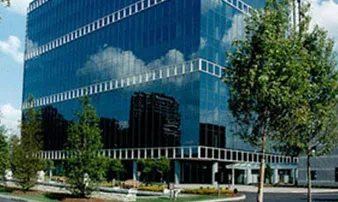
Atlanta/Decatur
1 West Court Square
Suite 750
Decatur, GA 30030
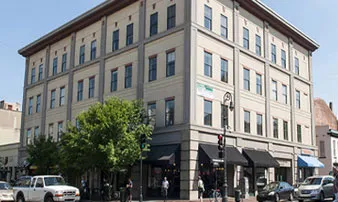
Savannah
100 Bull Street
Suite 200
Savannah, GA 31401
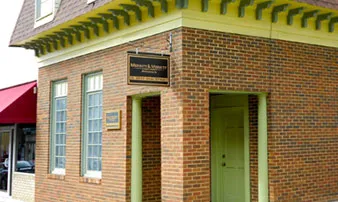
Statesboro
15 West Main Street
Statesboro, GA 30458
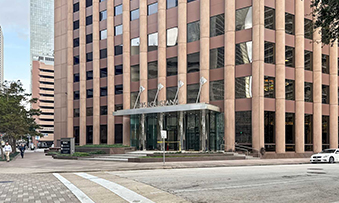
Houston
1415 Louisiana Street,
Suite 1800,
Houston, TX 77002
Jacksonville
841 Prudential Drive
12th Floor
Jacksonville, FL 32207

Contact Us
© Copyright 2026 Merritt & Merritt Law Firm. All rights reserved.